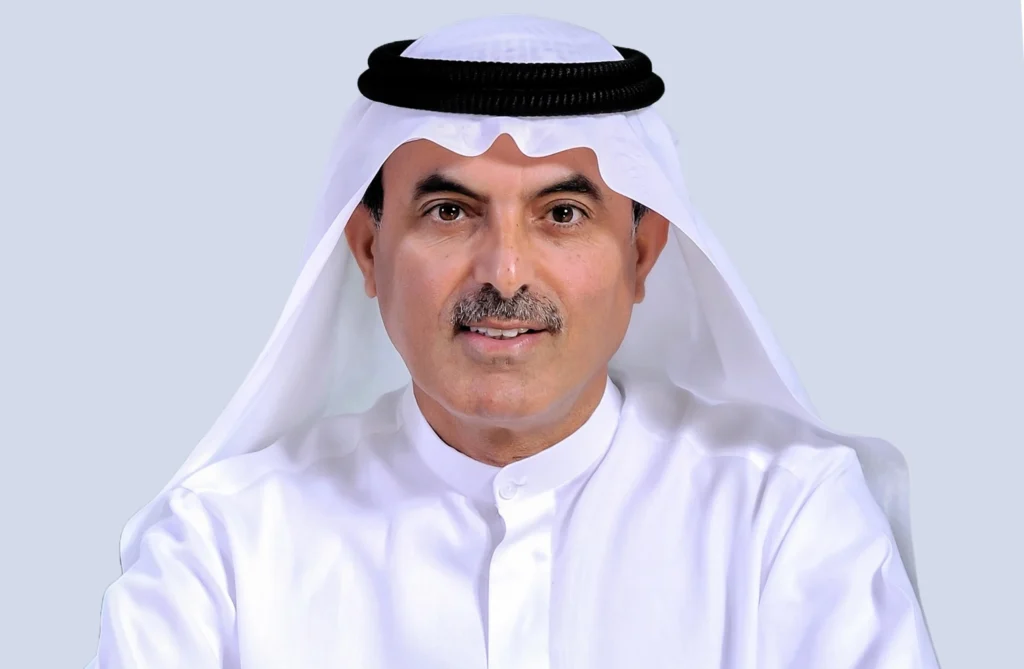
Abdul Aziz Abdulla Al Ghurair Business Leader, Innovator, National Builder By Rizwan Zulfiqar Bhutta A Legacy Rooted in Vision The Al Ghurair Family and the UAE The story of Abdul Aziz Abdulla Al Ghurair cannot be told without first understanding the enduring legacy of his father, Abdulla Ahmad Al Ghurair, and the broader Al Ghurair family, pioneers who helped sculpt modern-day Dubai and the United Arab Emirates. The family’s entrepreneurial journey began in the 1960s when the patriarch Ahmad Al Ghurair founded Al Ghurair Group. Over time, the Group launched the UAE’s first cement factory, flour mill, sugar refinery, aluminium extrusion plant, packaging businesses, and even the iconic Al Ghurair Centre shopping mall in 1981. These ventures laid the foundation for diversified industry in the young nation and helped spark its economic transformation. Abdulla Ahmad Al Ghurair emerged as a visionary businessman and philanthropist. In the early 1960s, long before the Union in 1971, Abdulla built several schools including the very first in remote Masafi to bring education to underserved communities. His belief was simple yet profound: education strengthens individual lives and uplifts society as a whole. In 2015, he formalized his philanthropic legacy by pledging one-third of his personal wealth, AED 4.2 billion at the time, to create the Abdulla Al Ghurair Foundation for Education, a landmark gesture supporting Arab and Emirati youth through scholarships, skills-building, and digital learning platforms. Born on 1 July 1954 in Dubai, Abdul Aziz Al Ghurair graduated from California Polytechnic State University with a degree in industrial engineering and joined the family’s financial arm, Mashreq Bank, in 1977. He rose to Executive Director in 1989 and became CEO in 1990, before being appointed Chairman of Mashreq. Under his leadership, Mashreq became the first bank in the UAE to introduce ATMs, credit and debit cards, consumer loans, POS terminals, travelers’ cheques, and eventually digital banking initiatives such as Mashreq Neo and NeoBiz for SMEs. He expanded the bank’s international footprint by opening branches in New York, London, Bahrain, Qatar, Egypt, India, and Pakistan, positioning Mashreq as a global Emirati financial institution. In addition to his banking leadership, Abdul Aziz is Chairman of the Executive Committee of Al Ghurair Investment, the diversified family conglomerate active in food and resources, properties, construction, energy, mobility, and ventures. The group operates across approximately 50 countries and employs around 28,000 people. The group’s holdings include Al Ghurair Foods, which houses one of the region’s largest flour mills and the Jenan brand, along with mineral water, poultry, and animal feed. Other entities include Arabian Packaging, Taghleef Industries, Gulf Extrusions, CarsTaxi, auto distribution via EXEED, real estate developments like Al Ghurair Centre, and educational institutions such as Dar Al Marefa. In 2023, Abdulla Al Ghurair and family had an estimated net worth of approximately US 3.2 billion, which rose to around US 4 billion in 2024. Abdul Aziz personally has been estimated at around US 2.6 billion. Mashreq reported annual net profit of AED 9.01 billion in 2024, with operating income rising 24 percent, reflecting strong financial stewardship. An Enlightened Vision: The UAE and Its Future According to Father and Son Abdulla Al Ghurair viewed education not merely as policy, but as a moral obligation and civic duty. He was one of the first private citizens to invest in building schools before the formation of the UAE, guided by the philosophy that education empowers individuals, communities, and the nation. He believed that seeking an education is not only about personal achievement but also a civic and religious responsibility as Arabs and Muslims. He foresaw a modern UAE grounded in a knowledge economy, and saw his philanthropic efforts as integral to that future. Abdul Aziz has embraced and expanded his father’s philosophy with a modern, impact-driven approach. As chairman of the Foundation, he emphasizes strategic philanthropy, partnerships, measured impact, and scalable solutions over one-off gifts. He has stated that strategic philanthropy transforms lives by building ecosystems where people thrive. His signature initiative, the Abdul Aziz Al Ghurair Refugee Education Fund, launched in June 2018, targets conflict-affected youth in Jordan, Lebanon, and the UAE. With an initial commitment of US 32.6 million, it has enabled over 100,000 refugee youth, more than half of them girls, to access secondary, vocational, or tertiary education through partnerships with NGOs and universities. In the first wave, 20 selected organizations supported 48,000 young people aged 12 to 30. He also pledged US 10 million to become the lead donor of UNICEF and Islamic Development Bank’s Global Muslim Philanthropy Fund for Children, marking the first major Muslim philanthropic commitment to that platform, aiming to support health, education, and youth empowerment across Muslim-majority countries. Abdul Aziz holds strong faith in the future of the UAE. He believes that the nation’s youth are its greatest asset and that private sector leadership must invest in education, entrepreneurship, and innovation. He frequently states that modern challenges require evolution in giving. Philanthropy must become strategic, collaborative, accountable, and youth-centred. Through the Foundation, he has directed resources that have now reached over 239,400 youth, exceeding the original target by around 20 percent well before 2025. Additionally, Al Ghurair Foods signed a 50-year land-lease agreement worth over US 272.3 million in KEZAD, Abu Dhabi, for mega food-processing projects. CarsTaxi, the group’s mobility division, partnered with Al-Futtaim Toyota to introduce 1,300 Toyota Camry hybrids into its fleet, reflecting strategic diversification into sustainability. A Family Ethos of National Loyalty and Optimism What unites father and son is a deep-rooted belief in the potential of the UAE. Abdulla Al Ghurair saw the Union of the Emirates as an opportunity to transform society through infrastructure and education, including building schools and industrial foundations in remote areas before 1971. He believed education was a duty to uplift Arab youth and build capacity for a new nation. Abdul Aziz continues this vision with contemporary tools and reach. He believes in the necessity of developing future-facing skills, digital readiness, and inclusive opportunities for all young people across the Arab world. He sees the