MAGNAV Emirates

Art and culture

History Did Not Forget Women by Accident, It Forgot Them by Design

History Did Not Forget Women by Accident; It Forgot Them by Design

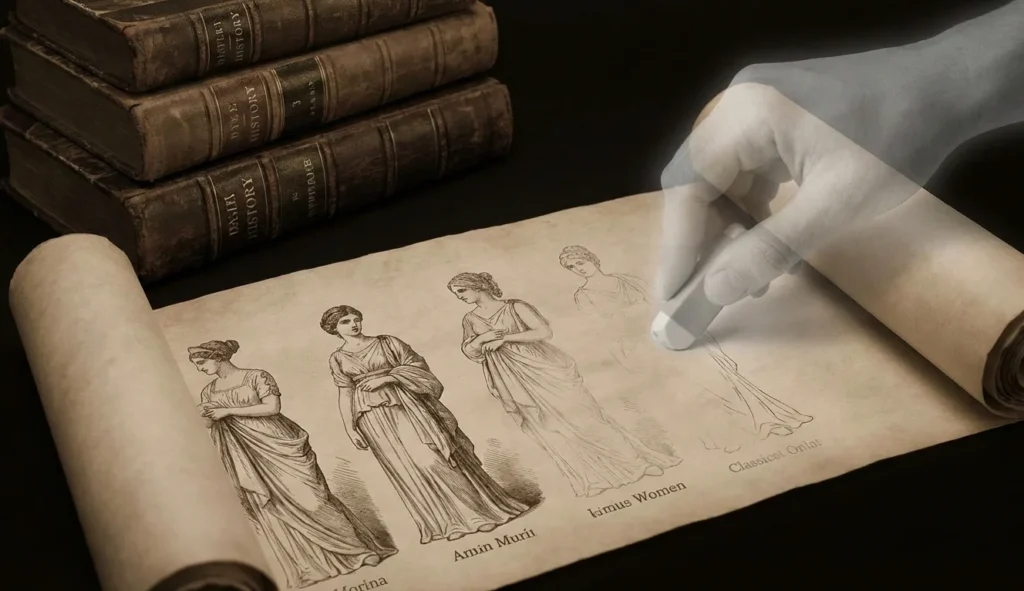
History Did Not Forget Women by Accident It Forgot Them by Design By Bisma Ijaz Imagine waking up in the world as a woman, trying to find your way to understand who you are. You engross yourself in research for meaning, spending hours gaining “self-awareness,” only to find out that what you relate to is always written by a male figure. How strange, right? You do hours of retrospection through reading and thinking, trying to connect with your own being intellectually, but you always end up aligning with the male experience, again. Trapped within hegemonic ideas of masculinity and femininity in our minds, any woman who strives to be self-aware, educated, and possess a nuanced political conscience goes through the same vicious cycle every day. This question has always triggered me: how is it possible that what I am feeling is labelled “unfeminine,” interrupted with, “You are behaving like a man,” just because I cannot be otherwise? You want to study? Go into soft topics, beauty, fashion, teaching, not as a scholar or expert, or in nursing. Don’t think beyond that. But what about the woman who loves astronomy, politics, history, economics, international affairs, and all these hardcore topics that have been “unfairly” reserved for men for thousands of years because masculinity is associated with power, strategy, resilience, and discipline? Ironically, women equally possess these qualities, but access to power often compels us to backslide. These rogue definitions of masculinity and femininity have eroded a thought that every human should ask: what if history is missing its 50 per cent, the other half of the population? Women. For several years, we have been listening to champions of human rights, the West, telling us how they have always stood for women’s rights. However, they often forget to mention that it was colonialism that deliberately eroded the great women of history. It was its innate sexism that labelled women as naïve, uneducated, emotional, and much more. For instance, Socrates holds immense importance in the foundation of Western philosophy, but male historians did not mention that his teacher was a woman named Aspasia. Science fiction, which is supposed to be a genre for men, guess what? The first-ever science fiction novel, Frankenstein, was written by a woman, Mary Shelley. In science, this phenomenon is known as the “Matilda Effect.” U.S. suffragist and abolitionist Matilda Joslyn Gage observed this deliberate suppression of the contributions of female scientists within research work and the common practice of women researchers crediting their work to male counterparts. In response, Margaret W. Rossiter, a U.S. science historian who coined the term in 1993, pointed out that some male historians who were willing to write about female scientists and their achievements quickly made women’s work invisible after their deaths, even if they were recognised during their lifetimes. This hypocrisy of male historians clearly manifests on the pages of history. Ida Noddack, who first proposed the concept of nuclear fission, was dismissed at the time. Similarly, Lise Meitner, who co-discovered nuclear fission, was denied recognition when the Nobel Prize was awarded only to her male colleague, Otto Hahn. Another example is Katherine Johnson, a NASA mathematician whose calculations enabled spaceflight success but were overshadowed by her male contemporaries. Ada Lovelace, the first computer programmer, was dismissed for a century as merely a translator. One of the most evident space mysteries, dark matter, had its existence proven by American astronomer, Vera Rubin. However, she was never awarded the Nobel Prize, potentially due to historical biases against women in science. What makes this erasure even more troubling is that Muslim societies, despite holding a rich history of women working alongside men, also allowed these legacies to be forgotten. Instead of researching and reclaiming these histories, Muslims confined women inside their bedrooms, removing all their significant roles and reducing them to a “shell” shaped by distorted interpretations of religion, often driven by superiority complexes and sexual control. Khadija bint Khuwaylid, the first wife of Prophet Muhammad (PBUH), was a businesswoman. What Muslim historians often ignore is her wisdom and conscience, directly linked to her being a successful, wealthy businesswoman and trader. Not only as a successful individual, she was also able to console and be equally emotionally present for her husband when the Apostle received his first revelation. It was her profound experience that gave her the emotional intelligence to seek guidance from a prominent Christian scholar, Waraqa ibn Nawfal. Fatima bint Muhammad al-Fihriya is ranked as one of the most influential Muslim women in history for founding the world’s first university. It is believed that Pope Sylvester II, an alumnus of the University of Al-Qarawiyyin, brought the use of zero and Arabic numerals to Europe following his studies there. Mariam “Al-Astrulabi” al-Ijliya was the only female astronomer of her era recognized as an eminent authority in astronomy. She crafted astrolabes, which were widely used to predict the positions of stars, planets, and the sun, and were also used by Muslims to accurately determine the direction of the qibla, required for prayer while facing Mecca. The list is so extensive that a single piece cannot contain it. This alone reveals how easily one’s gender, despite being a foundational pillar of society, can be erased simply for being a woman. This is not a debate of men versus women. It is about constructing a certain identity for women and confining them within a rigid shell governed by rules, while ignoring the fact that women hold equal identity and individuality. Let us pause for a moment. Women are repeatedly told they are born solely to be mothers. Yet how can we expect them to be great mothers if they are denied the opportunity to develop conscience, awareness, and an understanding of a rapidly evolving world? Every debate that seeks to confine women to a fixed identity ultimately exposes the reality of gendered privilege. It is time to recognize women as full individuals, navigating life for the first time, just like men do. If remarkable women

The Scent of Longevity, Ancient Arab Apothecary Leads Wellness 2026

The Scent of Longevity, Ancient Arab Apothecary Leads Wellness 2026

The Scent of Longevity, Ancient Arab Apothecary Leads Wellness 2026 By Marina Ezzat Alfred In 2026, wellness no longer whispers, it remembers. It remembers a grandmother rising before dawn, warming milk over a quiet flame, crushing Sidr leaves with steady hands. It remembers frankincense drifting through a majlis, not as perfume, but as a promise of protection and balance. Across the Middle East, women are returning to these moments not out of nostalgia, but recognition. What once sustained their ancestors is now answering a modern hunger: to live longer, clearer, and more whole. This is the Longevity Movement, and it begins from within. A young woman checks her sleep data on a wearable ring, then reaches for a tonic inspired by ancient apothecaries. Her beauty ritual is no longer about the mirror, it is biological. Camel milk nourishes her gut, frankincense steadies her nervous system, and wisdom passed through generations meets precision science. She is not chasing youth; she is cultivating vitality. Here, beauty is not applied in layers. It is built slowly and intentionally, from the inside out. It is a return to self, guided by memory, strengthened by technology, and led by women who understand that true transformation is not something you fix, it is something you grow into. For years, women were taught to negotiate with the mirror, to smooth, erase, and correct. Beauty became a pursuit measured in surfaces and seconds. But across the Middle East, that conversation is quietly ending. In its place, a deeper question is being asked, one that feels less urgent and more profound: how long can I live well? The focus is no longer on how youth looks, but on how vitality feels, moves, and endures. Longevity wellness reframes beauty as an internal dialogue. Glowing skin becomes a signal of gut balance, strong hair a reflection of hormonal stability, sustained energy a marker of low inflammation, and resilient cells. What appears on the outside is no longer engineered, it is revealed. This is beauty from within, a philosophy born in ancient Arab healing traditions and refined by modern bioscience, where harmony inside the body becomes the most honest expression of beauty outside. Long before shelves were lined with labeled bottles, healing in the Arab world lived in ritual. A healer observed the seasons, the body’s rhythms, and the temperament of the individual. Plants were chosen with intention, resins burned with purpose, milks prepared to nourish both strength and longevity. Wellness was not a reaction to illness, it was a daily practice of preservation. Today, those same ingredients return with new language but familiar soul. Frankincense, Sidr, and camel milk are no longer passed down only through memory; they are studied, refined, and bio-engineered into clinically optimized formulations. What was once instinct is now precision, proving that ancient wisdom was never outdated, it was simply waiting for science to catch up. Frankincense once filled rooms with stillness. Its smoke drifted through homes and sacred spaces, slowing breath, settling the mind, restoring a sense of order. It was never just fragrance; it was protection, grounding, quiet medicine. For generations, its value was felt rather than explained. In 2026, science finally gives language to that feeling. Advanced extraction methods isolate boswellic acids, revealing powerful anti-inflammatory, neuroprotective, and cellular-repair properties. Transformed into precise ingestible compounds, frankincense now supports brain clarity, immune strength, and skin elasticity from within, proving that what once calmed the spirit is actively strengthening the body at its core. Sidr leaves were once gathered with care, soaked, crushed, and used in rituals of cleansing the body, the home, and the spirit. Their role was gentle yet profound, trusted to restore balance and remove what no longer served. Today, Sidr is being rediscovered through a scientific lens. Rich in antioxidants and uniquely supportive of the microbiome, bio-fermented Sidr appears in edible skincare powders and longevity tonics that stabilize blood sugar, improve digestion, and reduce oxidative stress, addressing the true biological foundations of graceful, lasting aging. In the desert, camel milk was never just nourishment, it was survival, strength, and continuity. It sustained travelers through harsh climates and nourished generations with quiet reliability. Its value was understood intuitively: it built resilience in bodies that needed to endure. Today, that ancestral nourishment is refined for modern longevity. Rich in immunoglobulins, bioactive peptides, and natural probiotics, camel milk is freeze-dried and nano-filtered into advanced supplements that support gut integrity, stimulate collagen production, and improve insulin sensitivity, transforming an ancient staple into a precision tool for long-term vitality. The most radical shift in the wellness revolution does not appear on the skin; it begins far deeper. Edible skincare redefines beauty as an internal process, where digestion, hormones, and cellular energy determine what the mirror reflects. By 2026, luxury wellness brands across the Middle East offer ingestible formulations designed to strengthen skin density, reduce systemic inflammation, support hormonal balance, and enhance mitochondrial function. These are not mass-produced solutions, but carefully tailored responses to the body’s unique signals, because true beauty is no longer applied universally, it is nourished personally from within. What truly distinguishes the Middle Eastern Longevity Movement is not technology alone, but how it is used. Smart rings, glucose monitors, sleep trackers, and hormone-mapping wearables collect real-time biometric data, heart rate variability, cortisol patterns, insulin response, circadian rhythm alignment. Yet this data is not treated as cold numbers. It is interpreted through a philosophy shaped by centuries of traditional healing, where rhythm, balance, and timing matter as much as treatment itself. The result is a deeply personal ritual system. Frankincense-based ingestibles are adjusted according to stress biomarkers, Sidr tonics are timed to digestive and glucose cycles, and camel milk peptides are consumed in harmony with sleep and recovery data. Technology does not replace tradition; it sharpens it, allowing ancient wisdom to meet the body exactly where it is today. At the center of this movement stand Middle Eastern women, grounded in heritage, fluent in science, and fully aware of their influence. Highly educated and globally connected,

Yasmina Sabbah

Yasmina Sabbah, Orchestrating the Future of Middle Eastern Music

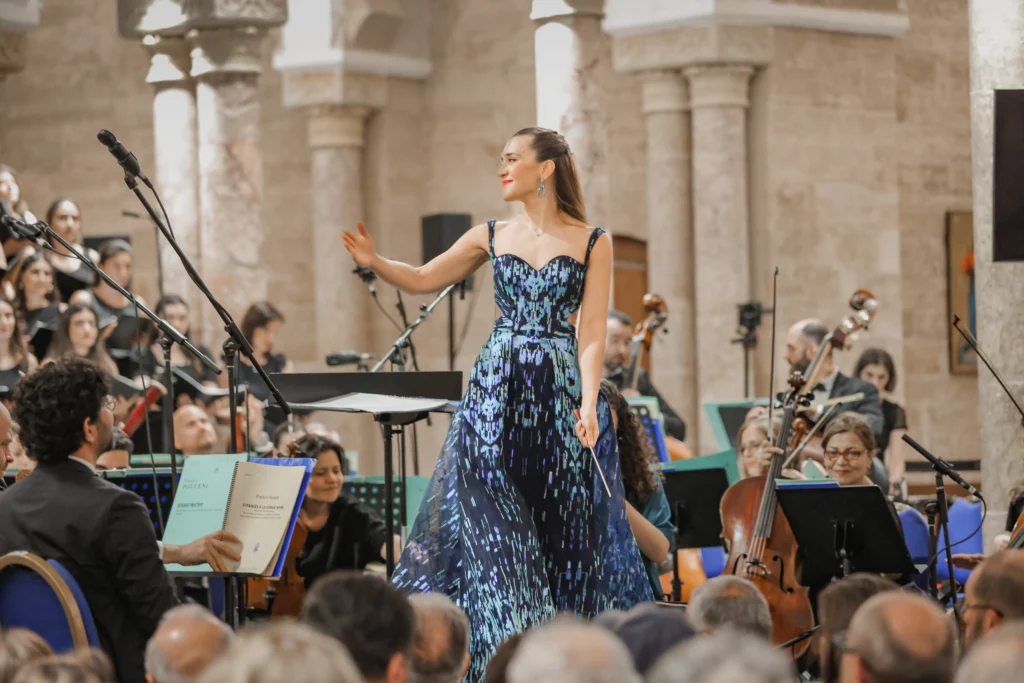
Yasmina Sabbah, Orchestrating the Future of Middle Eastern Music By Bella Brown Music entered Yasmina Sabbah’s life before she ever learned to name it as a profession. As a child, she instinctively gathered her cousins each summer to stage homemade musicals, writing scripts, teaching songs, directing scenes, and proudly hanging posters around the house. What felt like play at the time was already a glimpse of her future. She did not choose music as a path so much as recognize it as something that had always been there. Those early moments grew into years of rigorous study and frequent performances, shaping a deep musical discipline from a young age. Concerts became a constant, and learning became immersive. Yet clarity arrived later, during her undergraduate years, when she was given the chance to conduct a children’s choir. Standing in front of those voices, guiding sound and emotion into harmony, something clicked. Conducting revealed itself not just as a skill, but as a purpose. That realization led her to pursue a master’s degree in conducting at the University of Cambridge, laying the groundwork for a career rooted in both excellence and responsibility. Leading orchestras as a woman in the Middle East has required more than technical mastery. The challenges, she notes, rarely announce themselves openly. While there is visible enthusiasm for female leadership, resistance often appears in subtler ways. Trust must be earned repeatedly, instructions are sometimes questioned more than they should be, and progress can feel slower despite equal qualifications. Rather than allowing this to harden her, Sabbah learned patience. She learned resilience. Above all, she learned to let the music speak. Excellence, she believes, has a way of dissolving doubt when words fail. Music, for Sabbah, has never existed in isolation. It is a bridge between cultures, histories, and identities. She speaks often of the Middle East’s strong sense of self, shaped by a rich heritage and an openness to the world. That blend informs everything she does. Her work celebrates identity without closing doors, drawing from many traditions while honoring their roots. Each performance becomes a meeting point, where differences do not compete but coexist. Teaching and mentorship sit at the heart of her mission. In a region where music is still sometimes dismissed as a hobby, she works to expand how it is perceived by students and parents alike. She creates projects, concerts, and opportunities even amid difficult circumstances, particularly during Lebanon’s recent years of instability. Her guidance goes beyond technique. She teaches resilience, adaptability, and the understanding that music can be both a livelihood and a lifelong calling. Her approach to programming reflects that same balance between structure and curiosity. She carefully curates diverse repertoires across seasons, allowing musicians and audiences to grow together. Rarely performed works sit alongside new commissions and original arrangements. Each project begins with a clear vision, followed by deep study and thoughtful rehearsal. Exploration is encouraged, reassessment is welcomed, and innovation is grounded in understanding. When working with fusion or world music, she takes time to study each style closely, believing authenticity is the foundation of creativity. Leading an ensemble, she believes, is as much about emotional awareness as it is about precision. Music cannot thrive in tension or fear. She fosters environments built on trust, positivity, and mutual respect. By understanding the energy of each group and adapting her leadership accordingly, she allows individual expression to strengthen the collective sound rather than compete with it. Preserving Arab musical heritage remains a central commitment. Sabbah is deeply invested in integrating traditional Arab elements into orchestral and choral settings without diluting their essence. She works closely with composers and arrangers to explore quarter tones, Arabic vocal techniques, and the dialogue between Eastern instruments and Western structures. Her current projects reflect a belief that heritage is not something to protect behind glass, but something to keep alive through evolution. Certain performances stand out as defining moments. Conducting the Lebanese Philharmonic and USJ Choir in Vaughan Williams’ Dona Nobis Pacem carried particular weight, unfolding against the backdrop of national uncertainty and collective endurance. Collaborating with the Firdaus Orchestra at Expo brought her into conversation with global artists and expanded her musical language. Her Symphonic Fusion concerts continue to push boundaries, while conducting the New Year’s Eve performance at the Burj Khalifa remains a powerful symbol of music’s ability to transcend physical and traditional limits. Looking forward, she sees immense promise in the region’s young musicians. Their ability to move fluidly between Western and Oriental repertoires positions them uniquely on the world stage. Yet talent alone is not enough. Institutions, she believes, play a vital role in providing support, platforms, and continuity, allowing this potential to fully unfold. Music is inseparable from her life. It has shaped her relationships, guided her through joy and difficulty, and given her a way to communicate beyond words. It is not simply what she does, but how she understands the world. Yasmina Sabbah’s legacy is still being written, not only in performances, but in the spaces she opens for others. Through mentorship, preservation, and fearless creativity, she continues to shape the future of Middle Eastern music. Each movement of her baton carries intention, linking past and present, identity and innovation. Her work stands as a reminder that music is not just sound, but memory, possibility, and shared humanity.

Courtney Brandt, Navigating the Soul and Substance of Dubai’s Dining Renaissance

Courtney Brandt, Navigating the Soul and Substance of Dubai’s Dining Renaissance

Courtney Brandt, Navigating the Soul and Substance of Dubai’s Dining Renaissance By Jane Stevens Dubai’s dining story is not written only on menus or measured by opening nights. It lives in kitchens, in late services, in quiet conversations between chefs and those who truly listen. Courtney Brandt has spent more than a decade doing exactly that. Often seated away from the spotlight with a notebook instead of a phone, she has become one of the city’s most trusted food writers by choosing observation over performance. Her journey from novelist to culinary chronicler mirrors the evolution of Dubai itself, a city that learned to value depth as much as scale. Her turning point came far from the Gulf. A visit to Noma in Copenhagen in 2013 reshaped the way she understood food. She arrived as a curious traveler inspired by the storytelling of Anthony Bourdain, not yet a critic with an agenda. That single meal revealed food as narrative, emotion, and identity rather than indulgence. Returning to the UAE, she knew the direction she wanted to take. By 2016, Eat This Eat That was born, not as a brand chasing attention, but as a platform grounded in substance, patience, and respect for craft. Entering Dubai’s crowded food media scene felt daunting at first. Influencers and critics already dominated the conversation, each racing to be first at the newest opening. Courtney chose a different pace. She focused on consistency and relationships, understanding early that Dubai is built on trust. Kitchens remembered her not for sharp headlines, but for thoughtful dialogue and genuine curiosity. Over time, as local concepts matured and global chefs began calling the city home, her voice remained steady. She never tried to be everywhere. She tried to be honest. The pandemic marked a quiet but profound shift in her philosophy. Watching the hospitality industry struggle brought clarity to her role. Public criticism suddenly felt hollow in the face of human effort and vulnerability. She came to believe that meaningful critique belongs behind closed doors. Honest feedback, when invited, could help a restaurant grow. Public takedowns rarely did. This approach was not about lowering standards, but about raising professionalism. Chefs came to trust her because they knew her intention was never damage, only dialogue. What draws Courtney to a restaurant has little to do with décor or spectacle. She looks for the person behind the plate. A chef driven by conviction, curiosity, and personal history is what excites her most. Dining, to her, is a conversation. She encourages guests to be part of that exchange, to support restaurants not just with spending, but with presence, advocacy, and respect. Her writing consistently brings the human story forward, reminding readers that restaurants are built by people, not algorithms. The digital landscape has grown louder with each passing year. By 2026, every dish risks becoming content before it becomes a memory. Courtney recognizes both the opportunity and the distortion this creates. Viral moments may fill seats, but they rarely build loyalty. Trends come and go, but substance lasts. She cautions restaurants against reshaping themselves for fleeting attention, urging them instead to focus on the experience that unfolds once the phone is put down. Longevity, she believes, is born at the table, not on a screen. Selectivity has become essential to her work. She no longer chases volume. Dining out once or twice a week allows her to engage fully with each experience. Her interests have naturally gravitated toward fine dining, locally developed concepts, and women-led kitchens. She is intentional about where she lends her voice, knowing that attention has weight. By choosing carefully, she ensures that her support is meaningful rather than diluted. Years of immersion have also given her insight into the realities behind the scenes. She understands the financial risk, the long planning cycles, and the emotional toll that come with opening a restaurant. This perspective fuels her call for greater transparency, especially around ownership structures in Dubai. When diners understand what it truly takes to bring a concept to life, judgment softens and appreciation deepens. A restaurant becomes not just a place to eat, but the result of someone’s ambition and belief. Looking ahead, Courtney is most excited by the potential of Emirati fine dining. Global names will always have a place in Dubai, but she sees the future in locally rooted stories told with confidence and creativity. Chefs who translate heritage into contemporary expression represent the next chapter of the city’s culinary identity. She is ready to support that movement, to witness how local voices shape what Dubai tastes like to the world. At the heart of her journey lies a simple principle. Authenticity endures. Voices last when they are not borrowed or exaggerated. Courtney’s relevance has never come from chasing what is new, but from staying true to her values in a city that constantly reinvents itself. As kitchens across Dubai come alive each evening, she continues her quiet work, searching not just for a good meal, but for meaning, connection, and the soul of a city told one plate at a time.

The Classic Traditional Sweet Present at Festivals Throughout the Emirates, Inside the Heart and Soul of the Luqaimat

The Classic Traditional Sweet Present at Festivals Throughout the Emirates, Inside the Heart and Soul of the Luqaimat

The Classic Traditional Sweet Present at Festivals Throughout the Emirates, Inside the Heart and Soul of the Luqaimat By Hafsa Qadeer The Classic Traditional Sweet Present at Festivals Throughout the Emirates, Inside the Heart and Soul of the LuqaimatIf you find yourself wandering through the labyrinthine alleyways of the Al Hosn Festival in Abu Dhabi, or navigating the vibrant, neon-lit stalls of Global Village in Dubai, your senses will inevitably be hijacked by a singular, intoxicating aroma. It is a fragrance that defies the arid desert air, a heavy, sweet perfume of toasted saffron, the sharp, medicinal warmth of green cardamom, and the deep, caramelized musk of date syrup. Follow that scent to its source, and you will find the true heartbeat of Emirati hospitality. There, usually presided over by a group of formidable women whose hands move with the rhythmic precision of a master percussionist, sits a wide, bubbling vat of oil. With a flick of the wrist, small spheres of dough are launched into the heat. They bob, they spin, and they transform from pale ivory to a majestic, burnished gold. This is the Luqaimat. To the uninitiated, it is merely a fried dough ball. To the Emirati, it is a vessel of history, a symbol of survival, and the undisputed king of the festival table. The Ancient Pedigree of a Desert Delight To truly understand Luqaimat is to understand the history of the Silk Road and the profound culinary cross-pollination of the Middle East. While we claim it today as a quintessential Emirati treasure, its DNA stretches back to the 13th-century Abbasid Caliphate. Known in classical Arabic as Luqmat al-Qadi, translated literally as “The Judge’s Morsel, it was said to be so delicious that a judge, upon tasting one, would find his mood instantly lightened, perhaps even influencing a favorable verdict in the courts of old Baghdad. As the recipe traveled along the trade routes, it found a permanent home in the coastal and desert settlements of the Trucial States. In the pre-union days, before the skyscrapers of Dubai pierced the clouds and the oil wealth transformed the landscape, sweetness was a luxury of the highest order. In the harsh environment of the desert or the demanding, salt-crusted life of a pearl diver, calories were more than just sustenance; they were precious energy. The Luqaimat represented a celebration of rare and imported ingredients. Flour, yeast, and oil were staples, but the addition of saffron, plucked from the crocus flowers of the Iranian plateau, and cardamom from the Malabar Coast of India spoke of a nation that sat at the crossroads of global maritime trade. Today, as the United Arab Emirates celebrates its status as a global hub of modernization, the Luqaimat remains an anchor. It is the culinary glue that binds the generation of the Bedouins, who remembers the silence of the dunes, to the generation of the digital age, who navigates the heights of the Burj Khalifa. A Masterclass in Manual Dexterity There is a specific, mesmerizing theater to the preparation of Luqaimat that no modern machinery or industrial assembly line can replicate. At any cultural festival, the Luqaimat station is the primary attraction, often drawing longer queues than the modern food trucks parked nearby. The women who man these stations are the keepers of the national flame. Watching them is a lesson in fluid dynamics and human dexterity. The batter is notoriously difficult to handle; it must be elastic enough to stretch but firm enough to hold a sphere. The cook dips her left hand into a bowl of water to prevent sticking, then grabs a fistful of the sticky, fermented dough. With a calibrated squeeze of her thumb and forefinger, she pops a perfect sphere into the shimmering oil. It happens in milliseconds, a rapid-fire performance of rhythmic movement that fills the fryer with dozens of identical spheres in under a minute. As they fry, they are constantly agitated with a long-handled slotted spoon. This constant movement is the secret to their architecture; it ensures the ball is cooked evenly on all sides, resulting in a shell that is thin and glass-crisp, while the interior remains a soft, yeasty honeycomb of air. This texture is the hallmark of a master. A Luqaimat that is too dense is a failure; one that is too oily is a tragedy. It must be a morsel in every sense, a light, ephemeral bite that disappears almost as soon as it hits the tongue, leaving behind only the lingering warmth of the spices. The Holy Trinity of Aromatics What separates the Emirati Luqaimat from its global cousins, the Greek Loukoumades, the Turkish Lokma, or even the Indian Gulab Jamun, is the unapologetic boldness of its finishing. While other cultures might use a clear honey syrup or a simple dusting of powdered sugar, the Emirati version is rooted in the “Tree of Life.” Once the golden balls are drained of excess oil, they are not merely drizzled; they are baptized in Dibs. This is a thick, viscous, and intensely dark syrup made from boiled-down dates. It is the black gold of the Emirati kitchen, tasting of dark chocolate, molasses, and sun-drenched fruit. Unlike honey, which sits on the surface, the warm Dibs seeps slightly into the fragile crust, creating a tacky, rich coating that demands the diner abandon all pretense of using forks. The date palm has provided for the people of this region for millennia, offering shade, building materials, and life-sustaining fruit. By using Dibs, the Luqaimat becomes an extension of the land itself. The final act is a generous shower of toasted white sesame seeds. They provide a nutty counterpoint to the deep sweetness of the dates and a tiny, architectural crunch that complements the snap of the dough. When served alongside Gahwa, the bitter, cardamom-infused Arabic coffee, the balance is perfect. The bitterness of the coffee cleanses the palate, making the next sweet bite feel as fresh as the first. The Pulse of the Festival The

The Digital Dirham and the Total Transformation of Your Monthly Spending

The Digital Dirham and the Total Transformation of Your Monthly Spending

The Digital Dirham and the Total Transformation of Your Monthly Spending By Hafsa Qadeer There is a specific, quiet tension that defines the final forty-eight hours of the month for most residents of the United Arab Emirates. It is the period when the spreadsheet of life, including school fees, the DEWA bill, the mortgage, and the inevitable costs of the weekend’s social obligations, undergoes a frantic reconciliation. Historically, this has been a manual labor of the mind, a series of logins, OTP codes, and the anxious tracking of “pending” transactions that seem to hover in the digital ether of commercial banking for days. But as we move through the dawn of 2026, a silent revolution is rendering this anxiety obsolete. The Digital Dirham, the UAE’s Central Bank Digital Currency (CBDC), has transitioned from the conceptual laboratory to the pockets of the public, and in doing so, it is fundamentally reconfiguring the DNA of our daily existence. To walk down Sheikh Zayed Road today is to witness a nation in the midst of a sovereign metamorphosis. The transition to a cashless society is an old headline, but what we are witnessing now is something far more profound than the death of paper notes. We are witnessing the birth of “Smart Money.” This is not the speculative, volatile world of private cryptocurrencies, nor is it the mere “digital representation” of money offered by traditional banks.  The Digital Dirham is a direct liability of the Central Bank of the UAE, a digital extension of the state itself, and its integration into the retail economy is arguably the most significant economic pivot since the unification of the Emirates. The catalyst for this transformation was the Central Bank’s “Financial Infrastructure Transformation” (FIT) program, a multi-year roadmap that sought to bridge the gap between traditional fiat and the future of decentralized finance. For the average expatriate or Emirati citizen, the technical jargon of “Distributed Ledger Technology” (DLT) or “Multi-CBDC Bridges” matters less than the practical reality of the “Monthly Spend.” In the traditional banking model, your money is essentially a promise from a private institution. In the Digital Dirham era, your money is a programmable asset that possesses its own intelligence. The Rise of the Programmable Household The most radical departure from the old world lies in the concept of programmability. Until now, money was “dumb.” A five-hundred-dirham note did not know if it was being spent on a child’s textbook or a luxury dinner; it was a passive medium of exchange. The Digital Dirham, however, can be embedded with “Smart Contracts”, automated protocols that execute payments only when specific, verified conditions are met. Imagine, for instance, the complex ecosystem of a household’s monthly expenses. Under the new regime, a resident can “tag” portions of their salary at the moment of deposit. You are no longer just putting money into a savings account; you are programming your currency to prioritize your survival. A smart contract can be set so that the moment your salary is issued in Digital Dirhams, the exact portion required for your rent is “earmarked.” This money cannot be accidentally spent on a spontaneous sale at the mall or a high-end delivery app. It sits in a state of digital readiness, programmed to release itself to the landlord’s wallet the millisecond the 1st of the month arrives, provided the Ejari system confirms the lease is still valid. This shifts the burden of financial discipline from the individual to the infrastructure. For the thousands of families who live paycheck to paycheck, this “automated guardrail” provides a level of financial security that was previously the province of those who could afford private wealth managers. The Digital Dirham effectively democratizes sophisticated financial planning, baking it into the very currency we use to buy bread. The Liquidation of Time Beyond the domestic budget, the Digital Dirham is tackling the “time tax” that has plagued global commerce for centuries. In the legacy banking system, a transaction is rarely instantaneous, despite what the screen on your phone might say. When you tap a card at a merchant in Dubai Mall, a complex web of intermediaries, acquirers, processors, card schemes, and issuing banks begins a multi-day ritual of verification and settlement. During this time, the money is in a state of limbo. The Digital Dirham operates on a peer-to-peer basis. When you pay for a service, the settlement is the transaction. There is no clearinghouse. There is no three-day wait for a merchant to see the funds in their account. This “instantaneity” has profound micro-economic consequences. For the small business owner in a Sharjah industrial area, the ability to receive payment in real-time means they can pay their suppliers in real-time, which in turn allows them to negotiate better rates, ultimately lowering the cost of goods for the consumer. We are seeing the total liquidation of “float” time, a change that injects a massive burst of velocity into the national economy. The mBridge Revolution Perhaps no segment of the UAE population feels the impact of this transformation more acutely than the expatriate workforce. For decades, the “Remittance Ritual” has been a pillar of life here. Every month, billions of dirhams are sent across borders to families in India, Pakistan, Egypt, the Philippines, and beyond. Historically, this process has been a gauntlet of exchange house fees and the sluggish “correspondent banking” network, where money hops through multiple international banks, losing a small percentage of its value at every stop. The UAE’s leadership in Project mBridge, a platform that connects the CBDCs of multiple nations, is the wrecking ball that is finally dismantling this antiquated system. By using the Digital Dirham, a worker can now send funds home with the same ease as sending a text message. Because the central banks of these participating nations are connected directly through a shared ledger, the “correspondent” middleman is eliminated. In early 2026, the data is already showing the results. The cost of sending remittances has plummeted, and the time of arrival has moved from

Eid Al-Itihad Uae National Day

Eid Al-Itihad Uae National Day, Honouring The Past, Uniting The Present, And Imagining A Future Built On Hope & Togetherness

Eid al-Itihad The UAE’s National Day Unity, Culture and A Promise of Prosperity Honouring the past, uniting the present, and imagining a future built on hope and togetherness By Janhavi Gusani Every December 2 the United Arab Emirates pauses to celebrate a story that reads like a modern fable: seven emirates  each with its own history, leadership and traditions choosing union over fragmentation and building, within a single lifetime, one of the most dynamic countries in the world. National Day is both a commemoration and a living manifesto: a ritual that connects the UAE’s foundational values to the ambitions of a future built on tolerance, safety and shared prosperity. As the dawn of 2nd December nears, the nation is wrapped in pride, patriotism, and the vibrant colours of its flag. Eid Al Ittihad is more than a national holiday, it is a commemoration of the UAE’s history, its vision, and its enduring resilience. From the dunes of the Arabian Gulf to the wings of aircraft soaring across the sky, the country prepares to celebrate 54 years of unity this year. A union born of pragmatic idealism The formation of the UAE in 1971 was a practical, visionary response to the needs of a small, disparate region at a moment of rapid change. That strategic choice to bind together for defense, development and dignity remains central to National Day’s meaning. What started as a pragmatic union has been enshrined as a national ethic: collective responsibility, sensible governance and an emphasis on long-term nation-building.  The National celebration starts right from a month ahead as the country celebrates Flag Day on November 3rd. This occasion was established by H.H Sheikh Mohammed bin Rashid Al Maktoum in 2013 as a mark of Sheikh Khalifa bin Zayed al Nahyan’s presidential rise (in 2004) – by quoting it as a “renewed commitment to the values of the UAE, along with a sense of belonging, loyalty and gratitude to the homeland and its leaders” Core values, the moral code behind the momentum At the heart of the UAE’s public narrative are a handful of repeated, powerful values: generosity, tolerance, dignity and service. These are not abstract slogans. The UAE’s founding generation explicitly anchored policy in moral maxims  notably the words of the late Sheikh Zayed bin Sultan Al Nahyan, who urged that “to treat every person, no matter what his creed or race, as a special soul, is a mark of Islam.” Those lines have been translated into institutions and public programmes that prize inclusion and community welfare. Multiculturalism, the city-state effect The UAE’s society is unusually cosmopolitan. Official figures and long-running demographic trends show the country hosts residents from more than 200 nationalities, and expatriates make up the overwhelming majority of residents a fact that shapes everything from festivals to cuisine to the labour market. Rather than flat-line assimilation, the UAE cultivates a model of negotiated multiculturalism: public celebration of diverse cultures alongside civic initiatives that promote workplace equality, religious freedom and cross-cultural exchange. National Day has become an occasion to showcase that mosaic Emirati heritage alongside Indian, Filipino, Egyptian, Pakistani, European and African traditions that are all woven into daily life. Culture and identity, rooted innovation The UAE’s cultural scene during National Day is instructive: traditional arts (poetry, falconry, pearl-diving stories, majlis gatherings) are deliberately staged alongside contemporary music, large-scale public art, and avant-garde design. This duality — rooted tradition plus bold innovation is intentionally cultivated by national cultural strategies and festivals. It frames the UAE not as a place that abandoned the past for the future, but as one that uses its past as a platform for creative reinvention. Prosperity with an eye to sustainability Economic success has been central to the UAE’s post-1971 story. The government’s national strategies from Vision 2021 to “We the UAE 2031” and the Centennial 2071 roadmap explicitly link prosperity to diversification, talent attraction, and high-value knowledge sectors. The message of National Day is therefore both celebratory and aspirational: to honor what has been built, and to articulate the economic targets that will define the next decades. These policy goals double GDP, stronger innovation ecosystems, and a global-talent magnet shape the public conversation around wealth, opportunity and inclusion. Safety and trust,  an asset for everyday life Public safety and order are often taken for granted by residents and visitors alike, but they are a deliberate pillar of statecraft. Recent international indices show notable improvements in the UAE’s peacefulness and safety scores in the past few years, reflecting investments in policing, diplomacy and crisis preparedness. Safe streets, predictable services and stable institutions are part of what makes the UAE an attractive place to live, work and invest and that sense of security becomes more palpable during national festivities, when public spaces fill with families and visitors. Love and belonging, how National Day feels on the ground On the ground, National Day’s aesthetic is intimate and exuberant. Flags drape office towers and balconies; children learn national songs in school; food festivals and Emirati hospitality create moments of cross-cultural exchange. The tone is one of affection rather than performative patriotism: a civic love that’s nurtured by visible public goods (healthcare, transport, public parks) and the rituals that connect people to the state and to one another. A day that builds the year National Day is not merely a public holiday. It is a calibrated civic ritual that performs the UAE’s identity back to itself: a blend of unity and plurality, heritage and invention, stability and ambition. For readers of Magnav Emirates, the day is a reminder that the UAE’s social contract has been repeatedly renewed through legislation, through culture, and most importantly, through everyday acts of hospitality and cooperation. As the country stages ever larger visions for its future, National Day will continue to be the moment when those visions are both celebrated and translated into the small, practical choices that actually build a society.

Desert After Dark, Uae Residents Celebrate Winter Nightlife

Desert After Dark, Uae Residents Celebrate Winter Nightlife

Desert After Dark, Uae Residents Celebrate Winter Nightlife By Sudipa Roy Fashion in Dubai moves with a pace that mirrors the city itself, restless, ambitious, always reaching forward. Yet within this constant motion, a few creators choose a quieter rhythm. They design from emotion rather than urgency and shape relevance instead of chasing it. Among these rare visionaries is Chathuri Samaraweera, the founder and creative director of ANAYA, a brand rooted not merely in fabric and form but in memory, introspection, and the belief that a woman’s inner world is the most powerful source of design. ANAYA emerged quietly and intuitively, yet today it carries one of the most distinct identities in the Middle Eastern fashion landscape. Its creations are soft yet defined, timeless yet modern, intimate yet global. At the center of it stands a woman who views fashion not as an industry to keep up with, but as an art form to feel. Chathuri’s story begins long before she ever touched chiffon or sculpted satin. Her childhood unfolded inside her father’s art gallery, a place where towering sculptures, textured canvases, paintbrushes, and palettes formed the backdrop of her earliest memories. While other children played with toys, she absorbed colors, shapes, shadows, and the emotional pulse of artwork. Art was not just a profession in the family, it was the air she breathed. The brand’s name came years later, inspired by her daughter, ANAYA, a tribute not born from strategy but from love, symbolizing the emotional continuity passed down from her father to her, and now from her to her child. This sense of meaning shapes every decision within the brand. To Chathuri, ANAYA began with a simple vision, to celebrate the strength and softness within every woman and create pieces that feel like an extension of her inner light. That intention remains the brand’s guiding force. ANAYA’s signature lies in its devotion to emotion before structure. Chathuri designs as though fashion is a language for translating feeling into silhouette. She does not pursue trends or the fleeting aesthetics of social media, instead, she draws from lived moments, quiet memories, underwater stillness, architectural forms, and the subtle poetry of nature. She speaks often of the organic curves of Gaudí’s designs, the shadows that dance across textured stone, the peaceful hum of the Balearic Islands, the slow sway of Posidonia beneath the sea’s surface, and the cultural textures she discovers through travel. For her, inspiration is a sensory imprint that lingers until it takes shape in fabric. This approach gives ANAYA its unmistakable softness, a softness that is not fragile, but confidently feminine. In Dubai’s competitive fashion scene, many struggle to balance couture artistry with practical ready-to-wear, yet ANAYA has found harmony between the two. The key lies in its understanding of luxury. For Chathuri, luxury isn’t defined by extravagance but by intention. Whether a gown requires hundreds of hours of handwork or a ready-to-wear piece is sculpted with clean minimalism, the craftsmanship holds the same devotion. ANAYA’s lines may simplify, but its artistry does not. Subtle architecture, refined detailing, and intentional cuts shape pieces that are both wearable and poetic, allowing the brand to remain accessible without compromising its couture soul. Dubai Design District serves as ANAYA’s creative home, a place where art, fashion, architecture, and innovation intertwine. The multicultural energy of D3 mirrors the identity of the brand, hybrid, evolving, and globally attuned. The environment pushes the brand creatively and strategically, offering exposure to international markets and collaborative opportunities. From this district, ANAYA has grown from a local label into a name recognized across the global fashion world. Sustainability runs through the brand like a quiet but unbreakable thread. ANAYA embraces sustainability not as marketing but as responsibility. Made-to-order processes reduce waste, local artisans preserve and advance craftsmanship, high-quality materials ensure longevity, and designs are created to outlive seasons and trends. Couture itself is a practice in slow, intentional creation, and ANAYA leans deeply into that philosophy. Movement inspires much of Chathuri’s design process. She is drawn to fluidity, the shifting of ocean waves, the gentle dance of marine plants, the shimmer of light across water, the way fabric can echo breath. Many of ANAYA’s gowns appear to float, their layers lifting like currents, their embellishments shimmering softly rather than shining sharply. The Balearic Dreaming collection captures this most vividly. Born from hours spent underwater watching Posidonia sway in perfect silence, it embodies the serenity and poetry of the natural world. While ANAYA’s ready-to-wear pieces expand the brand’s reach, its bespoke creations reveal its soul. Chathuri approaches custom design as a dialogue. Rather than beginning with sketches, she begins with conversation, who the woman is, what she loves, how she wants to feel. The design then evolves through sketches, fittings, and sculpted adjustments until the final piece reflects both the client’s identity and ANAYA’s aesthetic. For Chathuri, the ultimate success of a custom gown lies in honoring the woman’s story. When a client sees her truest self reflected in the finished creation, the process becomes a deeply emotional connection. As global attention increasingly turns toward Middle Eastern designers, ANAYA stands at the forefront of this cultural moment. Chathuri’s work carries the region’s grace, softness, and femininity, fused with the structure of European couture and a universal contemporary appeal. With participation in Paris Fashion Week and a growing international clientele, ANAYA demonstrates that Middle Eastern fashion can be both rooted in cultural sensitivity and boldly global. Even as technology evolves within the fashion world, AI-driven designs, virtual fittings, automated pattern systems, Chathuri maintains a devotion to human connection. She still sketches by hand and shapes fabric physically, trusting that no algorithm can replicate the emotional intuition required in couture. Technology supports the brand, but it never replaces the artist’s touch. Each woman wears a garment differently, and understanding that requires presence, observation, and empathy. The horizon for ANAYA is expanding. The brand is moving toward global stockists across Europe, Asia, and the Middle East. Discussions for celebrity partnerships are

Holding A Fleeting Moment Inside Duette Studio’s Ephemeral Petunia Garden

Holding A Fleeting Moment Inside Duette Studio’s Ephemeral Petunia Garden

Holding A Fleeting Moment Inside Duette Studio’s Ephemeral Petunia Garden By Sara Hammoud In a city that reshapes itself almost weekly, where glass towers rise and dissolve into the desert glare, Duette Studio has crafted a moment meant to slow people down. Founded by husband and wife duo Rahat Kunakunova and Fuad Ali, the Dubai-based experiential design lab is gaining recognition for installations that blend material poetry with technical clarity. Their latest work, Ephemeral Petunia Garden, debuted during Dubai Design Week, an illuminated sculptural landscape inspired by a flower most residents overlook. “We kept coming back to the petunia,” Rahat says. “It’s humble, it blooms in winter, and then disappears. We wanted to hold that fleeting moment in place.” The installation, a field of reflective stems crowned with stainless steel mesh petals, shifts from serene to cinematic as day turns to night. In the late morning sun, mirrored surfaces fold the city into the piece. “Daylight invites calm curiosity,” Rahat explains. “People notice reflections, edges, and how the sky drifts across the base.” After sunset, the sculpture glows from within, each petal lit with low-energy LEDs. “At night, it becomes communal,” Ali adds. “A place to gather, take photos, or simply pause. Two moods, one narrative.” The project moved quickly from concept to installation, taking just eight to ten weeks. Modular stems, hand-finished petals, and flat-packable components allowed the team to fabricate locally and install with remarkable efficiency. Built for travel, the garden is already preparing for its next location. Rahat and Ali describe their working relationship as an ongoing conversation, shaped by shared life and complementary strengths. “We bring one vision through two lenses,” Rahat says. She leads narrative, lighting, and material language, while Ali focuses on systems design, production, and audience flow. “We prototype fast, critique honestly, and keep one question as our north star, How will this live with people?” Inside Duette Studio, they have created a culture rooted in psychological safety, clarity, and kindness. Debate stays separate from delivery, disagreements are private, alignment is public. Daily stand-ups keep momentum, open pin-ups encourage transparent critique, and each project closes with a candid debrief. Roles are clearly defined, and mentorship is woven into every workstream. “Younger designers grow alongside seasoned fabricators,” Rahat notes. “It keeps the studio human first while the work stays brave.” Duette Studio sits at the intersection of art, fashion, and spatial design. “Fashion gives us precision and pacing,” Rahat says. “Art gives us research and risk. Spatial design gives us flow, safety, and operations.” This cross-disciplinary approach enables the duo to transform brand values into lived experiences, installations that perform emotionally and practically long after they debut. Their signature is subtle but recognizable, light as material, memory as theme, and clarity in movement. “We want pieces that feel generous,” Ali says. “Easy to enter, hard to forget.” Following Design Week, Ephemeral Petunia Garden is set to tour internationally. Its modular system allows for new scales, new choreographies, and new contexts. The pair is also developing a collectible “Miniature Edition” for homes and studios, a way for the story to continue in more intimate environments. Sustainability, particularly in the UAE context, is central to their process. They prioritize local fabrication, re-skinning for new narratives, low-energy lighting, and avoiding wasteful one-offs. “Clients and cities are asking for longevity,” Ali says. “We are committed to evolving platforms, not temporary spectacles.” Despite their forward-looking practice, Rahat and Ali’s philosophy remains grounded in the present, specifically in the people around them. “Our inspiration comes from our surroundings, our home, friends, and community,” Rahat says. “We are inspired by the young creatives and ambitious youth of Dubai.” Their long-term ambition reaches beyond installations. They aim to help build an ecosystem of creative and cultural opportunity, one that circulates talent, resources, and growth within the community. “Dubai is writing its own cultural story,” Ali reflects. “We are proud to contribute to it through art, design, and the creative economy.” As the petals of Ephemeral Petunia Garden glow softly against the Dubai night, they embody exactly what Duette Studio stands for, a fleeting moment, held just long enough for people to draw close, and remember.

Architecture of the UAE

The Architecture of the UAE, A Journey Through Arabian Nights Reimagined for the Modern Era

The Architecture of the UAEA Journey Through Arabian Nights Reimagined for the Modern Era By Janhavi Gusani The evolution of the United Arab Emirates, from sands to skylines, is more than an architectural transformation. It is a symphony of heritage and innovation, a living narrative where the poetry of the past converses with the promise of the future. The UAE’s landscape, once defined by dunes and desert winds, now rises in shimmering glass, marble, and steel, yet still hums with the spirit of the desert that shaped it. This is the land of visionaries who dared to dream amid the vast emptiness, turning grains of sand into foundations of global marvels. The desert has always been more than a backdrop here, it is a teacher, a muse, and a silent witness to the endurance and imagination of its people. Each shifting dune carries stories of resilience, patience, and unity, lessons that now echo through the corridors of contemporary Emirati architecture. Before the skyscrapers, there was sand. Before innovation, there was survival. The architecture of the UAE is rooted in its desert identity, one that celebrates simplicity, balance, and connection to nature. The ancient Bedouin wisdom of building with harmony, not against the environment, continues to shape the region’s design philosophy. Traditional Emirati architecture was always sustainable at heart. Homes were oriented to capture the wind, shaded by courtyards and cooled by barjeel wind towers, ingenious structures that predated the modern concept of eco-design by centuries. These wind towers were not merely practical, they embodied an understanding of coexistence between man and nature.  Today, the principles of those early designs breathe within the glass walls of modern villas and the curves of cultural centers. Contemporary architects reinterpret the essence of those wind towers, courtyards, and mashrabiyas to suit modern lifestyles, preserving privacy, inviting light, and fostering community. The architecture of the UAE does not merely preserve identity, it celebrates it on a global stage. From Dubai’s futuristic skyline to Sharjah’s artistic revival and Abu Dhabi’s cultural grandeur, every emirate contributes a chapter to the nation’s architectural story. Each building tells a tale of collaboration, where Emirati tradition meets international artistry.  Materials are sourced from multiple continents, and ideas converge from diverse minds, yet the soul remains profoundly local. The Sheikh Zayed Grand Mosque in Abu Dhabi stands as a radiant embodiment of this philosophy. Constructed by artisans from around the world, it merges influences from Mughal, Persian, and Moorish architecture, uniting over 80 global cultures under one dome of faith and harmony. Its marble courtyards and delicate mosaics are not merely decorative, they narrate the story of a nation built on coexistence. Perhaps no event symbolized the UAE’s architectural narrative better than Expo 2020 Dubai, a celebration of innovation, culture, and human connection. The site itself was an architectural wonder, designed as a city within a city. Each pavilion became a national identity encapsulated in design, from Saudi Arabia’s gravity-defying facade to the Netherlands’ self-sustaining biotope and Singapore’s futuristic vertical gardens.  The Expo was more than a showcase of architecture, it was a living dialogue on how design can drive progress and sustainability. It was the physical manifestation of the UAE’s motto, “Connecting Minds, Creating the Future.” In a world rapidly racing toward digital and artificial intelligence-driven futures, the UAE’s architects are grounding innovation in sustainability. Masdar City, nestled in the heart of the desert, stands as a beacon of this vision.  It draws from the vernacular designs of old Emirati settlements, narrow streets that channel wind, shaded walkways that reduce heat, and mashrabiyas that filter sunlight into patterned serenity. Masdar City is a triumph of mindful engineering. Built with recycled steel and aluminum, powered by renewable energy, and designed for minimal carbon impact, it redefines what it means to build for tomorrow. Here, technology and tradition cohabit, where smart infrastructure coexists with the timeless values of balance and respect for nature. It is not just a city, but a statement, a message that sustainability need not come at the cost of culture. It is the UAE’s architectural poetry written in the language of the future. While the nation’s gaze is fixed firmly on innovation, its heart beats with reverence for heritage. The Sharjah Art Foundation is a shining example of this delicate balance. What were once historical buildings in the old Al Mureijah district have been transformed into dynamic cultural spaces. The Foundation restores rather than replaces, turning courtyards into galleries and wind-towered homes into sanctuaries of creativity. Sharjah’s approach is not to erase history, but to inhabit it, allowing art, performance, and dialogue to thrive within structures that once witnessed the everyday rhythm of Emirati life. It is architecture as memory, revived, not replaced. Few architectural works embody the soul of the UAE like the Louvre Abu Dhabi. Designed by Jean Nouvel, the museum’s geometric dome is inspired by palm fronds woven into traditional arish roofs. As sunlight filters through its intricate lattice, it creates a mesmerizing rain of light, reminiscent of rays piercing through date palms in an oasis. This interplay between nature, culture, and science turns architecture into a sensory experience, a modern ode to the poetry of the desert. Equally striking is Dubai’s Museum of the Future, a structure that appears as if suspended between earth and sky. Shaped like an eye gazing into tomorrow, its facade is engraved with Arabic calligraphy quoting the words of His Highness Sheikh Mohammed bin Rashid Al Maktoum on innovation and vision. The building’s void, its hollow center, symbolizes the unknown future humanity is yet to shape. Every curve, every word inscribed, transforms this museum into a living metaphor of the UAE’s identity, bold, forward-looking, and deeply rooted in its language and legacy. The UAE’s architectural narrative extends beyond glass towers and domes. It reaches for the cosmos. With the Mars Mission and advanced aerospace research facilities, the nation’s design philosophy transcends Earth itself. From sustainable urban planning to laboratories shaping interplanetary exploration, architecture here reflects the UAE’s philosophy to dream