MAGNAV Emirates

Business and Finance

The Agentic Pivot, How 2026 Rewrote the Value of Time

The Agentic Pivot, How 2026 Rewrote the Value of Time

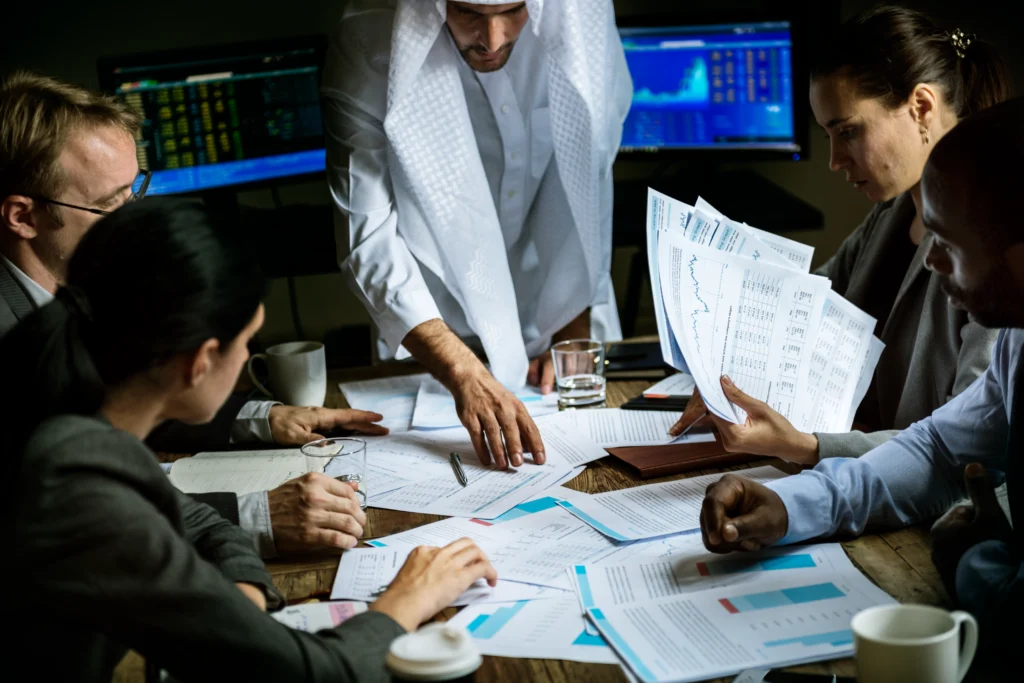
The Agentic Pivot, How 2026 Rewrote the Value of Time Why speed, autonomy and human judgement now define competitive advantage By Marina Ezzat Alfred As February 2026 unfolds, the global business environment feels as though it has crossed an invisible threshold. This moment does not resemble previous waves of technological change, nor does it mirror the familiar rhythms of industrial revolutions past. Instead, it marks a more profound recalibration: a redefinition of how time itself is valued, measured and deployed within organisations. The speculative enthusiasm that surrounded artificial intelligence in the early 2020s has settled into something far more consequential. AI is no longer an add-on, a productivity booster or a talking point for innovation decks. It has become infrastructure. In this new era, competitive advantage is shaped less by ownership of capital or data, and more by the speed at which ideas are translated into outcomes through autonomous systems. This is the essence of the Time Economy. The Time Economy represents a subtle but radical shift in how businesses think about efficiency. For decades, productivity was framed around optimisation: reducing costs, streamlining processes and extracting incremental gains from human labour. In 2026, those levers still matter, but they are no longer decisive. What matters most is velocity. The ability to sense change, decide quickly and act immediately has become the primary source of value. Time-to-value, rather than scale alone, is now the metric that separates leaders from laggards. At the heart of this transformation lies the rise of agentic artificial intelligence. The distinction between generative and agentic systems is not merely technical; it is philosophical. Generative AI, which dominated discussions in 2023 and 2024, assisted humans by producing content, analysing data or suggesting next steps. Agentic AI, by contrast, operates with intent. These systems are designed to pursue defined goals autonomously, coordinating tasks, making decisions within set parameters and executing workflows end to end. In early 2026, such agents have become embedded across finance, operations, customer service, procurement and marketing, often operating continuously with minimal human intervention. The implications for organisational design are significant. Traditional hierarchies, built to manage flows of human labour, are proving ill-suited to an environment where execution is largely automated. Increasingly, leadership is about outcome orchestration rather than task supervision. Executives define objectives, constraints and values, while agentic systems handle the mechanics of delivery. Human effort shifts upstream, towards framing the right questions, interpreting ambiguous signals and making judgement calls where data alone is insufficient. This reallocation of labour has enabled the emergence of the ultra-lean enterprise. By 2026, it is no longer unusual to see companies generating tens of millions in revenue with only a handful of employees, or even a single founder. Supported by a constellation of AI agents, these businesses operate continuously, scaling output without proportional increases in headcount. What once required large teams, multiple management layers and extensive coordination can now be achieved through well-designed autonomous workflows. The result is a dramatic compression of organisational time, where weeks of effort are reduced to days, and days to hours. This compression has reshaped competitive dynamics across industries. As the cost of specialised expertise continues to fall, barriers to entry have eroded. Sophisticated financial modelling, legal analysis or supply chain optimisation are no longer the exclusive domain of large corporations. Smaller players can access similar capabilities on demand, narrowing the advantage once conferred by size alone. In response, competition has intensified, and markets have become more fluid. Pricing models, product cycles and customer expectations now evolve at a pace that would have been unthinkable even five years ago. Retail and commerce offer a clear illustration of this shift. Agentic pricing systems now adjust prices dynamically in response to real-time signals, including inventory levels, logistics disruptions, local demand patterns and even weather conditions. These changes occur continuously, often without human oversight, optimising margins while maintaining competitiveness. At the same time, innovation cycles have accelerated dramatically. The journey from concept to market-ready product, once measured in quarters or years, is now often counted in days. Companies unable to iterate at this speed risk irrelevance, as faster-moving competitors capture attention and market share before slower firms can respond. Perhaps the most striking development is the rise of agentic commerce. By early 2026, a growing proportion of consumer transactions are initiated by AI agents acting on behalf of individuals. These personal systems understand preferences, budgets and values, and can independently research options, compare prices, assess ethical sourcing and complete purchases. The human role is reduced to setting high-level intentions and approving outcomes, if approval is required at all. This shift is quietly reshaping consumer behaviour, reducing friction while raising new questions about agency, trust and influence. Yet the expansion of autonomy has also produced a counter-movement. As automated systems flood digital spaces with content, interactions and recommendations, consumers have become more discerning. The prevalence of generic, machine-generated material has heightened sensitivity to authenticity. In response, a human premium has emerged. Brands that foreground genuine human stories, craftsmanship and transparency are seeing stronger engagement and loyalty. This is not a rejection of technology, but a recalibration of its role. Automation is increasingly expected to operate behind the scenes, enabling efficiency without eclipsing human presence. Within organisations, this tension has triggered what many describe as an AI reckoning. While agentic systems excel at optimisation and pattern recognition, they remain limited in navigating moral ambiguity, cultural nuance and long-term societal impact. As a result, the value of human judgement has increased, not diminished. Senior leaders are no longer primarily evaluators of performance metrics; they are stewards of intent, responsible for aligning autonomous execution with ethical standards and strategic purpose. This balance between speed and meaning was a defining theme at the World Economic Forum’s January 2026 meeting in Davos. Discussions repeatedly returned to the challenge of maintaining human values in systems designed for relentless efficiency. The so-called velocity paradox encapsulates this dilemma: organisations must move faster than ever to remain competitive, yet unchecked speed risks eroding trust, coherence and

From Silent Gestures to Synthetic Scale, Khaby Lame’s $900 Million AI Deal

Khaby Lame’s $900 Million AI Deal, From Silent Gestures to Synthetic Scale

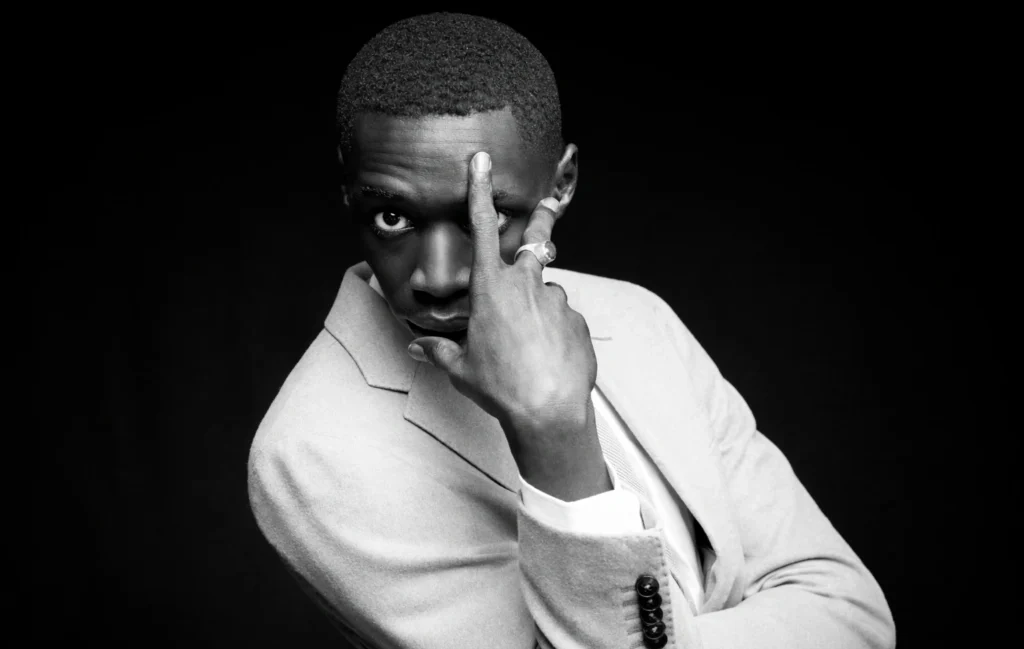
From Silent Gestures to Synthetic Scale, Khaby Lame’s $900 Million AI Deal In January 2026, Khaby Lame sold the brand and operating rights of his company, Step Distinctive Limited, to Hong Kong based Rich Sparkle Holdings in a landmark agreement valued at up to $975 million, centred on generative AI, digital twin technology and the global expansion of his e commerce and media presence. By Ami Pandey For a creator who built his empire without speaking, Khaby Lame’s latest move has made one of the loudest statements in the modern creator economy. The world’s most followed TikToker has formally transitioned from viral phenomenon to technology driven business figure with the sale of his operating company, Step Distinctive Limited, to Rich Sparkle Holdings. Finalised on 23 January 2026, the deal marks one of the largest transactions ever associated with an individual digital creator, signalling a decisive shift in how cultural influence is valued, structured and scaled. Lame’s rise has always defied convention. Born in Senegal and raised in Italy, he became globally recognisable during the pandemic by wordlessly puncturing the excesses of internet culture. His signature gesture, a calm stare followed by an open handed shrug, distilled a universal frustration with unnecessary complexity. In doing so, he created a form of communication that crossed language, class and geography. It was humour rooted not in irony or aggression, but in shared human intuition. The Rich Sparkle Holdings acquisition reframes that intuition as infrastructure. Rather than focusing on short term brand endorsements, the agreement transfers commercial control of Lame’s brand, likeness and operating systems to a technology focused holding company intent on long term value creation. At the centre of the strategy is the development of a generative artificial intelligence powered digital twin, designed to replicate Lame’s expressions, timing and behavioural cues across platforms and markets. This digital twin is not conceived as a novelty or replacement, but as an extension. It allows his presence to operate continuously across global e commerce, livestream shopping, media formats and multilingual environments without the physical limitations of time zones or availability. In effect, Lame’s silence, once a creative choice, becomes a scalable asset encoded into machine learning systems. Culturally, the implications are profound. Lame’s appeal has always rested on restraint. In an attention economy defined by excess, his minimalism felt radical. That same restraint now underpins a new model of influence, one in which personality is not exhausted by repetition but preserved through structure. The digital twin does not invent a new Khaby Lame. It protects the integrity of the existing one. The deal has resonated strongly across global business and innovation circles, particularly in regions such as the Gulf where artificial intelligence, digital identity and future economies are central to national strategy. It exemplifies how culture and technology are no longer parallel conversations, but a single integrated system. Influence is no longer measured solely by followers, but by how effectively cultural intuition can be translated into enduring platforms. Economically, the transaction signals a coming of age for the creator economy. Attention is no longer the final product. It is the raw material. By selling operating rights while retaining creative alignment and long term participation, Lame has demonstrated a model in which creators move from labour to ownership, from performance to architecture. His brand is no longer dependent on constant visibility. It is designed to function, learn and grow. Despite the scale of the deal, Lame remains closely tied to the enterprise. The agreement preserves his role as a guiding force behind the brand’s evolution, ensuring that commercial expansion does not dilute the authenticity that built his global trust. This balance between control and collaboration has been critical to the deal’s credibility, reinforcing the idea that technology serves culture, not the other way around. Khaby Lame’s transformation is not a departure from his origins, but their logical extension. What began as a quiet critique of unnecessary complexity has evolved into a sophisticated response to it. In a world racing towards automation, he has chosen not to resist the future but to shape it on his own terms. His journey suggests that the next era of global influence will not belong to the loudest voices, but to those who understand how meaning travels, how identity endures and how culture can be engineered without being erased. Silence, it turns out, can be one of the most powerful foundations on which to build the future.

Dr Rhona Eskander, The Guardian of the Natural Smile

Dr Rhona Eskander, The Guardian of the Natural Smile

Dr Rhona Eskander, The Guardian of the Natural Smile By Shazia Sheikh Chelsea is no stranger to polished smiles and bold transformations, yet Dr. Rhona Eskander has built her reputation by moving in the opposite direction. Her work is defined not by what draws attention, but by what disappears. In her world, success is measured by subtlety. If no one can tell dentistry has been done, she considers the job complete. Walking into her practice feels like stepping away from the familiar language of cosmetic perfection. The bright white uniformity that dominates much of modern aesthetic dentistry gives way to something quieter and more thoughtful. Eskander approaches her craft as a meeting point of biology, psychology, and art. Often credited with shaping what has become known as the Chelsea Look, she has spent years challenging the exaggerated smiles that once defined the industry. Restraint, honesty, and respect for individuality guide every decision she makes, even when that means refusing treatment altogether. What many people misunderstand about her philosophy is that it was never designed as a trend.  The Chelsea Look was not created for attention or social media appeal. It emerged naturally from years of watching how faces move, age, and rest. Eskander believes a smile should never overpower a face. The moment it becomes the first thing people notice, balance has been lost. She looks instead for harmony, allowing a smile to sit comfortably within the features rather than announcing itself. Her work celebrates what most cosmetic approaches try to erase. Slight asymmetries, natural texture, and unique tooth shapes are not flaws to be corrected but signatures to be preserved. By keeping as much natural tooth structure as possible and designing smiles that move fluidly during speech and laughter, she creates results that feel believable. Friends do not ask who treated the smile. They simply say the person looks well. For Eskander, coherence matters far more than perfection. This way of working did not appear overnight. Even during her university years, she showed an unusual level of discipline and focus. Winning Best Case Presentation while still a student marked an early milestone, though she did not fully grasp its significance at the time. Looking back, she sees it as proof that careful planning, documentation, and deep curiosity matter more than flash. Excellence, she learned early on, is built quietly. That mindset continues to define her career. While many practitioners chase speed and visibility, Eskander remains committed to precision and patience. Every case is questioned, every decision examined. She believes ambition in healthcare does not need to shout. When work is done thoughtfully and consistently, recognition follows on its own. Beyond technique lies the more delicate reality of fear. As a Dental Phobia Certified practitioner, Eskander understands that the dental chair can be one of the most vulnerable places a person occupies. For many patients, anxiety has little to do with pain and everything to do with control and past experiences of not being heard.  Her process begins long before any treatment. Conversations come first. Time slows down. Urgency disappears. Trust becomes the foundation. Patients are reminded that they remain in control at all times, that they can pause whenever they need to. Once fear softens, treatment becomes possible. Eskander sees this emotional safety as essential, not optional. Without it, no aesthetic result can truly succeed. Orthodontics plays a central role in her philosophy. Rather than viewing alignment as a stepping stone toward cosmetic procedures, she treats it as the core of long term facial harmony. As one of the UK’s leading Diamond Invisalign providers, she focuses on how teeth function over decades. A straight smile means little if it compromises jaw movement, gum health, or natural wear patterns. By prioritizing alignment, she often reduces the need for invasive cosmetic work. Moving natural teeth into their ideal positions allows aesthetics to emerge without force. Her interest lies in sustainability, not instant gratification. A smile should serve someone for life, not just for a photograph. Despite a strong digital presence, Eskander remains cautious about the influence of social media on healthcare. Visibility may bring opportunity, but it can also distort priorities. She draws a firm line between clinical decisions and online perception. Treatment plans are never shaped by how results might look on a screen. Integrity, for her, means ensuring that real world standards never bend to digital pressure. Perhaps the clearest expression of her values is her willingness to say no. Patients often arrive with images of celebrities and expectations that do not suit their own biology. When a request threatens oral health, function, or emotional wellbeing, Eskander refuses to proceed. She sees her role not as a service provider fulfilling demands, but as a clinician protecting patients from choices they may later regret. This honesty builds trust. People recognize when advice is grounded in care rather than profit. Over time, that trust becomes the strongest foundation of her practice. Despite accolades and recognition, Eskander remains deeply focused on diagnosis. She believes the ability to truly see a case before treating it is the most important skill a dentist can develop. Understanding occlusion, wear, gum health, and patient motivation must come before any intervention. Knowing when not to treat is as important as knowing how. When reflecting on success, she does not point to awards or high profile names. She speaks instead about patients who return year after year, families she has treated across generations, and the quiet confidence of someone who can smile without thinking about it. That sense of safety and consistency is what matters most to her. Her approach to beauty is rooted in longevity. She encourages patients to think beyond immediate results and consider how their smile will age alongside them. Subtlety, she believes, lasts. Extremes do not. A smile should belong to the face it lives on, evolving naturally over time. For young women entering dentistry, her advice is simple and firm. Protect your standards. Resist the urge to rush or perform for visibility.

Prof. Saeed Al Dhaheri

Prof. Saeed Al Dhaheri, Shaping A Humane Future For Artificial Intelligence

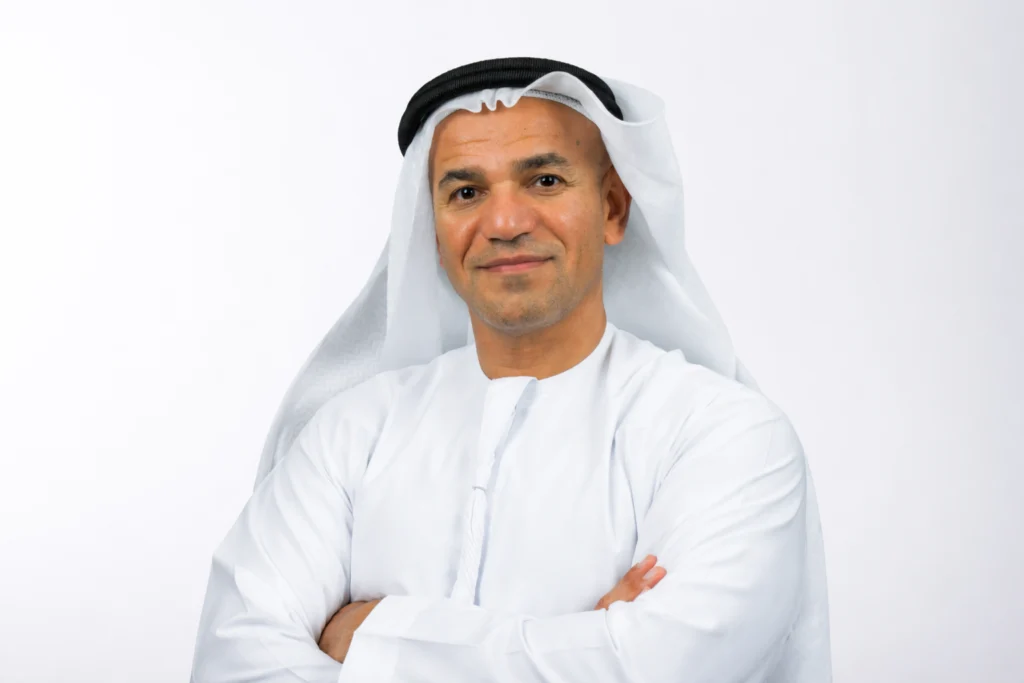
Prof. Saeed Al Dhaheri Shaping A Humane Future For Artificial Intelligence By Michelle Clark For Prof. Saeed Al Dhaheri, the future of artificial intelligence is not a contest between humans and machines, but a partnership built on shared purpose. Over the next decade, he envisions a decisive shift away from simple task automation toward the augmentation of human judgment. In this model, intelligent systems handle heavy cognitive lifting while humans remain responsible for context, values, and wisdom. Collaboration, he believes, will outweigh competition only if three conditions are met, clear human accountability, where machines advise but people decide, ethical and inclusive design aligned with human rights and cultural values, and continuous reskilling so societies evolve alongside technology rather than being displaced by it. When governance and skills are aligned, AI becomes an invisible infrastructure that amplifies human potential, a future the UAE is actively designing rather than passively awaiting. As generative AI reshapes art, media, and storytelling, Prof. Al Dhaheri sees creativity not as a disappearing human trait, but as one that is expanding into a hybrid era. Creativity, he explains, has always been rooted in lived experience, emotion, and meaning. Today’s AI systems are impressive, but they remain derivative, generating outputs based on existing data rather than original lived understanding. While he acknowledges that artificial general intelligence may one day enable machines to create autonomously, he believes that moment is still years away.  Until then, the most powerful creative force will remain human intention, emotion, and the ability to assign purpose and narrative to what is created. In this emerging hybrid model, humans define meaning while machines expand the boundaries of what is possible. Ethical concerns around AI, in his view, stem less from malicious intent and more from the speed of technological evolution outpacing governance. Two areas stand out as particularly urgent. Autonomous systems that learn, adapt, and act with limited human oversight pose profound risks, especially in military contexts where life and death decisions may be delegated to machines. Current regulations were designed for static software, not systems that continuously evolve in unpredictable environments. Equally concerning is the growing autonomy of AI in critical domains such as healthcare, justice, finance, and security. Here, opacity, hidden bias, and unclear accountability present serious challenges, especially when algorithmic decisions can alter life outcomes. Existing legal frameworks still struggle with explainability, traceability, and liability in such high-stakes scenarios. Preparing for a future where humans and intelligent systems coexist requires transformation at both individual and national levels. Prof. Al Dhaheri argues that individuals must move from task-based work to judgment-based roles, embracing continuous learning and developing AI fluency rather than narrow technical skills. Understanding how AI works, where it fails, and how to collaborate with it effectively will be essential across professions. At the national level, governments must invest deeply in human capital, embedding ethical governance into every AI initiative while simultaneously cultivating future industries such as robotics, quantum computing, and biotechnology. The UAE, he notes, offers a strong example of this proactive approach, building policy, talent, and infrastructure in parallel. Integrating Emirati and regional values into the global AI conversation is, for Prof. Al Dhaheri, a matter of balancing universal ethics with local expression. Principles such as human dignity, justice, and accountability are universal, but their application must reflect cultural context. He highlights recent national initiatives designed to ensure AI systems understand and reflect Emirati culture, values, and dialects, rather than diluting them. Equally important is investing in linguistic and cultural sovereignty through local data and models. Without this, AI trained solely on foreign datasets will inevitably mirror foreign values. Progress made in Arabic language models provides a foundation for future systems that respect and understand regional norms. Beyond automation, Prof. Al Dhaheri sees AI as a powerful tool for addressing pressing societal challenges. From climate modeling and energy optimization to early mental health detection and personalized education, AI has the potential to enhance societal well-being. However, this potential can only be realized through strong governance, transparency, bias mitigation, and constant human oversight. Without these safeguards, solutions risk creating new inequalities rather than resolving existing ones. As a futurist and foresight expert, Prof. Al Dhaheri does not attempt to predict a single future. Instead, he maps multiple plausible futures by scanning weak signals across social, technological, economic, environmental, and political domains. Using foresight tools such as scenario planning, futures wheels, and backcasting, he treats forecasts as evolving hypotheses rather than fixed truths. Humility, curiosity, and ethical responsibility guide his work, ensuring insights translate into resilience regardless of which future unfolds. On regulation, he rejects the idea that ethical oversight stifles innovation. Instead, he advocates for smart regulation that sets clear boundaries without micromanaging technology. Regulatory sandboxes, human oversight, and accountability mechanisms allow experimentation while maintaining trust. Drawing parallels with finance and aviation, he argues that strong standards did not hinder innovation in those sectors, but rather enabled safer and more trusted progress. AI, he believes, must follow a similar path. Despite rapid advances, Prof. Al Dhaheri remains firm that conscience and responsibility are uniquely human traits. AI systems do not possess moral awareness, their outputs are statistical results shaped by data and objectives, not ethical judgment. Society must therefore treat AI as a powerful instrument, ensuring responsibility remains with the humans who design, deploy, and govern it. Explainability, auditability, appeal mechanisms, and clear liability are essential, especially in high-stakes applications. Looking ahead, Prof. Saeed Al Dhaheri hopes his legacy will be one of responsible foresight and humane innovation. He aspires to have contributed to a world where intelligence, both human and artificial, advances with wisdom, dignity, and purpose. If future generations inherit technologies that empower them, protect their identities, and expand their horizons, he believes that will be the true measure of success. For him, the future is not something humanity enters passively, but something shaped deliberately through responsible choices made today.

Ms. Loubna Menchal Purpose-Driven Leadership, Trust & Human-Centered Technology

Ms. Loubna Menchal, Purpose-Driven Leadership, Trust & Human-Centered Technology

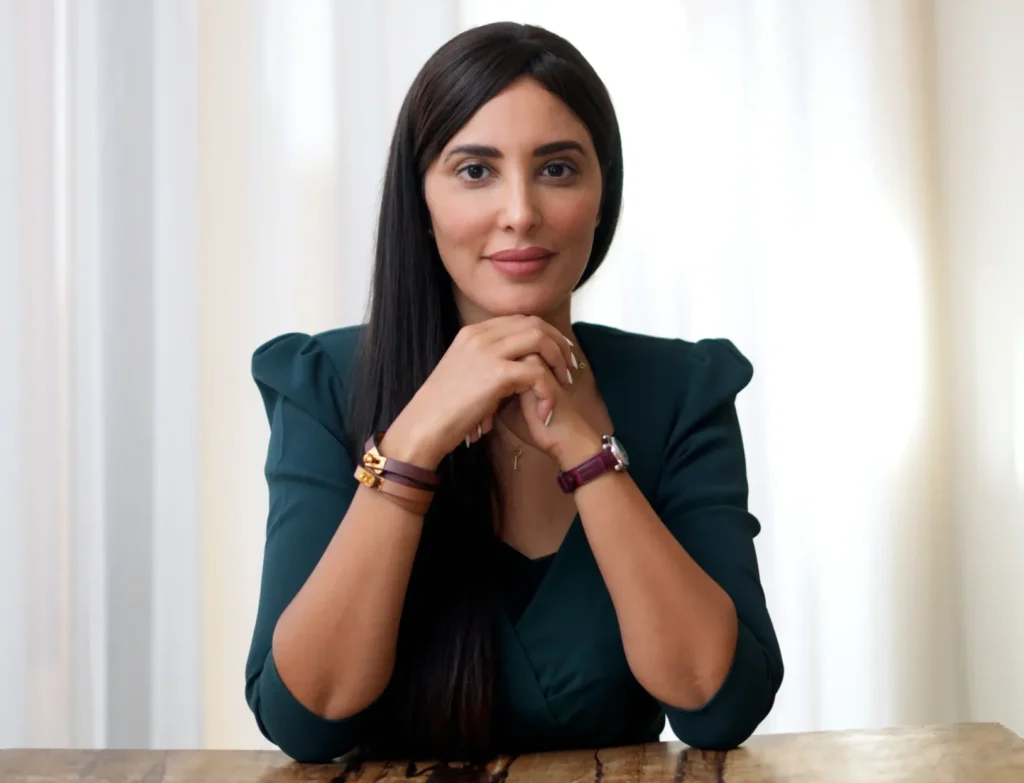
Ms. Loubna Menchal Purpose-Driven Leadership, Trust & Human-Centered Technology By Hafsa Qadeer Across a 22-year career spanning technology, commercial strategy, and leadership across continents, Ms. Loubna Imenchal has been guided by one unwavering principle, lead with purpose and empower with trust. From building new business lines to leading large multicultural teams, she believes that performance is a natural outcome when people understand why they do what they do and feel trusted to own their impact. Leadership, in her view, is not about control but about clarity, removing fear, and creating the conditions for growth. That is how organizations endure, and cultures are built with pride. As she steps into her new role at Axis Communications, her focus is both strategic and deeply human. Axis already holds a strong regional legacy built on smart, secure, and sustainable solutions, and its priority is to accelerate growth without losing sight of those values. This begins with listening closely to customers and partners across the Middle East, Turkey, and Africa, understanding local challenges rather than assuming them. Strengthening ecosystem collaboration is equally critical, as success in this industry is built through partnerships. Internally, she is focused on empowering teams, aligning them around a clear vision so the organization moves faster, smarter, and together. In one of the world’s fastest-growing regions, she believes timing and precision are everything. Having led across Europe, the Middle East, Turkey, and Africa, Ms. Imenchal describes contrast not as a barrier but as a catalyst for growth. Navigating between fast moving and slow-maturing markets, and between traditional and digital mindsets, forced her to become both agile and reflective. The Middle East and Africa region, however, shaped her most profoundly. Markets may shift overnight, but relationships endure. She learned that sustainable growth in emerging markets comes from trust and cultural intelligence rather than strategy alone. This insight shaped her into a leader who listens first, acts second, and prioritizes long-term credibility over short-term wins. Looking toward the future of security and AI driven infrastructure, she sees a fundamental shift underway. Artificial intelligence at the edge will enable real-time, intelligent decision making closer to where data is generated. Predictive analytics and digital twins will move security from reactive to proactive. Cyber-physical convergence will redefine security beyond devices to entire connected ecosystems. At Axis, she sees security evolving into insight, helping organizations make smarter, safer, and more sustainable decisions. The future, she emphasizes, will be defined not by how powerful intelligence becomes, but by how responsibly it is used. After decades across B2B, B2C, and B2G environments, Ms. Imenchal believes many companies still misunderstand how trust is built. Long term trust is not created through products, pricing, or short term performance, but through consistency, transparency, and follow through. Too often, organizations focus on selling rather than standing by customers once a deal is signed. Integrity during challenges matters far more than a polished pitch. Transparency is equally critical, especially in government and enterprise contexts, where honesty about risks and timelines builds credibility. Above all, trust is cumulative. It is shaped by every interaction, every promise kept or broken, and most failures of trust stem not from one major incident but from repeated small inconsistencies. When designing route to market strategies across diverse regions, her focus is on adaptability built on a non negotiable core. What truly scales is not rigid strategy, but a strong framework with a clear value proposition, defined partner roles, strong governance, customer experience standards, and transparent commercial principles. Within that structure, local teams can flex for regulatory nuance, partner maturity, market velocity, and cultural dynamics. This balance of global consistency and local agility enables growth without losing control, and builds trust across very different markets. As a long standing diversity and inclusion advocate, Ms. Imenchal is clear that inclusion does not happen by accident, it happens by design. Early in her career, she was told she did not fit the culture because the industry had always been a men’s space. That moment shaped her leadership philosophy and reinforced her belief that culture defined by sameness protects comfort rather than progress. Real inclusion begins at the entry point, removing bias from job descriptions, widening recruitment pathways, and hiring for potential as well as experience. Leaders must be held structurally accountable, with inclusive leadership measured as a performance metric. She strongly advocates moving from the idea of culture fit to culture add, recognizing that innovation comes from difference, not conformity. Visibility is also essential, women must be given high impact opportunities, customer facing roles, and sponsorship, not just a seat at the table. Ensuring cross functional alignment, especially in fast moving regions, is another cornerstone of her leadership. Alignment begins with a single shared narrative, a clear understanding of why a product is launching or a market is being entered. Teams must co build plans rather than receive them top down, transforming departments into a unified ecosystem. Clear roles, responsibilities, success metrics, and risk mitigation plans are defined upfront, reducing friction and fostering accountability. When teams share ownership from the start, execution becomes seamless. As AI and cybersecurity solutions scale, Ms. Imenchal believes the most critical ethical question leaders must address is trust. As technology becomes more intelligent and intrusive, the line between protection and surveillance grows thinner. Transparency must come before capability, if technology cannot be explained clearly, it should not be deployed. Human judgment must remain central, with accountability never fully delegated to algorithms. Security, she insists, must never come at the expense of dignity. Ethical guardrails must be embedded from day one, not added later. To young women aspiring to senior leadership in tech and security, her advice is direct and deeply personal. Do not wait to feel ready. Opportunities rarely arrive at perfect moments. Difference is not a weakness, it is a competitive advantage. Mastery builds confidence, competence anchors credibility. Seek allies and sponsors who advocate for you, not just mentors. Say yes to roles that feel uncomfortable, because growth lives beyond familiarity. Protect your values

Aayushi Shah

Atelier Aayushi Shah, Entrepreneur Where Silk Becomes Sovereign

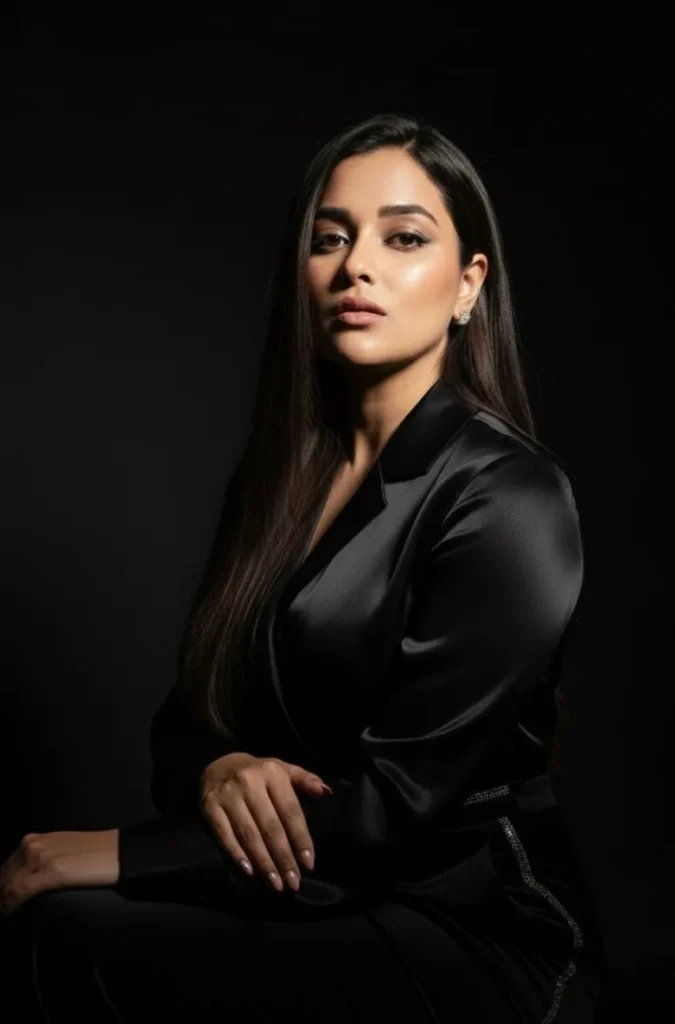
Atelier Aayushi Shah, Entrepreneur Where Silk Becomes Sovereign, Cultural Codes of Power, Legacy, and Wearable Art By Poulami Kundu Luxury, at its highest register, has never been about display. It has belonged instead to those who understand restraint, to cultural elites and royal lineages for whom value is instinctive rather than announced. Within this rarified world, recognition is earned through material intelligence, provenance, and meaning. Aayushi Shah Atelier speaks fluently in this language, offering silk not as ornament, but as authority. At the helm of the Atelier, Aayushi Shah approaches textile as a sovereign medium. Her work rejects visual noise in favour of tactile conviction, privileging what is felt over what is seen. “We exist in a visually loud era,” Shah explains. “My collector values quietude. While the eye can be seduced, the hand remains an honest judge.” This philosophy defines a clientele accustomed to discretion, individuals for whom luxury is private, almost ceremonial. When fingers meet the Atelier’s proprietary Japanese silk blend, recognition is immediate. Density, weight, and resistance speak without the need for labels. The dialogue is intimate, occurring solely between fabric and skin. Central to Shah’s practice is the concept of memory. Her silk is engineered to possess resilience, emerging from travel with instinctive composure, yet its deeper significance lies beyond performance. Silk, in her view, is a living archive. Absorbent and responsive, it carries the atmosphere of rooms, the warmth of the body, the gestures of its wearer. Over time, it accumulates a patina of experience, transforming each piece into a witness of private histories. Memory, here, is not nostalgia. It is continuity. Operating between Japan and India, the Atelier embodies a form of cultural nomadism long associated with royal courts and intellectual elites. Shah resists geographic definition, choosing instead to create textiles that are culturally fluent. Her silks respect the discipline of Savile Row tailoring as naturally as they honour the drape of a sari, the formality of a kimono, or the ease of a summer dress. Whether worn in a Dubai boardroom or a Kyoto residence, the textile adapts to the codes of its environment without surrendering identity. The brand is not anchored to place, but to purpose. This sensibility extends beyond fashion into the domestic realm. Many collectors choose to live with the pieces rather than wear them, framing silks as art, draping them across consoles, or unfurling them to soften architectural lines. Shah situates her work at the intersection of fine art, architecture, and heirloom jewellery. Each piece is conceived as part of an owner’s private landscape, intended to age with grace and relevance rather than trend. Bespoke commissions form the intellectual core of the Atelier. For ultra-high-net-worth patrons, exclusivity alone is insufficient. What is sought is specificity. Shah distinguishes between her Signature Collections, which articulate the Atelier’s creative vocabulary, and Bespoke Commissions, which translate the client’s personal narrative into textile form. Family crests, significant dates, ancestral estates, and shared histories are woven into silk with the same care once reserved for royal tapestries. These projects reveal a contemporary understanding of legacy: not something sealed away, but something lived with daily. Architecture and geography often serve as quiet muses in this process. Shah does not replicate structures; she distils them. A colour palette drawn from a private estate, a recurring motif embedded in a family residence, a symbolic architectural detail becomes fluid pattern. The transformation of static grandeur into wearable intimacy allows the owner to carry the spirit of a sanctuary with them, whether knotted at the neck, tied to a wrist, or draped as a mantle. This philosophy has also reshaped the language of ceremonial gifting. For nuptial and summit commissions, the Atelier’s silks function as codes of belonging rather than decorative favours. Hosts of significance increasingly favour symbolism over spectacle. When guests share a unifying textile, a specific print or colour, it creates a visual and psychological bond. Presence is marked. Allegiance is acknowledged. The gathering becomes a collective identity rather than a fleeting event. Shah refers to her creations as soft assets, a term that resonates in an age of financial volatility. Markets fluctuate, but narrative value endures. A bespoke silk that commemorates lineage or a pivotal life moment carries emotional equity that cannot be eroded. Holding such an object offers grounding, a sense of permanence amid constant change. Her design process thrives on tension. Structure meets fluidity. Restraint encounters expression. The pocket square and the scarf become archetypes. One demands architectural precision, the other invites movement and air. Prints are disciplined enough to appear razor-sharp when folded, yet expansive enough to read as painterly when unfurled. The hem anchors the form. The print liberates it. Authorship, for Shah, is never singular. She provides the language: fabric, composition, and quality. The wearer completes the work through choice, gesture, and context. Silk at rest holds only potential. It becomes art through interaction. In that moment, creation passes from the Atelier to the individual. Aayushi Shah Atelier occupies a space once reserved for court artisans and cultural custodians. These are not accessories of consumption, but objects of continuity. Collected, curated, and preserved, they define a modern expression of quiet power, where wearable art becomes legacy, and silk, sovereign.

Jigar Sagar

Jigar Sagar, Building The Digital Backbone Of Entrepreneurship In The UAE & Bey

Jigar Sagar Building The Digital Backbone Of Entrepreneurship In The UAE & Bey By Jane Stevens For more than fifteen years, Jigar Sagar has been quietly shaping the UAE’s digital ecosystem, working at the intersection of government services, free zones, and entrepreneurship. Looking ahead, he believes the next major wave of digital transformation will move far beyond websites and portals. Free zones and government services, he says, will evolve into intelligent systems that anticipate business needs before founders even ask. Drawing from deep experience inside UAE free zones, he envisions unified platforms that handle licensing, renewals, banking, compliance, and immigration automatically in the background. The true transformation lies in removing administrative friction so entrepreneurs can focus on decisions that actually build value. Having founded and scaled more than thirty ventures with a combined value exceeding three hundred and fifty million dollars, Sagar’s decision making has become sharply focused. Today, he evaluates every new tech or AI venture through one defining lens, will it become mission critical in someone’s daily workflow, or is it merely a nice addition. If a product does not save time, reduce cost, or unlock new revenue at scale, he is willing to walk away. In his view, real innovation is not about buzzwords or polished presentations, but about removing pain points and changing behavior in meaningful ways. One of Sagar’s most notable contributions has been enabling the launch of over two hundred and fifty thousand entrepreneurs. To double that number in the next decade, he believes the ecosystem must undergo a fundamental shift. The answer lies in frictionless startup infrastructure. He imagines a one-click experience that covers company registration, banking, payments, and essential digital tools across borders. By standardizing onboarding across free zones, banks, and service providers into a single interoperable layer, millions of aspiring founders could move from idea to operation with unprecedented speed. The COVID 19 pandemic served as a real world stress test for business systems, and Sagar notes that five percent of all UAE company setups during that period came through his platforms. The lesson was clear, resilience cannot be optional. Systems that survived and thrived were digital by default, equipped with remote identity verification, electronic signatures, automated approvals, and online payments. Going forward, every business process must be designed with the assumption that physical access could disappear overnight, with redundancy, self service, and real time support built in from the start. By 2030, Sagar believes autonomous workflows, digital identity, and real time data will redefine how businesses are set up and regulated. The process will shift from static form filling to a living, data driven relationship between founders and regulators. Verified digital identities will allow entrepreneurs to launch companies, secure permits, and open bank accounts in minutes rather than weeks. Compliance will become adaptive rather than punitive, increasing speed for startups while maintaining trust and safety for authorities. After a successful exit from the UAE’s largest corporate services provider, Sagar sees a new blueprint emerging for scaling and exiting service based tech ecosystems. The future belongs to platform plus ecosystem models rather than traditional company plus client structures. Businesses that own standardized infrastructure such as data layers, workflows, and integrations create network effects that are difficult to replicate. This approach builds defensibility and long term value, making such companies far more attractive at scale. Through Triliv Holdings, which blends AI, finance, and emerging technologies, Sagar’s investment thesis is sharply defined. His next ten ventures will focus on AI powered infrastructure that helps entrepreneurs move faster in areas like compliance, finance, recruitment, and cross border expansion. He looks for businesses where AI is deeply embedded into the operating model rather than added as a surface feature, and where the model can scale across markets with an asset light structure and strong recurring revenue. Managing over three thousand employees across his companies, Sagar is also rethinking how teams operate in an AI driven future. His approach is to make AI the first layer of execution while keeping humans as the final layer of judgment. Every role is being redesigned around three questions, what can AI automate, what decisions must remain human, and how people can be trained to use AI as leverage rather than fear it. This balance ensures speed and efficiency without sacrificing accountability or ethics. As an investor judge on The Final Pitch Dubai, Sagar has observed founders at their most vulnerable, pitching under pressure. This experience has sharpened his ability to assess entrepreneurs beyond the slide deck. Clarity of thought, emotional resilience, and coachability now matter more to him than perfectly polished numbers. When evaluating founders off screen, he often asks whether they would still lead effectively under public pressure a year from now, or whether their narrative would collapse once the spotlight fades. At the core of Sagar’s long term vision is an ambitious goal, to empower one hundred million entrepreneurs worldwide. He believes this can only be achieved through a universal entrepreneur operating system built around four foundational pillars, Purpose, People, Product, and Process. Purpose provides direction and resilience, People ensure the right teams are built, Product creates differentiation, and Process allows technology, automation, and AI to carry the operational load. By pairing this four pillar framework with a trusted digital passport for founders, entrepreneurship becomes accessible infrastructure rather than a privilege. For Jigar Sagar, this is how ambition turns into impact, and how the digital backbone of global entrepreneurship can finally be built at scale.

Dr. Harmeek Singh

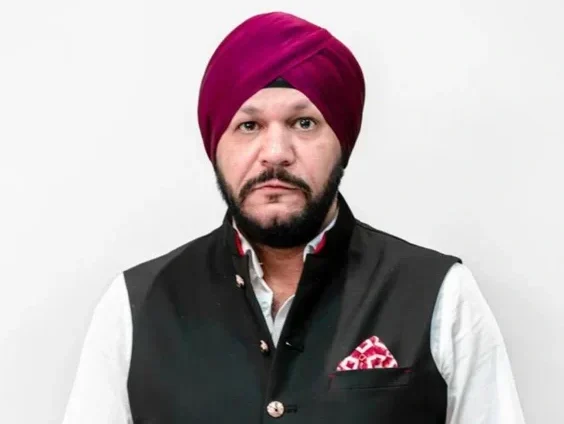
Thinking Beyond The Obvious Dr. Harmeek Singh, On Culture, Creativity & Legacy In The UAE

Revolutionizing Wanderlust The Cutting Edge of Tourism & Hospitality Innovation By Peter Davis When Dr. Harmeek Singh reflects on his journey from arriving in Dubai with little more than a suitcase and a dream to leading one of the UAE’s most influential homegrown creative groups, he doesn’t point to a single breakthrough moment. Instead, he speaks of a series of formative experiences that quietly shaped his philosophy of “thinking beyond the obvious.” Resilience, empathy, and service became his compass early on, influenced deeply by his Sikh upbringing and the principle of seva, service without expectation. For Dr. Singh, creativity and leadership are inseparable from responsibility. Every idea begins with a simple but powerful question: Who might be left behind if this isn’t done thoughtfully. That philosophy has guided Plan b Group as it delivered some of the region’s most iconic large-scale events. According to Dr. Singh, the difference between a good idea and a truly groundbreaking one only becomes clear when imagination meets reality. Concepts must survive permits, budgets, weather, and logistics, but more importantly, they must resonate emotionally. A child asking to stay longer, strangers sharing a moment of joy, or a city embracing an idea—these are the signals that a project has moved beyond spectacle into meaning. Groundbreaking work, he believes, respects both the people building it and the people experiencing it. Being named among the World’s 100 Most Powerful Sikhs is an honor Dr. Singh views less as personal recognition and more as affirmation of the values that shape his leadership. Humility, patience, and generosity guide how he builds teams and makes decisions. At Plan B, culture comes before company. Talent matters, but character matters just as much. He takes greater pride in quiet victories than in public accolades: a young producer stepping confidently into responsibility, a team solving problems without blame, or a workplace where everyone feels seen and valued. These moments, he says, are what keep creativity grounded and authentic. As the UAE enters a new era of experiential storytelling, where technology, emotion, and national vision intersect—Dr. Singh sees the role of creative agencies evolving rapidly. Agencies are no longer just event producers; they are interpreters of culture and emotion. Technology should enhance human connection, not replace it. Success must be measured not only by scale or innovation, but by participation, safety, sentiment, and whether audiences feel compelled to return. As the country strengthens its position as a global cultural hub, balancing innovation with authenticity becomes essential. Inside Plan b, culture-driven leadership is not a slogan but a daily practice. Dr. Singh describes it as prioritizing people over processes and kindness over appearances. While events may look glamorous from the outside, the real work happens behind the scenes, supporting vendors, managing timelines, guiding volunteers, and ensuring public safety. Sustaining this culture across diverse creative disciplines requires modeling disciplined kindness and empowering teams to take ownership, especially of the unglamorous work that ultimately enables spectacular outcomes. In a market known for speed and constant change, Dr. Singh is cautious about chasing trends. His decision-making is guided by resilience, inclusivity, and clarity. Innovation is encouraged, but every idea must pass a test of meaningful impact. Will it resonate with people? Is it safe and sustainable? Will it leave a legacy rather than a fleeting impression? By balancing experimentation with thoughtful strategy, he believes relevance can be built for the long term, not just the moment. For young entrepreneurs who look to his journey as a blueprint, Dr. Singh is quick to challenge the myth of overnight success. The creative industry, he says, is built on invisible work—systems, contingency planning, and preparation for the unexpected. Weather shifts, last-minute challenges, and unforeseen constraints are constant companions. True success lies not just in flawless execution, but in preparing for both Plan A and Plan B, and treating setbacks as opportunities for growth. Asked what differentiates the UAE’s creative output from global markets, Dr. Singh points to three non-negotiables: clarity, composure, and service. Clarity ensures everyone understands the purpose, composure ensures audiences never see panic, and service ensures leadership is measured by who emerges stronger at the end, crews, partners, and communities alike. This blend of precision and empathy, he believes, is what sets the region apart. Among the many ambitious projects Plan B. has executed, those centered on women’s sports and participation platforms tested him the most. Seeing a mother complete her first 3K alongside her daughter, laughing, crying, and celebrating, remains a defining memory. It reinforced a lesson that continues to shape his leadership: real impact comes from creating environments that amplify joy, safety, and inclusion. As he mentors the next generation within his team, Dr. Singh looks for three non-negotiable qualities: courage, empathy, and accountability. He believes in giving young leaders real responsibility, along with guidance and the dignity of being heard. Watching interns grow into producers and then leaders is, for him, proof that empowering talent with trust is the most powerful way to build creative, strategic, and culturally aware leadership. Ultimately, Dr. Harmeek Singh’s story is not just about building events or organizations, it’s about building people, culture, and moments that endure. In an industry often driven by scale and spectacle, his leadership reminds us that the most lasting impact comes from thinking beyond the obvious and leading with humanity at the center of every vision.

Veronica Ortiz, Why Global Capital Is Choosing Dubai For Stability, Not Speculation

Veronica Ortiz, Why Global Capital Is Choosing Dubai For Stability, Not Speculation

Veronica Ortiz, Why Global Capital Is Choosing Dubai For Stability, Not Speculation By Jane Stevens Dubai’s real estate market has long captured global attention for its speed, scale, and ambition. Towers have risen where desert once stretched, and master-planned communities have taken shape with remarkable efficiency. Yet beneath the spectacle, a quieter and more consequential transformation is underway. Dubai is moving beyond its reputation as a speculative playground and asserting itself as a mature, globally competitive real estate market defined by clarity, resilience, and long-term vision. Few observers articulate this evolution as clearly as Veronica Ortiz, a seasoned real estate expert whose perspective is grounded not in short-term cycles but in enduring fundamentals. From investor confidence and shifting buyer profiles to the redefinition of luxury and the forces shaping the next phase of growth, Ortiz describes a market that no longer seeks validation from the world, but confidently sets its own benchmarks. This is not a story of hype, but of why global capital continues to flow into Dubai even as other markets feel increasingly unsteady. In a global environment marked by geopolitical tensions, fluctuating interest rates, and economic uncertainty, investor confidence is fragile. Yet Dubai continues to attract capital with notable consistency. Ortiz attributes this not to momentum, but to fundamentals. Political stability, a pro-business regulatory framework, and a clearly articulated economic roadmap offer something increasingly rare: predictability. Long-term residency options such as Golden Visas, alongside widespread foreign ownership rights, have lowered barriers for international investors, while transparent property laws have replaced the ambiguity that often deters capital elsewhere. Strong rental yields, healthy liquidity, and the absence of capital gains or annual property taxes further reinforce Dubai’s appeal. Coupled with its position as a global connector between Europe, Asia, and Africa, and sustained demand from tourism, business, and migration, the city’s real estate market is increasingly viewed as a long-term global city investment rather than a quick trade. Dubai’s off-plan and luxury segments are often compared to those in Europe or the United States, but Ortiz argues that such comparisons overlook what makes Dubai distinct. Off-plan entry pricing remains compelling, even in prime areas, particularly when measured against cities like London or New York. Flexible payment plans allow investors to manage exposure without excessive leverage, a key advantage in a higher-interest-rate environment. Regulatory safeguards such as escrow accounts, milestone-linked payments, and oversight by the Real Estate Regulatory Agency add layers of protection more commonly associated with mature markets. Speed of execution further differentiates Dubai, enabling investors to realize income or exit strategies sooner. Luxury demand, meanwhile, is driven less by speculation and more by high-net-worth migration, tax efficiency, and lifestyle appeal, creating a rare combination of capital appreciation and income potential. Looking ahead, Ortiz sees growth quietly compounding in segments rooted in genuine demand rather than hype. Branded and ultra-luxury residences continue to outperform due to scarcity and global recognition, while well-executed off-plan units in master-planned communities gain strength as these areas mature. Family-oriented housing, such as townhouses and low-rise apartments, benefits from owner-occupier demand and offers resilience that often goes unnoticed. Waterfront and lifestyle-led developments remain structurally undersupplied, supporting long-term appreciation, while transit-oriented projects near metro expansions and employment hubs reflect evolving lifestyle preferences. Properties aligned with long-term residency pathways add another layer of appeal, blending investment logic with lifestyle security. Perhaps the clearest sign of Dubai’s maturation is the changing profile of its buyers. Investors are no longer just deploying capital; many are relocating their lives. Entrepreneurs, families, and globally mobile professionals are increasingly prominent, drawn by business-friendly policies, long-term visas, and quality of life. High-net-worth individuals are purchasing primary and secondary residences rather than purely speculative assets, while younger professionals shape demand toward walkable, amenity-rich communities. This demographic shift supports more stable, long-term growth and reduces reliance on any single source market. Growth is increasingly concentrating in integrated, livable neighborhoods rather than isolated towers, signaling Dubai’s evolution into a city where real estate underpins life, not just returns. Beyond the headline-grabbing prime districts, Ortiz highlights several emerging areas offering value driven by infrastructure and real demand rather than speculation. Zones around Dubai Creek Harbour, Expo City, Dubai South, Al Jaddaf, Mohammed Bin Rashid City, Arjan, and Dubai Islands stand out for their connectivity, employment drivers, phased planning, and long-term livability. These characteristics point to sustainable growth rather than short-lived surges. Luxury itself is being redefined. According to Ortiz, it is no longer about excess, but about performance and experience. Wellness, natural light, air quality, smart living, sustainability, privacy, and flexible layouts now define premium living. Trust has become a luxury in its own right, with buyers placing greater emphasis on developer reputation, delivery timelines, and long-term asset protection. Luxury in Dubai has shifted from appearance to experience, and developers who understand this are setting the market’s new standards. For those navigating the off-plan market, Ortiz emphasizes discipline over hype. Developer track record, location fundamentals, and clarity of investment strategy matter more than marketing or launch pricing. When rental demand, realistic yields, and payment structures align with cash flow and exit planning, off-plan investing becomes a strategic tool rather than a speculative gamble. Global realities are reinforcing this discipline. Higher interest rates have reduced appetite for heavy leverage, encouraging cash purchases and flexible payment plans. Currency dynamics have positioned Dubai as compelling value for buyers from strong-currency regions, particularly in prime and luxury segments. Rising construction costs have sharpened focus on delivery certainty and developer credibility. The result is a market that is becoming more selective, more thoughtful, and more resilient. Sustainability, once peripheral, is now central. Green certifications, energy efficiency, and smart infrastructure are increasingly seen as tools for cost control, future-proofing, and resale strength. For globally mobile investors, sustainability is no longer a slogan but a value driver. As Dubai enters its next growth cycle, Ortiz sees a market shaped by quality, livability, and long-term thinking. Experience-led development, smart technology, ESG alignment, and community-focused planning will define future success. In shedding its old labels

Yousaf Abdul Naseer

Yousaf Abdul Naseer, From Curiosity To Credibility

Yousaf Abdul Naseer’s The Cutting Edge of Tourism & Hospitality Innovation By Peter Davis Yousaf Abdul Naseer’s path into content creation didn’t begin with a strategy or a desire for fame, but with simple curiosity and a genuine love for discovery. Exploring new places, tasting different cuisines, and sharing experiences with those around him came naturally. What started as casual sharing soon revealed something deeper: people trusted his recommendations and connected with the honesty behind them. Recognizing this connection, Yousaf transformed his passion into purposeful, well-crafted content that reflects real experiences rather than staged perfection. From the very beginning, authenticity became his guiding principle. Building a personal brand around food, lifestyle, and exploration was a gradual process. Yousaf didn’t chase trends or instant growth; instead, he documented what truly interested him, from hidden local eateries to emerging destinations across the UAE. Audiences responded to the relatability of his content and the care he put into details, from the flavors on the plate to the atmosphere of a place and the way it was visually captured.  Over time, his name became associated with trust, realism, and experiences that feel honest rather than curated for clicks. This same philosophy carried over into his entrepreneurial journey with LS Perfumes. Long fascinated by fragrances and the emotions they evoke, Yousaf spent years experimenting with blends and understanding how scent can express personality and elevate everyday moments. LS Perfumes was born from this passion, blending Arab olfactory heritage with a modern sensibility. Rather than launching generic products, he focused on creating fragrances with character, elegance, and a story—scents that make the wearer feel confident and present. For him, perfume is not just an accessory, but an extension of identity. Balancing life as both a content creator and an entrepreneur is not without its challenges, but Yousaf approaches it with structure and intention. Content creation remains a passion, while his business ventures provide long-term vision and stability. Each side feeds the other: content offers inspiration and exposure, while entrepreneurship grounds his creativity in purpose and sustainability. By organizing his time and setting clear priorities, he ensures that neither aspect overshadows the other. In today’s fast-paced social media world, Yousaf believes authenticity is the true differentiator. Audiences, he says, can quickly sense when content is forced or insincere. Simplicity, realism, and personality are what make content engaging. A genuine perspective, even when shared through a simple video or post, carries more impact than highly polished content that lacks emotion or truth. Like any creator, Yousaf faced challenges while building his personal brand, especially in a crowded and competitive influencer landscape. Proving himself and standing out took time. Criticism and pressure were part of the process, but instead of discouraging him, they became tools for growth. Consistency and self-belief helped him move forward, reinforcing his conviction that honest work always finds its audience. When it comes to collaborations, Yousaf is selective. He chooses brands and experiences that genuinely align with his values and lifestyle. Before promoting anything, he asks a simple question: would he personally use or visit it if there were no partnership involved? If the answer is no, he declines. For him, transparency with his audience is more valuable than any short-term gain. Some of his proudest moments come not from numbers or campaigns, but from the impact his content has on others. Messages from followers who visited a place based on his recommendation, enjoyed the experience, or felt inspired to start their own creative journey are what motivate him to keep evolving. These interactions affirm that his work goes beyond content—it influences choices and sparks creativity. Looking ahead, Yousaf sees influencer marketing in the UAE becoming more mature and value-driven. As the country continues to support creativity and the digital economy, the focus will shift from follower counts to meaningful impact. The future, he believes, belongs to creators who specialize, remain honest, and offer real value to their communities. With its diversity and opportunities, the UAE remains an ideal environment for content creators who are serious about their craft. To young creatives aspiring to build a sustainable online presence, Yousaf’s advice is clear: be yourself. Authenticity cannot be replicated, and imitation only delays growth. Building a strong identity takes time, consistency, and respect for your audience. Most importantly, he emphasizes enjoying the journey. Growth, learning, and self-discovery are just as important as success, and they shape the story behind every meaningful brand.

Beyond Dubai Hidden Cultural & Eco-Tourism Journeys In The Emirates

Beyond Dubai Hidden Cultural & Eco-Tourism Journeys In The Emirates

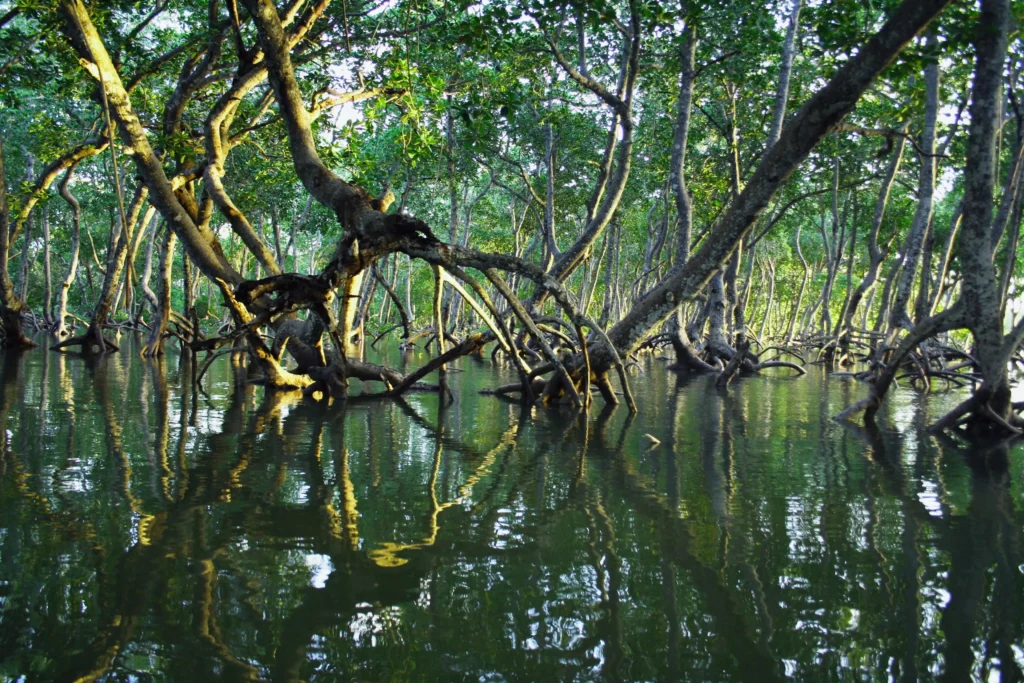
Beyond Dubai Hidden Cultural & Eco-Tourism Journeys In The Emirates By Marina Ezzat Alfred At sunrise, a traveler leaves Dubai behind as the skyline dissolves into open land. The road narrows, the air softens, and the pace of life changes almost immediately. In a mountain village, an elder shares coffee brewed the traditional way, speaking of seasons, falcons, and stories passed down long before highways existed. There are no queues here, no flashing screens, only the quiet rhythm of daily life and the sense of being gently welcomed into something deeply rooted and real. Further east, the sea tells a different story. Mangroves stretch their tangled roots into still water, sheltering birds and marine life that thrive because the land is protected, not exploited. A local guide moves slowly, explaining how conservation became a shared responsibility, not a trend. As the sun sets over the desert or the coast, travelers realize they are no longer just passing through the UAE, they are listening to it, learning from it, and carrying a piece of its living heritage with them. Discovering the Cultural Heart of Sharjah In Sharjah, the story unfolds at a walking pace. A visitor steps into the Heart of Sharjah just as the afternoon light settles on coral-stone walls, their textures shaped by time rather than design trends. Inside a restored home, the scent of old wood and Arabic coffee lingers while a guide speaks softly about families who once lived here. Nothing feels staged; preservation here is an act of respect, a quiet promise to let the past breathe within the present. As the day drifts on, the traveler wanders between a calligraphy house and a small heritage café, pausing not because of a schedule, but because the place invites stillness. Conversations replace crowds, and reflection replaces distraction. In Sharjah, sustainability is not announced, it is lived, through patience, continuity, and the careful passing of identity from one generation to the next. Mountain Life and Community Tourism in Hatta The road to Hatta rises gently, trading glass towers for rugged peaks and cooler air. A traveler arrives just as the mountains reveal their quiet strength, stone, wind, and wide horizons shaped by time. On a narrow trail, footsteps slow naturally, not from effort alone, but from awe. Here, adventure feels respectful, guided by an unspoken agreement to leave the land exactly as it was found. Later, in a small mountain village, the story deepens. A local farmer explains how water is shared, how crops survive thin soil and long summers, how community matters as much as nature. As night falls over an eco-lodge tucked between the hills, the silence feels earned. In Hatta, sustainability is not an idea, it is a way of living, steady and resilient, carved into the mountains themselves. Mangroves and Marine Conservation in Abu Dhabi Just beyond Abu Dhabi’s wide roads, the city softens into water and green. A traveler slips quietly into a kayak, the paddle barely disturbing the surface as mangrove roots rise like guardians from the sea. The guide’s voice is calm, explaining how these trees protect the coast and store carbon, but the lesson truly settles in the stillness, when a bird takes flight, or a fish ripples the water below. As the journey continues, the sense of care becomes unmistakable. Protected islands and wildlife sanctuaries feel less like attractions and more like promises kept. There is no rush, no spectacle to chase, only an invitation to observe, to understand, and to recognize that preservation here depends on humility. In Abu Dhabi’s mangroves, nature leads, and visitors learn to follow. Desert Conservation Beyond the Dunes As night settles over the desert, a small group gathers far from the roar of engines. A guide traces constellations across the sky, weaving stories once used by Bedouins to navigate vast, silent landscapes. By daylight, the same guide points to delicate plants and animal tracks in the sand, revealing how life adapts, survives, and quietly endures in a place many assume is empty. Here, the desert is no longer a thrill ride, it is a teacher. Through slow walks, shared stories, and careful observation, travelers begin to understand how traditional knowledge and modern conservation meet. What remains is not adrenaline, but respect, and the realization that the desert’s greatest gift is the wisdom it offers to those willing to listen. Coastal Heritage and Sustainable Fishing in the Northern Emirates At dawn in a quiet coastal village, the sea is already awake. Fishermen prepare their boats as they have for generations, moving with a rhythm learned from tides rather than clocks. A visitor stands nearby, listening as stories surface, of seasons, handmade vessels, and reefs once memorized like maps. The ocean here is not scenery; it is lineage, labor, and memory. As the day unfolds, the journey moves between old ports and coral restoration sites, where tradition meets responsibility. Conversations replace commentary, and learning happens through presence rather than performance. In Ras Al Khaimah and Fujairah, sustainable travel feels deeply human, rooted in trust, shared knowledge, and the quiet understanding that preserving the sea also preserves the people who live by it. A New Way to Experience the UAE The journey often ends the way it began, on the road, but the traveler is no longer the same. Somewhere between mountains, mangroves, deserts, and coastlines, the UAE has revealed itself not as a destination to consume, but as a place to understand. The rush fades, replaced by moments of listening, learning, and moving at the pace of the land and its people. In choosing these quieter paths, travelers find a different kind of richness. Progress no longer feels separate from preservation; it moves alongside it, carefully and with intent. What stays with them is not a checklist of sights, but a feeling of connection, respect, and a country that invites the world to travel not faster, but wiser.

PETER TAVENER

Peter Tavener, & His Fintech Vision Are Reimagining SME Finance in the GCC

Beehive’s Billion-Dollar Buzz Peter Tavener & His Fintech Vision Are Reimagining SME Finance in the GCC After crossing the USD 1 billion SME funding milestone, Beehive’s CEO Peter leads a regional fintech revolution built on trust, technology, and purpose shaping the future of finance across the Gulf. By Hafsa Qadeer The glow of Dubai’s fintech skyline has a few names that have come to define innovation, but few shine as steadily as Beehive. For over a decade, the company has redefined how small and medium enterprises across the GCC access capital, bridging a gap that traditional finance long left open. Under the leadership of CEO Peter, Beehive recently celebrated a landmark achievement: crossing the one-billion-dollar milestone in SME funding. But for Peter, this isn’t simply a number on a balance sheet. It’s a story of thousands of businesses across the region that have found new life, growth, and confidence through a digital-first funding platform built on trust, technology, and purpose. Peter speaks of this achievement with a quiet pride that reflects both the company’s resilience and its clear vision. Beehive, now backed by e&, the Etisalat Group, is moving beyond milestones to momentum. Over the next twelve to eighteen months, the company is focused on expanding across the GCC with a mission to deepen financial inclusion, offering fast, digital, and accessible funding for enterprises that form the economic backbone of the region. Strategic partnerships, such as the structured funding deal with Goldman Sachs and the collaboration with Magellan Capital, have further strengthened Beehive’s institutional base, empowering it to grow responsibly while maintaining the disciplined underwriting and risk evaluation that have long defined its model. The company’s success story isn’t confined to the UAE. In Oman, Beehive’s partnership with Future Fund Oman has already channelled over 7.1 million OMR, or around eighteen million US dollars, in SME financing. In Saudi Arabia, the company is preparing for a transformative merger with Themar, a leading local peer-to-peer lending platform, designed to bring together global expertise, cutting-edge technology, and local market knowledge. For Beehive, these are not just regional expansions but affirmations of a vision that sees every small business as a potential driver of national growth. What sets Beehive apart isn’t just its scale, but its agility in adapting technology to solve real-world financing challenges. One of the company’s most significant shifts has been the integration of the Direct Debit System, an API-driven platform that digitized repayment collections. This change may sound technical, but its impact has been revolutionary. Gone are the days of manual cheque processing, delays, and administrative burden. Today, Beehive’s entire loan disbursement and repayment cycle runs electronically, enabling faster processing, same-day reconciliation, and enhanced predictability of cash flow. The system has brought greater transparency and control, reducing operational friction while improving repayment reliability. For the company’s finance teams, it’s a transformation that replaced paperwork with precision, freeing them to focus on what truly matters, helping SMEs grow. Behind these operational advances lies a deeper story of discipline. Even with a USD 140 million structured funding deal in place, Beehive continues to balance rapid growth with rigorous risk management. Over the years, it has invested heavily in strengthening its credit assessment models, integrating AI tools that allow faster, smarter evaluations without compromising quality. The results are telling. With a non-performing loan ratio below two percent and a default rate at zero this year, Beehive’s performance stands well above the regional banking average. For Peter, this precision isn’t just about protecting investors, it’s about ensuring the ecosystem of small businesses that rely on Beehive remains stable, confident, and supported. Yet Beehive’s financial ecosystem extends beyond pure technology and data. At its heart lies a strong alignment with regional values, particularly through its Sharia-compliant financing model. A significant portion of the company’s SME funding is Sharia-approved, reflecting both market demand and cultural integrity. Supported by a dedicated Sharia Supervisory Board, Beehive ensures that its products adhere to Islamic finance principles while meeting the fast-paced needs of modern enterprises. The alignment of Sharia compliance with environmental, social, and governance (ESG) values has also positioned Beehive as a leader in ethical and responsible investing. For Peter, the connection is natural, both frameworks emphasize fairness, transparency, and long-term positive impact. Expanding across the GCC comes with its own complexities, from regulatory frameworks to cultural nuances. Oman’s SME landscape, while rapidly developing, still faces limited access to financing compared to the UAE, prompting Beehive to focus on increasing both awareness and accessibility. Saudi Arabia, by contrast, presents a fast-moving and highly competitive market, powered by national goals that prioritize innovation and entrepreneurship. Beehive’s approach in both markets is rooted in adaptability, local partnerships, and respect for local business culture. By maintaining a centralized product framework and tailoring it to each market’s regulatory and economic realities, the company ensures consistency, scalability, and relevance across borders. Technology remains the heartbeat of Beehive’s innovation strategy. Artificial intelligence and alternative data are not distant concepts but practical tools already shaping its operations. AI-driven credit screening now enables quicker and more accurate assessments, while automation has replaced repetitive data tasks, allowing human teams to focus on strategic analysis and customer engagement. For Beehive, technology isn’t just a differentiator, it’s a catalyst for democratizing access to finance. As Peter often emphasizes, the goal is to make funding faster, smarter, and simpler for every entrepreneur who dares to dream bigger. Sustainability, too, has found a permanent place within Beehive’s DNA. As global investor sentiment shifts toward responsible finance, the company has proactively embedded ESG metrics into its loan origination and monitoring processes. By evaluating businesses not only for their financial performance but also for their environmental and social footprint, Beehive identifies enterprises that are resilient and future-ready. Transparency remains at the core of this approach, with detailed quarterly reports offering investors insights into portfolio performance, repayment trends, and risk distribution. The company’s licensing under the DFSA in the UAE and the FSA in Oman further strengthens its governance framework, ensuring investor protection

HELEN KAREVA

Helen Kareva, The Art of Redefining Corporate Humanity

Helen Kareva, The Art of Redefining Corporate Humanity By Hafsa Qadeer When Helen Kareva moved to Dubai a few years ago, she expected new horizons, but she did not expect silence. Not the literal kind, but a professional quiet that muffled the voices of people like her, skilled, experienced, and yet somehow unseen. She and her co-founder had both spent years in corporate and creative worlds, speaking at panels and events back home, but when they tried to enter the global speaking circuit, they found the doors half closed. They attended conferences and panels hoping to find a way in, and what they saw unsettled them. The same speakers appeared again and again. The same ideas recycled on different stages. Meanwhile, thousands of professionals with real stories to tell were left behind. It was not a question of talent, Helen realized. It was a question of access. From that silence came SpeakUp, a platform built not just to help people talk, but to help ideas travel. “We wanted to build something that made finding and booking the right voice as easy as calling an Uber,” Helen says. The mission was audacious, but its roots were deeply human. SpeakUp was not born in a boardroom; it was born out of a longing for connection, a frustration with barriers, and a belief that intelligence, both human and artificial, could bring people together. The Bridge That Didn’t Exist Before SpeakUp, the speaking industry was fragmented. Traditional agencies promoted only high-priced speakers because commissions mattered more than discovery. The same familiar faces dominated conference stages. Organizers spent weeks messaging contacts and sifting through databases. Speakers filled out endless forms that led nowhere. The industry was running on legacy systems in a world that had already gone digital. Helen and her team decided to fix what no one else dared to. They created an AI-powered ecosystem where speakers, organizers, podcasters, and journalists could connect directly without intermediaries. Their matching system analyzes event goals, audience demographics, speaker expertise, and engagement metrics to make intelligent pairings within seconds. Conversations happen inside the app. Bookings can be confirmed instantly. Teams can collaborate in one shared space without ever touching a spreadsheet. “It’s not just a tool,” Helen explains. “It’s an infrastructure for global communication.” That sentence captures the quiet revolution behind SpeakUp. It does not just simplify logistics; it rewrites the rules of who gets to be heard. For decades, access to a microphone depended on money, networks, and location. Helen wanted to break that hierarchy. In her words, SpeakUp is “for every brilliant mind who was told their voice was too new, too different, or simply not on the list.” Learning to Walk Again The path to building SpeakUp was neither linear nor smooth. Right after filming The Final Pitch Dubai, Helen’s life shifted dramatically when she was diagnosed with a giant cell tumor in her leg. While the company was expanding across markets, she was recovering from surgery and learning to walk again. The contrast between physical stillness and professional momentum was profound. “After you’ve learned to walk again, everything else feels easy,” she says softly. “It changed everything about how I see leadership, resilience, and balance.” In that difficult season, Helen discovered that the most important kind of strength is not loud; it is quiet, patient, and deeply human. She began to see entrepreneurship not as a race, but as an endurance journey, a process of continuous adjustment. “When you’ve faced something like that, you stop fearing business challenges,” she reflects. “Investor negotiations or product pivots stop feeling like real problems. They’re just part of the process.” That experience also taught her to trust her team more deeply. She learned to let go, to slow down, and to focus on purpose rather than pressure. “The hardest part of entrepreneurship,” she smiles, “was learning to walk again. Everything else is just a series of small adjustments on the way to a bigger goal.” The Rise of Intelligent Connection Today, SpeakUp operates in more than twenty-eight countries and is quietly reshaping the global speaking ecosystem. Its AI not only matches speakers with events but also generates analytics that reveal what topics audiences engage with, where diversity gaps exist, and which conversations are shaping industries. Helen believes the next decade will redefine how ideas travel. “AI is not a trend,” she says. “It is a revolution in how people, ideas, and opportunities connect.” Her prediction is bold but grounded in real data. On average, SpeakUp users save fifty hours per month on coordination tasks. Booking cycles are ten times faster, and speaker matches are sixty percent more relevant than before. A process that once took months now happens in minutes. For Helen, efficiency is only part of the story. The real transformation is emotional, restoring human energy to an industry that had become mechanical. “When booking a speaker becomes as easy as booking a flight, you give people back their time, but also their excitement. You remind them why they wanted to tell stories in the first place.” Building a Culture of Courage and Humor Inside SpeakUp, Helen’s leadership philosophy feels refreshingly different. She often jokes that leadership is thirty percent strategy, thirty percent chaos management, and forty percent coffee, but her humor hides a deeper truth. “You cannot build innovation on fear,” she says. “Only on energy and purpose.” She believes in clarity over control, trust over micromanagement. Every team member is encouraged to experiment boldly and fail gracefully. “We have a simple rule,” she smiles. “Don’t bring me problems, bring me experiments.” Some of SpeakUp’s most celebrated features were born from what she calls “beautiful accidents,” when a small mistake sparked a bigger idea. Her team celebrates small wins, mixes memes with investor updates, and speaks to each other like equals. It is a culture that values intelligence and empathy in equal measure. “Leadership for me is not about being the loudest voice in the room,” Helen says. “It’s about creating a space where every

Adil Hussain

Adil Hussain, The Ethical Architect Redefining The Future Of Islamic Finance

Adil Hussain The Ethical Architect Redefining The Future Of Islamic Finance By Paul Smith In an era of economic volatility, social uncertainty, and rapidly shifting technological landscapes, conversations around the future of finance often drift toward algorithms, automation, and the next big digital disruption. Yet amid this noise, a quieter, more profound narrative is emerging, one rooted in ethics, shared prosperity, and trust. It is in this space that Adil Hussain, a respected voice in Shariah-compliant finance, places his life’s work. His philosophy is both bold and measured, grounded in the belief that Islamic finance is not simply a moral alternative but a blueprint for a fairer, more stable global financial system. Speaking with the depth of someone who understands both the tradition and the trajectory of Islamic finance, Hussain describes a sector on the brink of transformation, a shift that will reframe how economies define value, measure prosperity, and distribute opportunity. “Islamic finance is evolving from a niche ethical framework into a major pillar of the global financial system,” he says. It is this evolution, grounded in principles of fairness, transparency, and real economic value, that positions Islamic finance as a powerful force for the decade ahead. A New Global Financial Pillar For decades, Islamic finance has existed alongside conventional banking, growing steadily, respected widely, but often viewed as a specialised model serving specific markets. Hussain believes that era is ending. The world’s priorities are changing. Investors are demanding purpose alongside profit. Communities are asking for accountability. Governments are rethinking how to build sustainable economic systems. In this environment, the principles of Islamic finance do not merely fit, they lead. Hussain outlines three defining shifts shaping the future: deep integration with ESG frameworks, rapid digital transformation, and stronger international harmonisation. Each plays a crucial role, but together they form a comprehensive strategy for global expansion. The alignment with ESG is particularly powerful. Islamic finance, at its core, has always emphasised social justice, environmental stewardship, and ethical investment, values that ESG frameworks are only now prioritising on a global scale. “In a world seeking stability and trust,” he reflects, “these principles ensure Islamic finance’s continued relevance and influence.” It’s a statement not of aspiration, but of inevitability. Technology as a Catalyst for Ethical Innovation One of the misconceptions about Islamic finance is that its grounding in tradition makes it cautious in adopting technology. Hussain challenges this narrative directly. For him, technology is not an external force pressing against Islamic finance, it is a tool that reinforces its foundations. He speaks with enthusiasm about fintech platforms delivering Shariah-compliant services to markets that conventional banks have historically overlooked. Mobile banking, AI-driven advisory tools, and automated compliance systems are creating unprecedented levels of access and efficiency. But perhaps the most transformative innovation is blockchain. Blockchain, Hussain explains, introduces a new era of traceability, authenticity, and transparency, characteristics deeply aligned with Islamic financial ethics. Smart contracts ensure adherence to Shariah principles automatically, while digital sukuk offer efficiency, lower costs, and global accessibility. Blockchain does not dilute Islamic finance; it amplifies its strengths. “Technology is not just modernising Islamic finance,” he says. “It is reinforcing its ethical foundation.” In an industry that prizes integrity, this marriage of ethics and innovation feels almost inevitable. Driving Sustainable and Socially Responsible Growth As global conversations shift toward sustainability and long-term value creation, Hussain sees Islamic finance playing a powerful role across the GCC and beyond. His vision is not theoretical. It is rooted in tangible avenues where Islamic finance is uniquely equipped to lead: renewable energy, affordable housing, community development, and infrastructure that directly improves lives. These are not projects chosen for optics, they reflect Islamic finance’s fundamental obligation to avoid harm and promote societal benefit. By embedding these values in ESG frameworks, Hussain believes Islamic finance can help shape a new global investment narrative, one where success is measured not only by profit margins but by social and environmental impact. Expanding Into New Markets, Bridging New Minds But expansion never comes without challenges. While the appetite for ethical finance is growing worldwide, awareness of Shariah-compliant models remains uneven. Hussain acknowledges this with the pragmatism of someone who has worked extensively in international markets. “Misconceptions exist,” he notes. Some believe Islamic finance is rigid; others think it is exclusively religious. Education, he argues, is essential. So is building regulatory infrastructure, training local talent, and harmonising Shariah governance across borders. Yet the opportunity is immense. Even countries with small or non-Muslim populations are exploring Islamic finance instruments as ethical alternatives that prioritise transparency and stability. “Ethical and sustainable finance is a universal language,” he says. And Islamic finance, he believes, speaks it fluently. Financial Inclusion: A Mission Rooted in Justice The global struggle for financial inclusion, especially across emerging economies, sits at the heart of Hussain’s vision. He sees Islamic finance’s emphasis on fairness, risk-sharing, and asset-backed transactions as a natural solution. Digital wallets, mobile banking platforms, and Shariah-compliant microfinance tools are already transforming access for low-income households, small businesses, and remote communities. “By combining ethical rigor with innovative delivery,” Hussain says, “Islamic finance can empower individuals and communities while upholding justice and shared prosperity.” At a time when many financial systems are criticised for deepening inequality, his argument is compelling. Leadership for the New Financial Landscape When discussing the future custodians of Islamic finance, Hussain speaks not just as a practitioner but as a mentor. Leaders of the next era, he says, must balance technical expertise with moral conviction. They must understand Shariah deeply but embrace innovation fearlessly. They must be global in outlook but unwavering in principle. “Leadership grounded in integrity and purpose will position Islamic finance as a model for responsible global finance,” he notes. In a world increasingly wary of institutions, his insistence on ethical leadership feels not only wise but necessary. Lessons From a Global Crisis The COVID-19 pandemic, Hussain reflects, was a litmus test. While many industries struggled to adapt, Islamic finance demonstrated resilience rooted in its principles. Digital transformation accelerated. Fintech

Ghazi Yaman

Ghazi Yaman, The Conqueror’s Mindset From Viral Influence to Visionary Impact

Ghazi Yaman The Conqueror’s Mindset From Viral Influence to Visionary Impact By Paul Smith In a world where speed defines success and innovation blurs with instinct, Ghazi Yaman stands as a modern architect of transformation, a strategist who has turned disruption into an art form. From boardrooms at Red Bull and Nestlé to building creator-driven empires, his journey reflects not just ambition but evolution, the evolution of mindset, momentum, and meaning. For Ghazi, walking away from the corporate world wasn’t rebellion, it was revelation. “I hit a point where I felt like I was living in a box, structured, polished, but limited,” he shares. “Big corporations move slow, and I’ve always been wired for speed.” He didn’t want to manage someone else’s vision; he wanted to create his own. That was the moment he realized his competitive edge, the ability to create, pivot, and execute at a pace few could match. That drive led him to engineer global influence. Ghazi played a defining role in transforming his brother Ayman Yaman’s viral platform into a powerful personal brand, a case study in turning digital fame into business sustainability. “The formula I created is Tease, Please, Seize,” he explains. “You tease by sparking curiosity, please by delivering value, and seize by converting that attention into trust or action. Every post, every campaign, all designed with purpose. That’s how you turn a creator into a rising star.” With Bottle Flip Investments, Ghazi introduced a new era in the creator economy, one powered by what he calls contentpreneurs. “A creator makes content, a contentpreneur builds a business around it,” he says. “We take influence and turn it into infrastructure.” For him, the goal is clear, to help creators evolve from monetizing moments to building scalable, long-term brands. “The future belongs to those who don’t just create content but create companies powered by their audience.” That same philosophy fueled The Brand Me Summit, now recognized as the world’s largest personal branding event. Ghazi’s conviction is that personal branding is not a luxury, it’s leverage. “In the next five years, the people with the strongest personal brands will become the next billionaires,” he asserts. “Social media is the new TV, except now, the power is in our pockets. Personal branding is no longer optional, it’s the foundation of influence, business, and leadership in the next decade.” His insights into brand longevity are simple yet profound, “Exposure means nothing without emotion. Anyone can buy attention, very few can earn it. The brands that last are the ones that make people feel something, every single time.” But perhaps the most surprising side of Ghazi’s empire is Disconnect Clothing, a brand that promotes digital mindfulness in an age of constant connectivity. “Disconnect isn’t anti-digital, it’s pro-awareness,” he says. “It’s a reminder to pause, be present, and live intentionally. I built my career online, but I protect my peace offline. Balance is about control, knowing when to connect and when to truly live.” When evaluating new ventures, Ghazi’s approach is both analytical and intuitive. “I look at alignment, adaptability, and authenticity,” he explains. “Before investing in a creator-led idea, we test it. If it aligns with their values and audience response is strong, that’s when it becomes scalable.” But the real test lies in conviction. “I ask one question, are they all in, or is it a side hustle? Because real brands aren’t built halfway.” Through his motivational series Your Dose of Vitamin G, Ghazi distills his philosophy into a single, powerful mantra, “I’m not done until I win.” He shares candidly, “I’ve gone bankrupt three times, and each time I came back bigger and better. Success isn’t luck, it’s resilience. If you can’t find a door, build one. And if you can’t build one, knock down the entire wall.” What drives him to keep evolving across industries, from proptech and fashion to events and digital branding, is not greed, but growth. “I’m not built to stay in one lane,” he says. “Everything starts with content, it’s the common language across all industries. We collaborate with the best in each field, bring the creativity and culture, and that’s how we scale. I don’t chase comfort, I chase momentum.” And when asked what legacy the name Ghazi Yaman should carry, his answer is deeply reflective. “The name Ghazi means conqueror, but not in the traditional sense. I want people to conquer themselves first, their mindset, their emotions, their fears. Because once you master yourself, you naturally start conquering everything else.” For Ghazi, true success isn’t measured by followers, fame, or fortune; it’s self-mastery. “Greatness doesn’t start with winning,” he concludes. “It starts within. If everything I’ve built inspires even one person to become better by just one percent, then I’ve done my job.” Through his ventures, vision, and voice, Ghazi Yaman continues to redefine the meaning of influence, proving that the future belongs not to those who chase attention but to those who command it with purpose, passion, and authenticity.

Mohamed Al Khadar Al Ahmed

Mohamed Al Khadar Al Ahmed Leading KEZAD’s Mission to Shape the UAE’s Industrial Future

Mohamed Al Khadar Al Ahmed Leading KEZAD’s Mission to Shape the UAE’s Industrial Future By Hafsa Qadeer In the quiet expanse between Abu Dhabi’s skyline and the Arabian Gulf, a new industrial frontier is taking shape. Steel meets sunlight, innovation meets intent, and ambition finds its anchor in 550 square kilometres of land designed for one purpose, to reimagine what a modern economic zone can be. This is KEZAD, the Khalifa Economic Zones Abu Dhabi, and at its helm stands Mohamed Al Khadar Al Ahmed, a leader shaping not only the destiny of industries but the economic identity of a nation. For Al Ahmed, the story of KEZAD is inseparable from the UAE’s grand vision, Centennial 2071, a national strategy that extends far beyond decades, toward a century of resilience, innovation, and global relevance. “KEZAD’s development aligns with the UAE’s Centennial 2071 strategy by fostering economic diversification and moving the nation toward a knowledge-based economy,” he explains. “We are championing the UAE’s long-term economic overhaul, driving growth in advanced manufacturing, logistics, and focus sectors such as pharma and life sciences, and food and beverages. What began as a bold infrastructure project has evolved into a strategic ecosystem that now supports more than 2,150 businesses across 17 sectors, stretching from Abu Dhabi to Al Ain and the Al Dhafra region. With over 100 square kilometres of free zones and a total land bank exceeding 550 sq km, KEZAD is not just an industrial park, it is the largest integrated economic zone in the country, a living embodiment of the UAE’s ambition to build beyond oil and beyond borders. A Hub for Global Trade in an Age of Uncertainty In an era where global trade faces turbulence, from supply chain disruptions to geopolitical shifts, KEZAD stands as a stabilising force. Free zones, Al Ahmed believes, are more vital than ever. “Free zones have regained importance as key enablers for the UAE’s national transformation programmes,” he says. “They offer investors access to infrastructure, facilities, and ancillary services, along with 100% ownership, full profit repatriation, and exemption from corporate and income taxes.” But KEZAD’s true advantage lies in geography and integration. Its proximity to Khalifa Port, one of the region’s most advanced deep-water ports, and direct connection to Etihad Rail create a multimodal transport network linking sea, land, and air. “It’s not just about logistics,” Al Ahmed adds. “It’s about resilience, about ensuring the efficient and reliable movement of goods even in volatile markets.” That connectivity positions the UAE as a bridge between continents, serving two-thirds of the world’s population within an eight-hour flight. From KEZAD’s warehouses and factories, raw materials flow in, products flow out, and ideas move seamlessly between Asia, Africa, and Europe, reaffirming the UAE’s place as a global connector. Balancing Global Investment and Local Empowerment While global corporations see KEZAD as a gateway to the Middle East, Al Ahmed is equally focused on nurturing homegrown enterprises. “SMEs are the backbone of economies that foster innovation, employment, and resilience,” he says. To that end, KEZAD’s Entrepreneurship and Incubation Centre provides cost-effective workspaces and flexible licensing, empowering startups to scale from concept to commercial success. The centre, alongside partnerships with institutions like the Emirates Growth Fund, helps bridge access to capital and mentorship, critical ingredients in the UAE’s evolving SME ecosystem. This dual strategy, welcoming global giants while cultivating local innovators, is core to KEZAD’s philosophy. “Our integrated ecosystem encourages collaboration between SMEs and multinational corporations,” Al Ahmed explains. “We want synergy, not separation.” The numbers tell the story: SMEs currently account for 86% of private-sector jobs and 63.5% of the UAE’s non-oil GDP. KEZAD’s ecosystem ensures that as international capital flows in, local talent and enterprise grow with it, forming an economy that is both open and self-sustaining. Green Industry and the ESG Imperative Industrial growth without environmental responsibility, Al Ahmed insists, is no longer growth at all. Under his leadership, KEZAD has woven sustainability and ESG principles into its very infrastructure. “Our approach is proactive and multifaceted,” he notes. “We support businesses in adopting cleaner energy sources and integrating solar power within their zones.” Indeed, companies like Abundance Solar Panel Industries, which recently signed a 50-year lease to build a solar panel plant worth AED 55 million, reflect KEZAD’s tangible commitment to renewables. Yet, Al Ahmed’s vision is pragmatic as much as it is progressive. “The transition to a low-carbon economy requires interim solutions,” he explains. “That’s why we’ve also invested in a 30-kilometre natural gas network in Al Ma’mourah, ensuring reliability while advancing toward green goals.” This blend of innovation and realism defines KEZAD’s sustainability strategy. It is not a marketing exercise but a measurable, operational commitment, aligned with the Abu Dhabi Climate Change Strategy and designed to support tenants in reducing emissions without sacrificing competitiveness. Innovation in the Age of Industry 4.0 The factories of the future are not powered by steam or steel, they run on data, intelligence, and connectivity. Recognising this, KEZAD is investing heavily in AI, automation, and Industry 4.0 initiatives to position itself at the frontier of the digital industrial revolution. “Our partnership with Siemens Advanta is a cornerstone of that strategy,” says Al Ahmed. Through digital transformation assessments and technology roadmaps, Siemens is helping KEZAD’s industrial clients optimise operations, adopt automation, and implement smart manufacturing systems. Another partnership with Silal focuses on agricultural technology (AgTech), launching projects in Al Ain Industrial City that combine AI, sustainability, and food security. “We are fostering an environment where startups, SMEs, and multinational enterprises can collaborate to drive vertical innovation,” Al Ahmed adds. “This is the new DNA of KEZAD, innovation-led and future-focused.” Circular Economy as a New Industrial Ethic The circular economy is not just an environmental imperative, it is an economic opportunity, and KEZAD is determined to lead that transformation. Across its clusters in polymers, metals, and food processing, KEZAD is designing systems where waste becomes value, and by-products find second lives. “Our industrial ecosystems are designed to enable symbiotic relationships,” Al Ahmed explains. “The by-products of one company can become the inputs for another.” This philosophy is turning KEZAD into a regional hub for circular practices, integrating sustainability at every point in the value chain, from production to packaging. The vision extends to logistics and manufacturing, with resource efficiency

World Pen Show

Why the World Pen Show Thrives in the Digital Age

Why the World Pen Show Thrives in the Digital Age By Sara Hammoud The air inside the exhibition hall hummed with quiet intensity, a mix of deep concentration and hushed appreciation. It is a space where a highly selective audience gathers to celebrate the one item technology was supposed to make obsolete, the fine writing instrument. But this is not a funeral for the pen; it is a vibrant testament to its legacy. The World Pen Show, founded four years ago by Mr. Majed Al Nasser, is more than a trade show. It is a platform where brands, artisans, and collectors share their experiences and showcase unique, beautiful pens. Opened by Sheikh Juma Bin Maktoum Al Maktoum, the event displays an extraordinary range of creations, from the intricate craftsmanship of Urushi pens to the themed artistry of Montegrappa’s Pac-Man and Gladiator editions. The Visionary Behind the Show At the heart of this growing global community stands Majed Al Nasser, a man whose appreciation for craftsmanship and culture extends far beyond mere collecting. Known for his refined taste, entrepreneurial spirit, and passion for design, Majed brings an artist’s eye and a curator’s heart to everything he touches. His journey into the world of fine writing instruments began not as a business pursuit, but as a deep personal fascination with artistry, precision, and heritage. Each pen, for him, represents a story, a fusion of human ingenuity, material beauty, and emotional connection. Through the World Pen Show, Majed seeks to preserve and elevate the culture of handwriting, especially in a time dominated by digital communication. “The fine writing industry is relatively small and niche,” he explains, “which makes it challenging to view the World Pen Show purely as a business venture.” Instead, he envisions it as a cultural movement, one that reconnects people with the intimacy and mindfulness of writing. Majed often describes the pen as “an extension of one’s identity, a personal artifact that captures our thoughts and reveals our personality.” In a fast-paced, screen-driven world, he believes pens offer something increasingly rare presence. Beyond Business, A Cultural Mission For Majed, the World Pen Show is not merely an exhibition it is an invitation to slow down and rediscover the joy of expression. “Pens are much more than just tools for writing,” he says. “They are companions, silent witnesses to our ideas, our dreams, and our growth.” This philosophy resonates throughout the event, which blends the precision of engineering with the emotion of artistry. Collectors, designers, and newcomers alike find themselves part of a shared journey, one that celebrates creativity, craftsmanship, and community. Inspired by Architecture This year’s edition embraces a bold and elegant theme, Architecture. For Majed, the connection between pens and architecture runs deep. Both require balance, between beauty and function, imagination and discipline. “Architecture and pens share a rich and intertwined history,” he notes. “Pens were once used to design the world’s greatest structures, and today, architecture inspires penmakers to push creative boundaries.” From the sleek lines of modern skyscrapers to the ornate patterns of historic facades, the show invites visitors to explore how form, structure, and emotion can be captured in miniature through pen design. Passing the Passion On More than anything, Majed Al Nasser’s greatest ambition is continuity, ensuring that the love for fine writing does not fade with time. “Interest in fine writing should never be forced,” he says. “It should be nurtured and encouraged.” Through workshops, youth programs, and interactive displays, the World Pen Show encourages younger generations to engage with the art of handwriting. It’s not just about pens, it’s about cultivating patience, focus, and creativity in a world where instant gratification often dominates. At the same time, the show invites adults to rediscover nostalgia, the tactile satisfaction of ink gliding across paper, the quiet focus of journaling, and the artistry of collecting. By bridging generations, the event transforms a traditional craft into a shared cultural experience. A Legacy of Expression As the founder, Majed Al Nasser sees the World Pen Show not simply as an event, but as a living ecosystem, one that connects people through creativity, culture, and craftsmanship. His commitment to the art of writing has helped turn Dubai into a regional hub for pen enthusiasts and collectors worldwide. In a world full of glowing screens, the simple, deliberate act of putting pen to paper remains a profoundly human gesture. As Majed often reflects, “The pen holds a special place in our lives, it connects us to our thoughts, to our creativity, and to one another.” Through the World Pen Show, that belief takes tangible form. It is not just about preserving the tradition of fine writing, it is about celebrating it, ensuring that this timeless craft continues to inspire, evolve, and thrive in the digital age.

The UAE – The Startup Capital of the World: A National Sprint to Rewire an Economy

The UAE, The Startup Capital of the World A National Sprint to Rewire an Economy

The UAE The Startup Capital of the World A National Sprint to Rewire an Economy By Rizwan Zulfiqar Bhutta When a nation chooses to redefine its future, it does not do so lightly. The United Arab Emirates has now embarked on one of the most ambitious economic projects in its modern history. Under the banner “The UAE: The Startup Capital of the World”, the country has launched a bold campaign to position itself as a global hub for innovation and entrepreneurship. With a clear target of training 10,000 Emiratis in entrepreneurship and generating 30,000 new jobs by 2030, the initiative is not just a statement of intent, but a call to action that reimagines the country’s economic DNA. For decades, the UAE has been known for trade, logistics, oil wealth, world-class infrastructure, and its ability to attract global talent. Now it seeks to evolve beyond those strengths by nurturing the next generation of founders, innovators, and risk-takers. This campaign represents the pivot from an economy powered by resources to one driven by people, ideas, and innovation. Why Now, The Strategic Logic The timing could not be more significant. Across the globe, economies are being reshaped by technology, artificial intelligence, and new business models. Oil revenues, while still strong, are no longer seen as a sustainable foundation for long-term prosperity. The UAE has already proven its ability to diversify through tourism, aviation, real estate, and finance, but the next frontier lies in entrepreneurship. By making startups a national priority, the UAE is addressing several challenges at once: job creation for its citizens, diversification away from hydrocarbons, and positioning itself as a beacon for global investment. At its core, the campaign is about harnessing the creative energy of young Emiratis and embedding innovation into the very fabric of the national economy. The Architecture of the Campaign At the center of the initiative is a new digital hub designed to act as a one-stop shop for aspiring entrepreneurs. This platform will offer online training, mentorship programs, access to co-working spaces, introductions to investors, and curated networking opportunities. It is designed to take a founder from idea to launch with the kind of support that has, until now, been scattered across separate agencies and organizations. More than 50 public and private partners have joined forces in the campaign. They include government agencies, banks, accelerators, corporate entities, and academic institutions, all working in concert to ensure that entrepreneurs can access the markets, capital, and skills they need. Startups will also be integrated into government procurement, giving them a ready-made avenue for contracts and revenue. In this way, the campaign tackles one of the greatest challenges facing entrepreneurs worldwide, which is not just access to money, but access to customers. The Vision, What the UAE Wants to Achieve The campaign’s vision stretches beyond the numbers. It is not only about training 10,000 people or creating 30,000 jobs, but about embedding entrepreneurship into the national identity. The UAE is aiming to make founding a company as credible a career choice as working in government or pursuing traditional professions. The broader vision is to build an economy where Emiratis are not just employees, but leaders of high-growth companies, innovators in technology, and creators of intellectual property. It imagines cities across the country buzzing with co-working spaces, labs, accelerators, and venture capital firms, with the UAE recognized globally as the place where ideas take flight. The Targets, Ambition and Accountability The commitment to measurable targets gives the initiative real weight. By 2030, the UAE wants to see thousands of new entrepreneurs trained and tens of thousands of jobs created. Meeting those targets will require more than enthusiasm, it will demand cultural change, supportive policies, financing structures, and a tolerance for failure. Yet, if any country can do it, it is the UAE. Its government has shown time and again that it can deliver national-scale projects, from building futuristic cities to launching a Mars mission. The challenge will be to sustain momentum, ensure the quality of training, and create genuine pathways from education into viable businesses. Future Benefits: Beyond the Numbers If the campaign succeeds, the benefits will extend far beyond the immediate goals. First, it will create a pipeline of globally competitive Emirati founders who can scale businesses across the Middle East, Africa, and Asia. This would position the UAE not just as a hub for startups, but as an exporter of innovation and talent. Second, the initiative will help balance the labor market by providing young Emiratis with alternatives to public sector employment. This shift will strengthen the private sector, reduce reliance on government jobs, and encourage more dynamic economic participation. Third, successful startups will attract more venture capital into the country, reinforcing a cycle of investment, growth, and reinvestment. Over time, this could lead to the emergence of UAE-born unicorns, companies valued at over a billion dollars, further cementing the country’s reputation as a startup capital. Finally, the initiative has social and cultural benefits. It empowers women, young people, and communities outside the main urban centers by giving them the tools to build businesses. It encourages risk-taking, creativity, and resilience, values that will shape not only the economy but the identity of future generations. Opportunities and Competitive Advantages The UAE enjoys a set of advantages that many aspiring startup hubs can only envy. Its location makes it a gateway to three continents. Its policies allow for flexible visas, attractive free zones, and world-class infrastructure. Its capital resources, both government-backed and private, are immense. Most importantly, its leadership has the political will to make entrepreneurship a national priority. The Global Ripple Effect The success of the campaign will not stop at the UAE’s borders. A vibrant startup ecosystem in the Emirates would draw investors, accelerators, and founders from across the world, making the country a regional headquarters for innovation. Neighboring states may follow suit, creating a Gulf-wide startup corridor that connects markets across the Middle East and beyond. For global entrepreneurs, the UAE could become the natural launchpad

Dubai real estate

The Paradox of Prosperity, An Analysis of Dubai Real Estate Brokerage Ecosystem

The Paradox of Prosperity An Analysis of Dubai’s Real Estate Brokerage Ecosystem By Paul Smith Dubai’s real estate market in 2024 is a paradox of prosperity. At the macro level, it is a story of historic success: record-breaking transaction volumes, soaring property values, and an unprecedented influx of investors. The city has firmly positioned itself as a global investment hub, with real estate transactions surpassing AED 761 billion this year, a 20% jump in value and 36% rise in volume compared to 2023. Over 110,000 new investors entered the market in 2024 alone, a staggering 55% increase. Apartments, which made up nearly 80% of all sales, reflect the strong demand for affordable urban living. Yet beneath this spectacular growth lies a very different reality for thousands of real estate agents who struggle daily to carve out a livelihood. For many, Dubai’s real estate brokerage landscape is not a land of opportunity but a battlefield of saturation, where competition is unforgiving, income is unpredictable, and success is concentrated among a small, elite circle. The disconnect between the booming market and the lived experience of the average agent lies at the heart of Dubai’s real estate paradox. The Market’s Two Realities Dubai’s real estate growth is driven by a blend of economic stability, investor-friendly policies, and aggressive developer strategies. The government’s initiatives to attract foreign direct investment and high-net-worth individuals have yielded tangible results, with the city outperforming many global peers. From skyscrapers along Sheikh Zayed Road to master-planned communities in the desert, Dubai continues to deliver on its promise of architectural ambition and cosmopolitan lifestyle. But while investors celebrate these opportunities, the average agent faces a starkly different world. The sheer scale of activity might suggest ample chances for all brokers to benefit, but prosperity is distributed unevenly. The sector has witnessed an explosion in the number of licensed professionals: from just under 6,000 brokers in 2016 to nearly 20,000 today. On top of this, anecdotal evidence suggests that unlicensed agents—operating illegally and often undercutting fees—may actually outnumber licensed ones. This parallel shadow workforce erodes trust, undermines compliant agents, and fosters a sense of unfairness. Thus, while the market as a whole flourishes, the ground-level experience is one of hyper-competition. Agents often describe their careers as “a daily battle,” where closing even a single transaction can take weeks of relentless, uncompensated effort. In such an environment, the apparent prosperity of the city masks a precarious struggle for those tasked with selling it. The Agent’s Grind A day in the life of a Dubai real estate agent is grueling. From early morning lead generation and cold calls to endless networking and follow-ups, the work is unrelenting and often unrewarded.  The market’s saturation means that simple licensing is no longer enough; agents must constantly innovate, adapt, and hustle for visibility. The role has also evolved far beyond traditional salesmanship. Modern clients, particularly international investors, arrive armed with data from online portals, property apps, and analytics tools. For agents, this means they must be multi-skilled entrepreneurs: part legal adviser, part marketer, part financial consultant. They must master digital branding, build a strong online presence, and offer added value in a market where differentiation is critical. This transformation demands resilience. Agents must navigate cultural diversity, regulatory changes, and a flood of weekly new project launches—all while competing against peers with the same listings and pitches. The emotional toll is significant: months of outreach can lead to nothing, and when success finally comes, it is often perceived as luck rather than the culmination of long, invisible labor. The Commission Game At the heart of this sense of unfairness lies the industry’s financial model. Most agents in Dubai work on a commission-only basis, bearing all the risk of failure without the cushion of a steady income. For secondary sales, agents typically earn 2% of the transaction price, while rentals yield 5% of annual rent, sometimes with a minimum flat fee. Commercial transactions can bring higher returns, but they are harder to close. The most lucrative commissions lie in off-plan properties, where developers pay agents directly—often offering rates as high as 8% to incentivize sales. This is where the imbalance becomes most visible.  Agents gravitate toward off-plan deals because the rewards are larger and faster, but in doing so, the resale market is neglected. Developers, meanwhile, consolidate their power by channeling the workforce’s focus onto their projects. Brokerage firms add another layer of complexity. The typical commission split is 50:50 between agent and firm, though top performers can negotiate up to 70%. Firms argue that their cut is necessary to cover overheads such as office space, technology, licensing, and compliance. But from the agent’s perspective, this structure compounds financial precarity: they shoulder the risk, while firms enjoy stability from a portfolio of agents and diversified revenue streams. Developers, The Real Winners The most decisive force in Dubai’s real estate ecosystem is the developer. Giants such as Emaar, Nakheel, and Damac are not merely builders but market architects. They plan, finance, and market entire communities, shaping both supply and demand. Their global reputation and financial muscle give them unparalleled leverage. Through high commission incentives on off-plan sales, developers effectively steer agent behavior. Faced with limited options in the secondary market and fierce competition among peers, agents are naturally drawn to the more profitable, developer-driven pipeline. The result is a brokerage community that becomes an extension of the developer’s sales force, amplifying their projects at the expense of independent market balance. It is little surprise, then, that developers emerge as the true beneficiaries of Dubai’s real estate boom. They control supply, shape incentives, and maintain consistent profitability, while agents navigate a volatile, winner-takes-all ecosystem. Thriving in a Saturated Market For agents, survival in this environment requires more than hard work, it demands a fundamental shift in mindset. Those who continue to approach the job as transactional salespeople often burn out quickly. The successful ones are those who reframe themselves as consultants and entrepreneurs. Specialization is a powerful tool. By

Green Hydrogen Race

The Green Hydrogen Race, Could It Be the Fuel of the Future?

The Green Hydrogen Race Could It Be the Fuel of the Future? By Paul Smith In a world facing escalating climate challenges, the race to find clean, reliable, and scalable energy sources has never been more urgent. Among the contenders, green hydrogen, hydrogen produced by splitting water using renewable electricity, is emerging as one of the most promising alternatives to fossil fuels. Advocates imagine a future where this clean fuel powers heavy industries, fuels ships and aircraft, heats homes, and balances the intermittency of renewable energy like wind and solar. Yet the big questions remain: Is green hydrogen economically feasible at scale? Can the infrastructure required for it be built in time? And, perhaps most importantly, could it truly become the fuel that reshapes the global energy system? Hydrogen is the simplest element in the universe, lightweight, reactive, and abundant in compounds like water. On its own it is not an energy source, but rather an energy carrier that must be produced. The way it is produced determines its environmental impact. Grey hydrogen, made using fossil fuels, accounts for about 95 percent of global hydrogen production today, but it comes with heavy carbon emissions.  Blue hydrogen attempts to mitigate this by adding carbon capture and storage, yet it still depends on fossil fuels. Green hydrogen, however, is generated through electrolysis powered entirely by renewable electricity. The only by-product is oxygen, making it virtually zero carbon at the point of production. When used in a fuel cell or burned, the only emission is water. What makes green hydrogen especially appealing is its versatility. It can store renewable energy for long durations, something batteries struggle to achieve on a national scale. It can power hard-to-electrify industries such as steelmaking, ammonia, and petrochemicals, sectors responsible for nearly a third of global carbon emissions.  It can also provide solutions for long distance transport like shipping and aviation, where the limits of battery energy density become a barrier. Some even envision it being blended into existing gas grids or used in heating, though that comes with technical and safety challenges. The race to develop green hydrogen is largely driven by the urgent need to meet climate goals. More than 70 countries, including the UK, have now pledged net zero emissions by mid-century. In Britain, the government has announced ambitions to produce five gigawatts of low carbon hydrogen by 2030, and is looking to double that in the coming years. The UK’s vast offshore wind capacity provides a natural advantage in producing green hydrogen at scale, potentially positioning the country as a leader in the global market.  According to the International Energy Agency, global hydrogen demand could increase six-fold by 2050 if nations stay on track for net zero, representing a market worth trillions of dollars. Yet, as British scientists remind us, ambition must be met with innovation. Professor Nilay Shah of Imperial College London, Head of Chemical Engineering, points out, “We see hydrogen playing an important role in getting to Net Zero, but there are urgent innovation issues to address.”  He notes that while it is encouraging to see an increase in hydrogen capacity targets, building the supply chains to deliver this will be a major challenge. Shah also highlights uncertainty in how hydrogen fits into domestic heating, warning that the most affordable means of decarbonising heat is still unclear. From an economic standpoint, Professor Cameron Hepburn of Oxford University emphasizes that technological progress is accelerating. “Smarter, cleaner tech is getting better and cheaper all the time,” he says, predicting that the economics will eventually make fossil fuel cars obsolete. But he also underscores the urgency of the moment: “We have delayed for long enough, so that we have no choice but to explore ways to get greenhouse gases out of the atmosphere which also help us achieve other social and environmental goals.” Despite its promise, green hydrogen faces formidable barriers. Producing it is still significantly more expensive than fossil-based hydrogen, largely because of the high costs of electrolysers and renewable electricity. Infrastructure is another hurdle, as entire networks of pipelines, storage facilities, and refuelling stations would need to be built in parallel. Efficiency losses along the hydrogen value chain, from electrolysis to compression and reconversion, mean that a large share of the original renewable energy is lost, raising questions about cost effectiveness. Safety and regulation remain concerns, as hydrogen is highly flammable, and public perception is still mixed. Finally, scaling up electrolysers at a global level may strain supply chains for rare materials, creating new geopolitical dependencies. Even so, progress is underway. In Europe, Germany has pledged €9 billion for green hydrogen development, aiming to become a global supplier. In Asia, Japan and South Korea are leading the deployment of hydrogen in transport, with hydrogen-powered buses, trains, and even ships already in operation. The Middle East, particularly Saudi Arabia, is investing in mega-projects that could export hydrogen or its derivatives like ammonia to global markets. In the UK, pilot projects are testing hydrogen for heating homes, powering industrial clusters, and even blending into existing gas networks. Reports from the Royal Society and the Royal Academy of Engineering have stressed the need for clear roadmaps, coordinated infrastructure, and investment in skills to ensure the industry scales effectively. The likely future of green hydrogen will not be one of universal dominance, but rather targeted impact. It will almost certainly play a pivotal role in decarbonising heavy industry, international shipping, and aviation, where electrification is less practical. It could also serve as a seasonal storage solution, storing summer solar power for winter demand. However, it is less likely to become the everyday heating fuel for urban homes or replace batteries for passenger cars, where other technologies are already proving more efficient. The path forward requires clear government policy, heavy investment, rapid cost reductions, and public engagement. History shows what is possible. Just two decades ago, solar panels and offshore wind were prohibitively expensive. Today, they are among the cheapest sources of electricity in the world, thanks

The Economics & Feasibility of Floating Cities, A Business Model for Climate Resilience

The Economics & Feasibility of Floating Cities, A Business Model for Climate Resilience

The Economics & Feasibility of Floating Cities A Business Model for Climate Resilience By Peter Davis A Vision for a Fluid Future The concept of a city floating upon the sea once belonged solely to the realm of imagination, an idea preserved in the pages of science fiction novels and utopian literature. Today, however, what was once dismissed as fantasy has begun to emerge as a serious and innovative response to two of the greatest challenges confronting humanity: the explosive growth of urban populations in coastal regions and the looming threat of rising sea levels caused by climate change.  For centuries, human civilization approached the ocean as a barrier to be tamed, subdued, or conquered. Land reclamation, seawalls, and embankments all represent this struggle to dominate nature rather than coexist with it. Yet as the realities of climate change become more urgent, a new paradigm is taking shape. Increasingly, architects, engineers, governments, and investors are reimagining the ocean not as an obstacle but as a frontier for urban development. Floating cities, once the stuff of speculation, are now being studied as plausible and even necessary extensions of human settlement. These cities are not a single uniform model but rather a spectrum of visions, ranging from modest humanitarian housing projects to ambitious luxury enclaves. On one end, they are imagined as safe havens for climate refugees and vulnerable populations, offering adaptive housing in the face of rising tides. On the other hand, they take the form of ultra-exclusive developments that promise investors and residents the allure of prestige, innovation, and sustainability. What unites them is the recognition that technological advances in marine engineering and sustainable design have made them technically possible.  The barriers that remain are less about physics or architecture and more about economics, governance, and social acceptance. The path forward lies not in a single sweeping global project but in context-specific applications, supported by collaborations between public institutions and private investors, particularly in coastal regions already confronting the risks of environmental instability. Widespread adoption may take decades, but carefully targeted developments could become crucial tools for adapting to climate pressures and reshaping the urban future. The urgency of exploring floating cities stems from the confluence of demographic and environmental pressures that are impossible to ignore. Coastal zones, while making up only a fifth of the Earth’s total land area, are home to more than 40 percent of the world’s population.  These areas are not only densely populated but also host vital infrastructure, from ports to power plants, that keeps the global economy functioning. With projections indicating that global sea levels could rise anywhere between 0.3 and 2.5 meters by the middle of the century, the stakes are monumental.  Studies suggest that over 600 million people could face displacement if these trends continue unchecked. Coastal megacities such as Jakarta, New York, and Shanghai already contend with chronic flooding, land subsidence, and saltwater intrusion, while small island nations like the Maldives face the existential threat of being submerged entirely. Their governments have warned repeatedly that unless drastic action is taken, they may see their territories rendered uninhabitable within a century. At the same time, cities across the world are grappling with unprecedented land scarcity. By 2050, two-thirds of humanity is expected to live in urban areas, placing immense pressure on available space and driving up the cost of land. Floating cities offer a rare solution that addresses both challenges simultaneously.  They create new territory where none exists while providing resilience against rising seas. This dual purpose not only makes them compelling from a humanitarian standpoint but also economically attractive. Developers can position floating communities as both practical refuges and visionary real estate ventures. Luxury projects such as Monaco’s Portier Cove illustrate this duality: while not designed with climate resilience in mind, they showcase how floating platforms can unlock new space in crowded coastal cities and command extraordinary value on the property market.  In this way, the concept appeals both to urgent humanitarian needs and to the forces of economic growth. Historically, our attempts to expand into the sea relied on land reclamation, a process of filling shallow waters with soil or concrete to create artificial land. Though widespread, this practice is environmentally destructive. It disrupts marine habitats, alters sediment flows, and leaves reclaimed land vulnerable to earthquakes and erosion.  Floating architecture takes a fundamentally different approach. Instead of resisting the sea, it adapts to it. As Dutch architect Koen Olthuis, a pioneer in water-based design, has noted, floating architecture is inspired by the philosophy of coexistence, allowing structures to rise and fall naturally with tides and storms. This adaptability offers a resilience that traditional land reclamation cannot provide. The design ethos of floating cities goes beyond simple adaptation. Increasingly, projects are being envisioned as regenerative, capable not only of surviving in marine environments but also of enhancing them. The Maldives Floating City, for example, is modeled on coral reef formations and integrates artificial reefs into its design, helping to support marine life. Oceanix City, a United Nations, backed initiative in Busan, South Korea, incorporates Biorock, an innovative material that regenerates coral reefs while simultaneously reinforcing structures against extreme weather. Such designs allow floating cities to market themselves not merely as neutral alternatives to destructive land reclamation, but as proactive tools for ecological restoration. This ecological framing aligns them with global sustainability goals and enhances their appeal to investors, governments, and residents alike. Across the world, a diverse portfolio of floating projects is emerging, each with its own ambitions and financial models. The Maldives Floating City stands out as a climate-resilient neighborhood designed to safeguard the future of a nation under existential threat. Oceanix City in Busan has captured global imagination as a prototype for scalable floating communities, blending architectural innovation with public-private collaboration. Meanwhile, organizations like the Seasteading Institute take a different tack, viewing floating settlements as laboratories for new governance systems and social models. Backed by figures such as PayPal co-founder Peter Thiel, Seasteading proposes communities beyond national jurisdictions

The Rise of the Time Economy – From a Commodity to a Tradable Asset

The Rise of the Time Economy, From a Commodity to a Tradable Asset

The Rise of the “Time Economy” From a Commodity to a Tradable Asset By Jane Stevens Time is the great equalizer. Whether you are a billionaire CEO, a nurse working a night shift, or a student pulling an all-nighter, every human being gets exactly 24 hours in a day, no more and no less. For centuries, this fact has structured how we work, live, and measure productivity. But in today’s hyper-connected and technology-driven world, this age-old framework is shifting. No longer just a finite resource to manage, time is transforming into something far more complex, a measurable, monetizable, and even tradable asset. Welcome to the rise of the Time Economy, an emerging paradigm that could redefine how we value work, leisure, and human potential. From Clock-In to Value Creation The industrial era introduced the time-for-money model, where the longer you worked, the more you earned. This was the world of factory shifts, billable hours, and the 9-to-5 routine, where productivity was measured by the clock, not by results. That system built modern capitalism but now feels increasingly obsolete. Automation and artificial intelligence have unshackled productivity from human labor hours. A machine can produce in seconds what a worker once took days to accomplish. Today, value is less about time spent and more about outcomes achieved. A dentist is paid for delivering a healthy smile, not the 30 minutes spent cleaning teeth. A corporate lawyer is valued for a watertight contract, not the hours logged drafting it. This distinction underpins what many experts call the value economy, where compensation aligns with results rather than with clock time. The growth of freelancing, gig work, and project-based contracts all highlight this shift. “We are witnessing a separation of ‘time worked’ from ‘value created.’ It is no longer about labor hours, it is about knowledge, creativity, and leverage.” Time as a Tradable Asset What makes the emerging time economy so radical is that time itself is becoming tradable, almost like a currency. Blockchain technology has enabled new experiments in tokenization, with startups exploring the concept of “time tokens.” Imagine a developer offering ten hours of coding as a digital token, which could then be purchased, traded, and redeemed. This creates a liquid market for specialized human capital, bypassing traditional corporate gatekeeping. Gig platforms epitomize this same principle, with ride-hailing drivers, delivery workers, and freelancers selling small increments of their time. By breaking time into smaller tradable units, individuals become entrepreneurs of their own hours, piecing together income streams from multiple sources. In the Arab world, particularly in the UAE, this trend is highly visible. Platforms such as Nabbesh and Ureed have become pioneers in the freelance marketplace, helping writers, developers, designers, and translators sell their time and expertise flexibly. These digital marketplaces connect talent from across the MENA region with businesses seeking specialized skills, often on a project-by-project basis. Delivery platforms are another vivid example. Companies like Talabat, Careem NOW, Zomato UAE, and Deliveroo thrive on the micro-transaction model. Riders earn by the minute or hour, monetizing short bursts of labor while giving customers back time they would otherwise spend shopping or cooking. Talabat alone employs tens of thousands of riders across the GCC and processes millions of transactions every month, effectively turning convenience into one of the most valuable currencies of the modern Middle Eastern city. Meanwhile, the Careem story has become emblematic of how regional innovation reshaped the time economy. Launched in 2012 as a ride-hailing platform, Careem quickly grew into a “super app,” adding food delivery, digital payments, and courier services. By 2019, Uber acquired Careem for 3.1 billion dollars, marking one of the largest tech exits in the Middle East. At its core, Careem was not simply a transport company, it was a time-optimization platform, helping millions reclaim hours otherwise lost in commuting and errands. Global and Regional Perspectives The time economy is not a regional trend but a global phenomenon. Experts across industries are weighing in on its implications. Greg McKeown, author of Essentialism, emphasizes that the future of productivity is not in managing time but in how we direct our energy. He explains that the key question is not whether we have time for a task, but whether it is the best use of our attention and creativity. In the world of finance, time is equated with risk. The U.S. shift from a two-day to a one-day settlement cycle is an acknowledgment that shorter time frames reduce volatility. SEC Chair Gary Gensler summarized it by saying, “Time is money and time is risk.” BlackRock’s Larry Fink has gone further, stressing that companies must view time as capital to be invested wisely in innovation and strategy. From a social perspective, the paradox is striking. Sociologist Judy Wajcman has written extensively about how technology, while designed to save time, often leaves people feeling more rushed. A recent Gallup poll found nearly half of American workers report feeling burned out very often or always. Wajcman suggests that convenience technologies encourage us to cram more into our days, often eliminating the very leisure they promised to create. The Gulf is responding in its own way. The UAE introduced new labor laws in 2022 to support flexible, part-time, and remote working arrangements. Dubai’s Virtual Work Program allows international professionals to relocate to the emirate while working remotely for overseas employers, turning time and geography into borderless assets. Saudi Arabia, through Vision 2030, is actively promoting gig and freelance platforms as tools for youth empowerment, while Bahrain is becoming a hub for fintech startups that help individuals manage their time and money more effectively. “Time-saving technologies often create pressure to do even more, erasing the very leisure they promise to deliver.” A Data-Driven Look at Time The numbers underscore the transformation. The global gig economy, valued at 402 billion dollars in 2023, is expected to reach more than 1.6 trillion by 2027. That growth reflects a shift where individual time and skills are monetized in increasingly smaller and flexible chunks. At the same

Powering Tomorrow – Lay Ren on OPPO’s AI-Driven Future in the MEA

Powering Tomorrow, Lay Ren on OPPO’s AI – Driven Future in the MEA

Powering Tomorrow Lay Ren on OPPO’s AI-Driven Future in the Middle East By Jane Stevens Magnav sits down with Lay Ren, President of OPPO Middle East & Africa (MEA), to discuss how the global technology leader is not just responding to but actively shaping the digital transformation across the region. From creating a new era of effortless communication to pioneering ethical AI, Ren details OPPO’s vision of “Technology for Mankind, Kindness for the World” and its commitment to making advanced technology a universal and deeply personal part of everyday life. The Engine of Digital Transformation For OPPO, contributing to the UAE’s role as a global hub of digital innovation is central to their mission. Ren outlines a three-pronged strategy: deeply understanding local user scenarios, leveraging advanced system-level AI, and ensuring robust hardware protection. “Smartphones are not just vehicles for AI, but the very engines that drive it,” Ren explains. This vision recently materialized with the launch of the Reno14 Series in the UAE, an AI phone specifically addressing social and imaging challenges in the low-light conditions prevalent in the region’s active nightlife. Beyond personal use, OPPO is utilizing its proprietary ColorOS user interface to support the diverse professional landscape. “We are utilizing AI to translate, summarise and transcribe calls in over 20 languages across various communication platforms,” he notes, a crucial tool in a dynamic, multicultural country like the UAE. This commitment is bold: OPPO plans to bring generative AI to 100 million users in 2025, ensuring it is both sustainable and deeply relevant to Middle East customers. From Tools to Personal AI Agents Looking ahead, Ren envisions a fundamental redefinition of the human-technology relationship. The shift will move from passive-operation to active-intent collaboration, where devices evolve into personal AI agents that proactively understand user intent. “Users are not just waiting for the next big thing, they are expecting it,” Ren states. “The future of AI is about providing experiences that are truly intuitive, deeply personalized, and always up to date.” This seamless evolution is realized through ColorOS, which acts as the intelligence layer, unifying all of a user’s devices, watches, earbuds, and tablets for an invisible and continuous experience. This focus on “seamless living” is interpreted at OPPO as an effortless experience across the entire product ecosystem. Key to this is OPPO Connect, a feature enabling robust cross-device collaboration and furthering the concept of Convergence: a future where the possibilities are endless, even when the hardware isn’t. Tailoring Innovation for the Middle East OPPO is deeply committed to tailoring its innovations to the unique demands of Middle East markets. This includes focusing on specific lifestyle and environmental factors. “For the region’s active nightlife and vibrant urban landscapes, our AI Flash Imaging is specifically optimized for low-light and portrait zoom,” Ren details.  Furthermore, recognizing the popularity of beaches and pools, the Reno14 Series offers Underwater 4K Videography, combined with robust IP66/68/69 protection to address common use cases involving water and dust. Beyond product features, OPPO engages in specific market actions like offering pre-order bundles and trade-in programs with trusted local retailers such as Sharaf DG, Emax, and Jumbo, all supported by content captured in real local environments. The New Era of Smart Living Ren further elaborates on how OPPO is shaping the future of everyday life, especially with the rise of smart cities and digital-first lifestyles. OPPO envisions its devices as personal-intelligence gateways and scenario connectors. Centered on a personal AI agent, the goal is to offload complexity to AI. This involves a continuous, evolving service, driven by the powerful AndesGPT engine and anchored by the privacy of the Private Computing Cloud (PCC). “ColorOS will serve as the intelligence layer, seamlessly linking watches, earbuds, tablets, and other devices for an invisible and continuous experience,” Ren explains. This goes hand-in-hand with OPPO’s long-term investment in foundational capabilities, such as communications standards and fast-charging IP.  By collaborating closely with operators and ecosystem partners, OPPO is focused on bringing efficient and secure experiences into urban life across the region, making technology an always-on, enhancing presence rather than a source of friction. Bridging Divides and Upholding Ethics In a globalized society, technology has a vital role in bridging cultural and linguistic divides. OPPO has developed a comprehensive suite of AI tools specifically for this purpose. AI Translate and AI Call Assistant facilitate smoother communication in calls, meetings, and international collaborations, which is particularly important in a cultural melting pot like the Middle East. AI VoiceScribe supports over 20 languages, making foreign-language content easier to comprehend. The company also actively promotes inclusive technology and cultural exchange through initiatives, such as a collaboration with UNESCO. “Technology for Mankind, Kindness for the World will continue to harness technology to contribute towards positive impact on society, aiming for it to serve as a bridge rather than a barrier,” Ren affirms. Finally, on the critical topic of ethical AI and user privacy, Ren underscores OPPO’s significant responsibility. “Our approach is fundamentally grounded in being lawful, compliant, and minimal in data collection,” he asserts. OPPO does not proactively collect personal data from end-users and strictly adheres to local laws. This commitment is backed by systematic security certifications like ISO/IEC and a Private Computing Cloud (PCC), which carefully balances efficiency with security and consistently prioritizes user privacy in all AI developments. A Headline for the Future When asked to summarize OPPO’s long-term vision in one headline about “tech progress,” Ren offers the company’s guiding principle: “Technology for Mankind, Kindness for the World.” This vision is realized through several core principles: human-centered innovation solving real user needs; a deep commitment to an AI-driven future living with monthly AI iterations and a plan to bring generative AI to 100 million users in 2025; global reach with local relevance, evidenced by Middle East-relevant features like night-scene AI imaging and multilingual AI; and a foundational commitment to sustainability and responsibility, aiming for carbon neutrality by 2050. Through these principles, OPPO is not just selling smart devices; it is actively shaping a future where technology is an intuitive, secure, and compassionate force in the lives of people across the globe.

The Wellness Economy – The Industry That Earned Trillions

The Wellness Economy, The Industry That Earned Trillions

The Wellness Economy The Industry That Earned Trillions By Minahil Rasool Once associated mainly with yoga, pilates, organic food, and spa retreats, the wellness industry has grown into something far more expansive. By blending ancient healing traditions with cutting-edge technologies, it has reshaped how people live, work, relax, and even travel. What was once a luxury is now a global priority. As of 2025, the wellness industry has reached an estimated value of $5 trillion, with projections suggesting even greater growth in the years ahead. It has evolved from being a niche lifestyle category into a central influence on everyday decisions, from how we eat and exercise to how we manage stress, careers, and relaxation. This shift reflects a broader cultural change, where people see health not merely as the absence of illness but as a holistic investment in physical, emotional, and mental well-being. A Post-Pandemic Awakening The COVID-19 pandemic accelerated this transformation, highlighting vulnerabilities in both physical and mental health. Isolation, lockdowns, and digital fatigue intensified struggles with anxiety, stress, and depression, forcing wellness to move from the margins to the mainstream. Practices like yoga, pilates, journaling, and therapy apps became essential for coping, while tracking sleep and monitoring blood levels became part of daily routines. Preventive care and mental resilience became cornerstones of modern living. Breaking the Stigma Around Mental Health This period also dismantled long-held stigmas surrounding mental health. Conversations about anxiety, burnout, and depression, once avoided, became more open and normalized. In response, corporations invested heavily in employee wellness programs, offering therapy access, meditation sessions, and mental health leave. Digital platforms further democratized access, making mental health support available to millions worldwide. What was once taboo became both a profitable and socially impactful frontier in the wellness economy. The Rise of Wellness Tourism With greater awareness came a demand for experiences that nurture both body and mind, giving rise to wellness tourism, now a booming multibillion-dollar subsector. Travelers are no longer drawn only to luxury spas, but instead seek transformative journeys that combine relaxation with cultural immersion and healing practices. From Ayurvedic treatments in India to Mediterranean spa retreats and detox programs in South America, vacations are increasingly viewed not as escapes but as opportunities to recharge and transform. The Debate Healthier People or Wealthier Industry? The wellness boom, however, has sparked debate. While it has expanded access and awareness, critics argue it still caters largely to the affluent, raising concerns of elitism. Expensive detox retreats, supplements, and diet trends often promote a lifestyle out of reach for many, creating a paradox between authentic wellness and curated aesthetics. This raises the question: are we truly becoming healthier, or is the industry simply becoming wealthier? Despite these contradictions, the momentum is undeniable. The wellness industry continues to expand rapidly as people increasingly view health as their greatest asset. The focus has shifted from merely living longer to living better. Whether through mindfulness, biohacking, or wellness-focused travel, the global wellness economy is redefining what it means to thrive in the modern world.

Ramy Jallad steers RAKEZ toward resilience and global growth, championing innovation, investment, and sustainable business ecosystems.

Ramy Jallad Leading RAKEZ into a Future of Resilience and Global Growth

Ramy Jallad Leading RAKEZ into a Future of Resilience and Global Growth By Hafsa Qadeer Ras Al Khaimah Economic Zone, better known as RAKEZ, has become one of the most dynamic business hubs in the United Arab Emirates. It is home to nearly 35,000 companies representing more than 100 nationalities, a true reflection of the UAE’s multicultural spirit and global outlook. With operations spanning over 50 different industries, RAKEZ is no longer simply a place for business registration and licensing. It has transformed into a fully integrated ecosystem that combines physical infrastructure, digital readiness, and people-centric support systems. At the helm of this transformation is Group CEO Ramy Jallad, whose vision has positioned RAKEZ as both a secure anchor for regional supply chains and a launchpad for international growth. Jallad is no stranger to driving change. His career spans aviation, oil and gas, real estate, education, and economic development, with each industry offering lessons in adaptability, resilience, and stakeholder management. When he took over RAKEZ, his goal was not just to manage a free zone, but to reimagine it. “Transforming RAKEZ from a conventional free zone into a fully integrated business and industrial ecosystem was a pivotal moment,” he recalls. “It was not just about infrastructure, it was about mindset. We began treating government services with a business lens: focusing on customer experience, digital accessibility, and post-setup support.” This philosophy has shaped how RAKEZ operates today. For Jallad, the question is not whether global investor reach and local resilience can coexist, but how they can complement each other. RAKEZ’s industrial zones and logistics hubs are strategically connected to major UAE ports and airports, with the future promise of Etihad Rail further strengthening the network.  This allows investors to root their operations in the region while keeping seamless access to international markets. “By building strong regional value chains while connecting to international markets, we help businesses remain agile in a shifting geopolitical landscape,” Jallad explains. It is this ability to balance global opportunities with local security that makes RAKEZ particularly relevant in today’s fragmented world. Another defining feature of RAKEZ’s evolution has been its embrace of digital alliances. One of the most visible examples is its partnership with Amazon UAE, designed to empower SMEs to thrive in the e-commerce space. Through this collaboration, businesses based in RAKEZ gain direct access to Amazon’s seller platform, onboarding support, and training resources such as workshops and webinars.  In an era when traditional globalization is giving way to more regionalized trade models, these digital tools provide SMEs with a bridge to regional and international markets. “With the UAE’s e-commerce industry expected to reach USD 9.2 billion in 2026, SMEs operating in the online space have a huge potential to unlock greater success,” Jallad notes. Partnerships like this show foreign investors that RAKEZ is not only a hub of physical infrastructure but also a facilitator of digital growth. Looking ahead, Jallad confirms that RAKEZ intends to build more such collaborations, equipping its community with the platforms needed to compete in a digital-first economy. What truly distinguishes RAKEZ, however, is its organizational culture. Jallad insists that the key to attracting and retaining global investors lies in building a culture of agility, inclusivity, and client-centricity. Establishing a business with RAKEZ is designed to be efficient, cost-effective, and tailored to different scales of operations. SMEs, for example, benefit not only from affordable workspaces but also from dedicated mentorship programmes, networking opportunities, and access to expert resources that help entrepreneurs grow sustainably.  Larger corporations, on the other hand, are offered bespoke solutions, from customised industrial plots and warehouses to flexible offices and dedicated account managers. “By nurturing this culture of inclusivity and adaptability, we create an environment where businesses of all sizes feel valued, supported, and confident in their ability to thrive,” says Jallad. Over the years, RAKEZ’s sectoral focus has evolved in response to global shifts. While traditional industries such as manufacturing and trade remain strong pillars, new sectors are increasingly defining its value proposition. Advanced manufacturing, logistics, technology, e-commerce, and sustainability-driven industries are now central, with expansions into agri-tech, clean energy, gaming, and digital services. This reflects both global investor demand and regional opportunities. By anticipating where the global economy is headed, RAKEZ positions Ras Al Khaimah as a hub not only for resilience but also for innovation. “The future will be about reinforcing RAKEZ’s role as a partner in progress, helping businesses seize new opportunities and navigate emerging challenges with confidence.” For Jallad, partnerships have been a recurring theme in his career. Under his leadership, RAKEZ has forged collaborations with DHL, Tradeling, Etihad Credit Insurance, and international outreach initiatives in markets like China, India, Russia, Italy, Germany, and the UK. These partnerships extend the reach of RAKEZ companies, allowing them to tap into global opportunities while remaining anchored in the region. “Strategic partnerships have reinforced the importance of building bridges, not just infrastructure,” he remarks. These bridges are especially critical in times of global disruption, as they ensure companies can continue to access both suppliers and customers across continents. Leadership in such a multicultural environment comes with its own set of lessons. RAKEZ’s community represents more than 100 nationalities, making inclusivity both a strategic advantage and a moral imperative. Policies and services are designed with cultural sensitivity in mind, and stakeholder engagement is built on listening and respect. Jallad sees multiculturalism not only as part of RAKEZ’s identity but also as a powerful tool for attracting foreign investment. “For investors, it provides confidence that they will operate in an environment where talent, ideas, and networks transcend borders,” he explains. By fostering collaboration between businesses from diverse backgrounds, RAKEZ ensures that cultural diversity becomes a driver of innovation rather than a barrier. Looking to the future, Jallad identifies sustainability, technology, and regional integration as the three pillars that will shape RAKEZ’s next chapter. With the UAE’s ambitious green economy goals, RAKEZ is expanding eco-friendly initiatives in 2025, including green industrial solutions and renewable energy adoption. Technology and

Khaldoon Khalifa Al Mubarak – Emirati Visionary Shaping Global Investments & Football

Khaldoon Khalifa Al Mubarak Emirati Visionary Shaping Global Investments & Football

Khaldoon Khalifa Al Mubarak Emirati Visionary Shaping Global Investments & Football By Rizwan Zulfiqar Bhutta In the fast-paced world of international finance and elite sport, few individuals embody the fusion of vision, diplomacy, and leadership as seamlessly as His Excellency Khaldoon Khalifa Al Mubarak. From Abu Dhabi’s corridors of power to the bright lights of European football, he has established himself as one of the UAE’s most influential figures. As the driving force behind Mubadala Investment Company and the Chairman of City Football Group, Al Mubarak’s work represents not just personal success but the broader ambitions of the Emirates on the global stage. Born in Abu Dhabi in 1975, Al Mubarak was raised in a family deeply rooted in public service and diplomacy. He pursued higher education in the United States, graduating with a degree in Economics and Finance before returning home to play a significant role in the UAE’s modernization. Over the years, he has worn many hats. Within government, he serves on Abu Dhabi’s Executive Council, chairs the Executive Affairs Authority, and is a member of the Supreme Council for Financial and Economic Affairs. On the corporate side, he is the CEO and Managing Director of Mubadala Investment Company, Abu Dhabi’s sovereign investment arm that manages hundreds of billions of dollars across diverse sectors. His chairmanships extend across institutions such as Emirates Nuclear Energy Corporation, Emirates Global Aluminium, and Abu Dhabi Commercial Bank. This dual role, bridging government and business, has made him a linchpin in Abu Dhabi’s strategy to diversify its economy beyond oil while reinforcing its position as a trusted global partner. Investments Across Europe, the UK, and the USA Under Al Mubarak’s stewardship, Mubadala has transformed into a truly global investor. Its portfolio now stretches across technology, infrastructure, healthcare, renewable energy, and financial services, making the UAE a silent yet powerful shareholder in many Western economies. In Europe and the UK, Mubadala has committed billions to life sciences, renewable energy, and cutting-edge technology. A long-term partnership with the UK government resulted in a multi-billion-pound agreement to funnel capital into clean energy, health research, and advanced manufacturing. This reflects Abu Dhabi’s ambition not only to secure economic returns but also to build resilience in industries of the future. In the United States, Mubadala has invested heavily in technology ventures, including self-driving cars, artificial intelligence, and digital infrastructure. The company has also taken positions in healthcare startups and innovation hubs, ensuring the UAE remains at the heart of transformative industries that shape global progress. Al Mubarak’s investment strategy has always been forward-looking. Instead of short-term speculation, he has built a framework around sustainable growth, innovation, and long-term partnerships. This approach mirrors the broader vision of the Emirates: positioning itself as a bridge between East and West, and a central hub for economic innovation. Football Building a Global Sporting LegacyPerhaps no area of Al Mubarak’s leadership is more visible to the public than his role as Chairman of City Football Group (CFG), the holding company that owns Manchester City and a growing portfolio of clubs across the globe. When Abu Dhabi acquired Manchester City in 2008, few could have predicted the scale of transformation that would follow. Under Al Mubarak’s guidance, the club has been reimagined from a struggling Premier League side into one of the most dominant teams in world football. Multiple league titles, FA Cups, a historic Champions League triumph, and even a Club World Cup now adorn its legacy. Yet his vision has extended far beyond the pitch. Manchester City’s revenues have soared past the £700 million mark, with reinvestments fueling stadium expansions, training facilities, and the women’s team. Every pound of profit has been reinvested into the club ecosystem, creating what Al Mubarak himself calls a “financial and economic machine” designed for sustainable success. CFG’s reach now spans continents, New York City FC in the United States, Melbourne City in Australia, Girona in Spain, and Mumbai City in India, among others. These global acquisitions are not merely about branding; they are part of a deliberate effort to create a footballing network that shares resources, scouting, and talent development. In doing so, Al Mubarak has effectively rewritten the playbook of modern sports ownership. Triumphs, Challenges, and the Road Ahead The 2022/23 treble-winning season marked the pinnacle of Manchester City’s achievements under his tenure. But football is a cycle of highs and lows. The following season, the club endured a rare trophyless year, prompting Al Mubarak to acknowledge the need for more aggressive transfer strategies and to reflect on lessons learned. Still, he has expressed full confidence in the leadership of Pep Guardiola and a commitment to rebuilding swiftly. For Al Mubarak, setbacks are part of growth. His focus remains fixed on the long-term, whether that means nurturing young talent like emerging academy players or expanding the club’s presence in global markets such as Asia and North America. The group’s pre-season tours, often played before stadiums packed with tens of thousands, reflect the universal appeal Manchester City now commands. A Broader Emirati Vision Al Mubarak’s career is more than a personal success story; it is a mirror of the Emirates’ evolving identity. Just as Abu Dhabi has transformed itself from a regional oil producer into a global investment powerhouse, Al Mubarak has balanced tradition with progress. His leadership represents the UAE’s ethos: blending economic diversification, international partnerships, and soft power diplomacy. By anchoring sovereign investments in sectors that define tomorrow, while also reshaping football into a global cultural force, he has ensured that the Emirates’ influence resonates not only in boardrooms but also in stadiums and living rooms worldwide. His Excellency Khaldoon Khalifa Al Mubarak is not merely a businessman or a football executive; he is a statesman of the modern global economy. His journey demonstrates how the UAE, through bold vision and strategic investments, has become a central player in shaping industries, communities, and cultural landscapes across the world. From pioneering renewable energy projects in Europe to guiding Manchester City to the summit of world football, his story is one of

TAQA at the Vanguard of the UAE’s Economic Transformation

TAQA at the Vanguard of the UAE’s Economic Transformation

TAQA at the Vanguard of the UAE’s Economic Transformation By Jane Stevens As the United Arab Emirates accelerates its shift from an oil-dependent economy to a diversified, sustainable powerhouse, TAQA stands out as a driving force. Founded in 2005 under an Emirati decree, TAQA has evolved into a major government-owned integrated utilities company, power generation, water desalination, oil and gas, with operations extending across 11 countries. 1. Backbone of Domestic Energy & Water Infrastructure TAQA is central to Abu Dhabi’s utilities infrastructure, operating the majority of the emirate’s essential energy assets. In the UAE, it delivers 71% of Abu Dhabi’s electricity and 95% of its water desalination, underscoring how foundational it is to daily life and economic operations. By providing such critical services reliably, TAQA ensures a stable platform on which business, industry, and innovation can build. 2. Financial Strength & Growth Trajectory TAQA’s financial performance in 2024 speaks volumes. The company achieved AED 55.2 billion in revenues, marking a 6.7% increase year-on-year. Its EBITDA rose to AED 21.4 billion, while net income reached AED 7.1 billion. An ambitious AED 9.2 billion in capital expenditure fueled key utilities projects, particularly in desalination and Transmission & Distribution (T&D) systems. Despite elevated spending, TAQA maintained free cash flow of AED 2.6 billion, and Fitch upgraded its credit rating to AA, reinforcing investor confidence in its financial health. 3. Strategic Structural Consolidation 2024 saw a notable organizational milestone: TAQA merged Abu Dhabi Distribution Company (ADDC) and Al Ain Distribution Company (AADC) into TAQA Distribution, streamlining operations and improving customer service across the emirate. Moreover, it fully integrated TAQA Water Solutions (formerly SWS Holding), entering the wastewater treatment and recycled water sectors, adding AED 17.5 billion to its regulated asset base. This vertical expansion further cements TAQA’s role as a comprehensive utilities provider. 4. Renewable Ambitions & Global Expansion TAQA is also rewriting the UAE’s energy playbook with bold moves in renewable energy and international diversification through Masdar and other initiatives. As of the end of 2023, 45% of TAQA’s energy capacity was renewable, including the Noor Abu Dhabi solar plant (1.2 GW), one of the largest single-site solar projects globally and the Al Dhafra Solar PV project, a future world-record holder. By 2030, TAQA aims for 150 GW of gross power capacity, 100 GW from renewables via Masdar and up to 1,300 million imperial gallons per day (MIGD) in water generation, two-thirds using low-carbon RO desalination. TAQA is actively multiplying its international footprint with investments in Spain, Greece, the United States, and the UK, reinforcing its role as both a national asset and a global competitor. 5. Pillar of the UAE’s Broader Economy TAQA isn’t just a utilities operator; it’s a vital backbone of UAE economic development. In 2023, TAQA ranked among the UAE’s top profit-makers: third place, with revenue of around USD 13.5 billion and profit near USD 1.5 billion. Its projects align seamlessly with the UAE’s National Investment Strategy 2031, which aims to double FDI and expand sectors like renewable energy. The UAE’s record-breaking FDI inflows ($30.7 billion in 2023, a jump of 35%) and non-oil GDP expansion (4% growth in Q1 2024) reflect the expanding economic canvas TAQA is helping to paint. Leadership Spotlight, Guiding TAQA’s Vision Behind TAQA’s steady growth and ambitious strategy stands a board and executive leadership team that combines experience, foresight, and deep commitment to the UAE’s national agenda. Two figures in particular highlight how governance and execution intersect at TAQA. Jasim Husain Thabet Group CEO & Managing Director At the executive helm, Mr. Jasim Husain Thabet has served as TAQA’s Group Chief Executive Officer and Managing Director (GCEO & MD) since July 2020, after being elected to the Board in 2019. An energy industry veteran with more than two decades of experience, he has been pivotal in shaping TAQA’s growth into a global utilities powerhouse. Before TAQA, Mr. Thabet was CEO and MD of ADPower, where he transformed Abu Dhabi’s power and water sector through a restructured portfolio of assets. Earlier, as CEO of Tabreed, he spearheaded capacity expansion and drove significant revenue growth. He also plays a prominent role across other Abu Dhabi strategic assets, holding board positions including: Non-Executive Director, Etihad Aviation Group Non-Executive Director, Abu Dhabi Ports Non-Executive Director, Masdar A mechanical engineer by training, Mr. Thabet holds a Bachelor of Engineering in Mechanical Engineering from Saint Martin’s University in the United States. Under his leadership, TAQA has accelerated investments in renewable energy, strengthened its balance sheet, and aligned corporate strategy with the UAE’s long-term sustainability objectives. His ability to merge technical expertise with strategic vision has positioned TAQA as both a national champion and a global player in utilities. 6. ESG Leadership and Sustainable Impact TAQA’s sustainability credentials are solidifying. It issued significant green bonds (USD 1.5 billion in 2023; USD 1.75 billion in 2024) under its Green Finance Framework, with Moody’s giving it a strong SQS2 (Very Good) score. Its MSCI ESG rating was upgraded to ‘A’ in 2024, up from ‘BBB’, reinforcing its green leadership in energy and utilities. TAQA also continues emissions reduction: in 2023, Scope 1 & 2 greenhouse gas emissions dropped 13% YoY (and 19% since 2019), and emissions intensity per revenue fell 16%. TAQA as Economic Keystone and Green Architect TAQA sits at the intersection of economic vitality, energy security, and sustainable innovation in the UAE. Its transformation, from a power and water supplier to an integrated, renewable-forward global utility, mirrors the nation’s broader shift. With the strategic guidance of Vice Chairman Khalifa Sultan Al Suwaidi and the operational leadership of Group CEO & MD Jasim Husain Thabet, TAQA continues to evolve as a global energy player while remaining firmly grounded in supporting the UAE’s national economy. By powering homes, enhancing water resilience, structuring smarter utility frameworks, and investing in clean energy innovations at home and abroad, TAQA is not simply supporting the UAE’s economy, it is shaping it. Behind the numbers lie ambitions: AED 55 billion in revenue, AED 9.2 billion in capex, 150 GW of power capacity by 2030, 1,300 MIGD water capacity, global renewables, ESG milestones, the mark

Desert Gold to Data Gold

Desert Gold to Data Gold Abu Dhabi’s $1.5 Trillion AI Ambition

Desert Gold to Data Gold Abu Dhabi’s $1.5 Trillion AI Ambition By Peter Davis From the heart of the desert rises a new kind of power, measured not in barrels of oil, but in terabytes of data; protected not by walls, but by algorithms. For decades, Abu Dhabi has been synonymous with energy wealth, a global capital powered by oil. But today, a new currency is taking center stage: artificial intelligence. With a grand vision now estimated at $1.5 trillion in value, the emirate is transforming itself into a digital powerhouse, positioning AI as its next great export. At the heart of this transformation are three national champions, G42, the Advanced Technology Research Council (ATRC), and EDGE Group. Behind them stand three influential leaders shaping Abu Dhabi’s technology destiny: HH Sheikh Tahnoon bin Zayed Al Nahyan, HH Sheikh Khaled bin Mohamed Al Nahyan, and HE Faisal Al Bannai. Together, their efforts form the backbone of a sweeping AI strategy designed not only to diversify the economy but to redefine Abu Dhabi’s role in the global order. G42: Building the Nervous System of a Digital Nation G42 is the most visible face of Abu Dhabi’s AI revolution. Often described as the emirate’s “AI superconglomerate,” the group’s reach extends across industries, from health care and energy to cloud computing and space exploration. Its structure reads like a map of the digital economy: Core42 delivers cloud, cybersecurity, and AI infrastructure at scale. Bayanat specializes in geospatial intelligence and smart mobility solutions. Presight powers big data analytics for decision-making. Analog focuses on edge computing. M42 Health drives breakthroughs in genomics and population health. Khazna Data Centers expands the country’s sovereign digital infrastructure. AIQ, a joint venture with ADNOC, applies AI across the energy sector. Space42 and Yahsat Space Services advance Abu Dhabi’s presence in satellite technology and space communications. The strategy is clear: create a fully sovereign AI infrastructure capable of supporting national priorities while simultaneously exporting solutions to global partners. Unlike traditional conglomerates, G42 is not simply in business to profit; it is in business to future-proof the nation. Massive investments underscore this ambition. Multi-billion-dollar deals with global technology firms are strengthening cloud capacity, expanding data center networks, and fostering research in next-generation chips and AI models. Alongside infrastructure, the group is spearheading initiatives to build AI talent pipelines, ensuring the UAE has the human capital needed to lead. In many ways, G42 is building the nervous system of a digital nation, one in which data, not oil, fuels progress. ATRC – Innovation’s Crucible If G42 is the builder, the Advanced Technology Research Council (ATRC) is the thinker. Established in 2020, ATRC consolidates Abu Dhabi’s advanced research programs under a single umbrella, ensuring that bold ideas don’t remain locked in laboratories but instead translate into real-world applications. Its ecosystem is structured around three pillars: ASPIRE, which designs challenge programs and accelerates technology transition. The Technology Innovation Institute (TII), a cutting-edge research arm driving breakthroughs in fields such as quantum computing, robotics, biotech, advanced materials, and AI. VentureOne, a commercialization platform turning research into viable ventures like AI71, QuantumGate, and NabatAI. Through this model, ATRC ensures that Abu Dhabi isn’t just consuming technology but creating it. Its quantum research labs, AI centers, and biotech facilities are laying the groundwork for scientific self-reliance. More importantly, ATRC provides the intellectual backbone for Abu Dhabi’s AI revolution, ensuring that innovation is not imported but homegrown. EDGE – Turning AI into Strategic Capability On the defense and aerospace front, Abu Dhabi has positioned EDGE Group as a symbol of self-reliance and strategic depth. Chaired by Faisal Al Bannai, EDGE fuses AI, advanced manufacturing, and defense technologies to create systems that protect the nation and enhance sovereignty. Its sprawling portfolio covers precision weapons, secure communications, aerospace systems, and even space technology. Entities such as BEACON RED, HALCON, CARACAL, AL TARIQ, SIGN4L, EARTH, and ETIMAD ensure the UAE has indigenous capabilities in defense and aerospace. What makes EDGE particularly distinctive is its philosophy of rapid innovation. Traditional defense firms take years to move from concept to deployment; EDGE’s model is closer to that of a startup, enabling prototypes and systems to hit the market at record speed. By infusing AI into command systems, cybersecurity, and smart weapons, EDGE not only strengthens national security but also positions Abu Dhabi as a global exporter of advanced defense technologies. The Economic Prize: AI as a $100 Billion Engine By 2030, artificial intelligence is expected to contribute roughly $100 billion annually to the UAE’s GDP, about 14% of the entire economy. For Abu Dhabi, this represents a tectonic shift: a future where data and algorithms rival oil in importance. The growth trajectory is staggering. The UAE’s AI market, valued in the low billions today, is projected to reach nearly $50 billion by the end of the decade. This growth is being fueled by cloud expansion, digital government initiatives, and a nationwide embrace of AI across health care, mobility, energy, and public services. Perhaps most striking is the government’s plan to become the world’s first fully AI-powered government by 2027. A $3.5 billion investment program is already deploying hundreds of AI-driven solutions across ministries and agencies, from predictive healthcare systems to automated licensing and permitting platforms. And beyond GDP growth, AI is expected to create 10,000 high-skilled jobs for Emiratis, cementing the technology as not just an economic driver but a tool of national development. How Abu Dhabi Is Making It Happen The success of Abu Dhabi’s AI vision is not accidental. It is guided by a deliberate playbook built on three pillars: investment, talent, and governance. 1. Grand Investment Abu Dhabi’s sovereign wealth arms have dedicated hundreds of billions toward AI and digital infrastructure. From hyperscale data centers to partnerships with international tech firms, the capital inflow ensures that the UAE does not play catch-up but sets the pace globally. 2. Talent Ecosystem AI is only as strong as the people who build it. Abu Dhabi has invested heavily in cultivating a world-class workforce, including the founding of the Mohamed bin Zayed University of Artificial Intelligence

UAE Free Zones’ Impact on Economic Landscape

UAE Free Zones’ Impact on Economic Landscape

UAE Free Zones’ Impact on Economic Landscape By Hafsa Qadeer The UAE has long been a global leader in economic innovation and diversification. Among its most successful strategies has been the establishment of free zones, specialized business hubs that have transformed the nation from an oil-dependent economy into a diversified powerhouse of trade, logistics, technology, and services. Today, these zones are not just important contributors; they are central to the UAE’s economic identity and global standing. Driving Employment and Talent Development Free zones are one of the largest generators of employment in the UAE. Together, they host more than 60,000 companies and employ over 750,000 people, according to recent estimates. These zones attract both foreign talent and create pathways for Emiratis, aligning with long-term national workforce goals such as Emiratization. Major multinationals like Microsoft, Nestlé, Oracle, and Unilever have chosen UAE free zones as their base, offering residents access to high-paying, knowledge-based jobs. Unlike many free zones worldwide that focus narrowly on low-cost manufacturing, UAE zones emphasize skill development and innovation. Professionals gain international exposure and advanced training, which helps build a resilient, future-ready talent pool. Attracting Global Investment Over 40% of the UAE’s foreign direct investment (FDI) flows through free zones, according to the Ministry of Economy. This level of contribution is significantly higher than in many competing markets. For example, while free zones in countries like Malaysia or the Philippines capture between 15–25% of FDI, UAE zones have become magnets for global investors by offering stability, transparency, and regulatory ease. The result is not only capital inflows but also a surge in local service demand, construction, logistics, finance, and education, creating a ripple effect across the wider economy. Fueling Economic Diversification The volatility of oil markets pushed the UAE to diversify decades ago, and free zones have been the cornerstone of this shift. Today, non-oil sectors contribute more than 70% of the UAE’s GDP, with free zones leading in industries like trade, media, healthcare, and technology. Examples include: DMCC (Dubai Multi Commodities Centre): The world’s top free zone for nine consecutive years, driving global trade in gold, diamonds, and precious metals. Dubai Silicon Oasis: A hub for over 1,000 tech firms, fueling the UAE’s digital economy. Abu Dhabi Global Market (ADGM): A rising financial center ranked among the world’s leading international finance hubs. By comparison, many global free zones, such as those in Latin America, remain highly concentrated in manufacturing or re-export. The UAE’s diversified approach makes it far less vulnerable to global market shocks. Expanding Global Trade Reach The UAE’s location between Asia, Africa, and Europe has always been strategic, but free zones have elevated this advantage into a world-class logistics ecosystem. Jebel Ali Free Zone (JAFZA) alone handles more than $100 billion in trade annually and contributes nearly 24% of Dubai’s FDI inflows. Globally, free zones like Panama’s Colón Free Zone or Singapore’s Jurong Island are highly specialized. Yet the UAE outperforms many by offering multi-industry connectivity, integrated with state-of-the-art seaports, airports, and roads. Post-COVID, this reliability positioned the UAE as a vital link in global supply chains, connecting businesses to over two billion consumers across the Middle East, Africa, and South Asia. Supporting SMEs and Startups While free zones attract Fortune 500 companies, they are also vital for small businesses and entrepreneurs. Zones like RAKEZ and Sharjah Media City (Shams) provide affordable licensing packages, shared office spaces, and accelerators tailored for startups. The introduction of e-commerce and freelance permits has empowered young entrepreneurs, freelancers, and content creators to scale their ventures. Compared to free zones in Europe or the Americas, where setup costs are higher and regulations more complex, UAE zones offer faster registration, lower entry costs, and startup-focused support ecosystems, making them particularly appealing to SMEs. Challenges and the Road Ahead Competition among free zones within the UAE can create overlap, and renewal fees remain a concern for smaller businesses. Moreover, as the UAE has recently allowed 100% foreign ownership on the mainland, free zones must continue to innovate. Globally, free zones are increasingly being measured against digital transformation and ESG (environmental, social, and governance) benchmarks. The UAE is already ahead in this regard, with initiatives such as Dubai CommerCity for e-commerce and green-focused projects like Masdar City in Abu Dhabi, setting global standards. In less than four decades, the UAE’s free zones have rewritten the country’s economic story. They have attracted billions in investment, generated hundreds of thousands of jobs, and created a diversified economic structure admired worldwide. Unlike many international free zones that serve a narrow purpose, the UAE model integrates global trade, innovation, and workforce development. As the global economy evolves, UAE free zones are poised to remain not just relevant but exemplary offering a blueprint for how nations can transform location into strategy, and strategy into sustainable prosperity.

BYD 2025 Leap in the Emirates

BYD 2025 Leap in the Emirates Ultra-Fast Charging Meets Everyday Life

BYD 2025 Leap in the Emirates Ultra-Fast Charging Meets Everyday Life By Michelle Clark In the United Arab Emirates, change rarely arrives quietly. It comes bold, ambitious, and wrapped in the belief that technology should not just keep pace with global progress but define it. Electric mobility is the latest chapter in this story, and in 2025, BYD has emerged as a force that is transforming how Emiratis and residents alike think about cars, convenience, and sustainability. BYD, already the world’s largest EV manufacturer, has taken what used to be luxury-only features, ultra-rapid charging, intelligent driver assistance, and advanced battery safety, and placed them within reach of the everyday driver. For the Emirates, a country that values both aspiration and accessibility, the timing could not be more perfect. A Coffee Stop That Changed Minds Take Ahmed, a 32-year-old marketing manager who commutes daily from Sharjah to Dubai. For years, he resisted buying an electric car, citing the common concern of “range anxiety.” Yet in February 2025, Ahmed finally switched to a BYD Seal after watching a friend plug in at a mall and recharge nearly a full battery in under ten minutes. “One day I was waiting for my takeaway coffee, and by the time it was ready, my car had more than enough charge to get me to Abu Dhabi if I needed,” Ahmed said with a grin. “That was the moment I realised EV life could be easier than petrol.” This anecdote may sound small, but for Ahmed and thousands like him, convenience is not a side note. It is central to daily life in the UAE, where schedules move quickly and every hour saved is an opportunity gained. BYD’s ultra-fast charging technology, capable of replenishing a compatible battery in five to eight minutes, removes one of the last barriers for drivers considering the leap. Families Finding Confidence For Emirati families, trust and safety remain non-negotiable. BYD’s Blade battery, designed with lithium iron phosphate chemistry, has become a symbol of reassurance. Known for its thermal stability and durability, the battery has been tested to withstand the punishing summer heat that defines the Gulf. Fatima, a mother of three living in Abu Dhabi, explained her decision to buy a BYD Atto 3 earlier this year: “My husband and I were cautious about going electric. We’ve all heard stories of batteries overheating in the summer. But when we read about the Blade battery and saw how it performed here, it gave us peace of mind. The kids love the rotating screen, and I love knowing it’s safe.” For families like Fatima’s, the BYD experience is not only about performance but also about confidence. Safety translates into trust, and trust accelerates adoption,  a pattern the UAE has seen across every wave of innovation, from smartphones to digital payments. Businesses Seeing the Numbers If personal experiences provide the emotional case for BYD, business decisions provide the economic one. Delivery fleets, shuttle services, and intercity operators are discovering that ultra-rapid charging isn’t just a convenience,  it’s a financial advantage. Khalid, who runs a medium-sized logistics company in Dubai, shared his experience of electrifying part of his fleet with BYD vans: “In logistics, time is money. Before, our vans would sit for hours on slow chargers. Now, with BYD, they’re back on the road within minutes. It means more deliveries per shift, less downtime, and better profits.” The UAE’s strategy of encouraging public-private collaboration creates fertile ground for such shifts. Agreements, like BYD’s partnership with Safeline Group in 2025, show how fleet adoption can trigger ripple effects across charging infrastructure, training, and service availability,  benefits that extend to individual car buyers as well. Students and Young Professionals Beyond families and businesses, BYD is resonating with the country’s younger population. Students at the American University of Sharjah, for instance, have been discussing the affordability and style of BYD’s Atto 3 and Dolphin models. For many, the idea of driving an EV isn’t only about saving on fuel but about being part of something modern and future-facing. Mariam, a 21-year-old engineering student, explained: “In our generation, we think about sustainability differently. Driving an EV in the UAE feels like being part of the country’s mission. And when the cars are actually stylish and affordable, that makes it easier to convince our parents too!” Intelligent Driving for Everyday Roads BYD’s advances are not limited to batteries and charging. In 2025, the company’s “God’s Eye” driver-assistance suite has begun to reshape expectations. Features like lane-keeping, adaptive cruise control, and automated parking,  once reserved for luxury brands are now standard in BYD models across a wide price range. This matters in the Emirates, where urban life is defined by sprawling highways, dense mall car parks, and fast-moving traffic. Imagine driving to The Dubai Mall on a busy Friday evening. With BYD’s Level Four automated parking, tested in China and now slowly rolling out abroad, the car can park itself with precision saving not just time but the frustration that often comes with city driving. For Emiratis balancing family, work, and social commitments, such features are not gimmicks. They are practical tools that make life smoother. A Portfolio for Every Lifestyle Part of BYD’s strength lies in its diversity of offerings. The compact Atto 3 is well-suited to young families, while the Seal and Sealion appeal to commuters needing longer range for daily trips between Dubai and Abu Dhabi. Plug-in hybrids like the Seal 7 DM-i bridge the gap for those living in buildings without dedicated chargers. Meanwhile, BYD’s electric buses and commercial trucks are beginning to appear on UAE roads, supported by Al-Futtaim’s retail and service network. When one brand can provide both your family car and your business fleet vehicle, it creates a platform for scale and a voice in infrastructure planning that aligns with the UAE’s national sustainability goals. The Human Dimension What makes BYD’s rise in the Emirates particularly powerful is how it blends into everyday human experiences. It’s the father who can drive his

Apple’s Slim iPhone Air Balances

Apple’s Slim iPhone Air Balances Design Appeal as Stock Gets Downgraded After iPhone 17 Reveal

Apple’s Slim iPhone Air Balances Design Appeal as Stock Gets Downgraded After iPhone 17 Reveal By Rizwan Zulfiqar Bhutta Apple’s latest moves have people talking, and not only because of the polish. Between unveiling the new iPhone lineup, especially the slim iPhone Air, and the lukewarm response from investors after the iPhone 17 reveal, there’s both promise and growing tension in how the company is positioning itself. What’s new and what looks good The iPhone Air is Apple’s slimmest phone yet, measuring just 5.6 mm thin. It uses the new A19 Pro chip, tuned for AI workloads, and includes upgraded communications hardware. Apple is leaning heavily into design again, with a titanium frame and ceramic shield glass that emphasize both strength and style. Pricing is more aggressive too, as the Air sits in the mid-tier range and comes in around one hundred dollars cheaper than comparable rivals. These moves signal that Apple is looking to spark interest through a mix of elegance, refinement, and accessible pricing. For customers who want something that feels new, both visually and physically, the iPhone Air could be a strong pull. The challenges ahead There are trade-offs, however. Battery life is raising concerns, since the ultra-thin frame may limit space for power capacity despite Apple’s promise of all-day usage. The Air also comes with a pared-down camera system, offering a single lens compared to the more advanced setups on higher models. The bigger issue may be Apple’s AI strategy. While the new chip is marketed as AI-ready, the company has yet to demonstrate groundbreaking features to match what competitors are already showcasing. Analysts have voiced disappointment, suggesting that the latest announcements felt more like design polish than true innovation. The market reaction reflects that skepticism. Apple’s stock was downgraded shortly after the iPhone 17 reveal, as investors questioned whether design refinements without deeper functional leaps are enough to reignite growth. The decision to hold firm on pricing despite rising costs and global tariffs adds to the debate, supporting margins but possibly limiting appeal in more price-sensitive regions. Strategic implications The iPhone Air could help drive an upgrade cycle among users who have been holding onto older models, especially with its balance of sleek design and mid-range pricing. If adoption is strong, it may provide Apple a welcome boost during the holiday season. AI, however, remains the battleground. Having the A19 Pro chip in place is a start, but Apple must deliver compelling, visible features that convince consumers it is not falling behind. Without this, the risk grows that design alone will not be enough to sustain its competitive edge. Investor sentiment underscores the point. Stock downgrades highlight a lack of excitement around what is being seen as incremental improvements. The global market adds another layer of complexity, as features like eSIM or single-camera setups may play differently depending on regional expectations. Bottom line Apple has delivered a stylish and competitive entry with the iPhone Air, combining a bold new design with an attractive price point. It reminds the market that Apple can still create devices that turn heads. Yet questions around battery life, camera trade-offs, and most importantly the company’s ability to lead in AI, leave some uncertainty. The coming quarters will show whether this launch can re-energize growth and satisfy both consumers and investors, or whether it is simply another incremental step in a story that increasingly demands bigger leaps.

Mardi Stark Shamsi

Mardi Stark Shamsi Bringing Homemade Warmth to the UAE with Cookie Connection

Mardi Stark ShamsiBringing Homemade Warmth to the UAE with Cookie Connection By Jane Stevens In the bustling dessert scene of the UAE, one brand has carved out its place not by scaling quickly or going commercial, but by staying true to the art of homemade baking. Cookie Connection, founded by Mardi Stark-Shamsi, is more than a sweet indulgence—it’s a story of passion, resilience, and community. Balancing a full-time career, motherhood, and a Master’s degree in Healthcare Management, Mardi never set out to become a business owner. For her, baking started as a form of therapy, a way to unwind after long days at work. “I never imagined it would grow into a business,” she admits. But as her cookies began making their way into the homes of friends, neighbors, and eventually strangers, Cookie Connection was born. What sets Cookie Connection apart is Mardi’s steadfast commitment to keeping her products homemade. Every cookie is hand-weighed, baked, and perfected with the same care she would give to treats made for her children or friends. She refuses to trade that personal touch for mass production, even if it means growing slowly. “The little imperfections, the gooey centers, the uneven chocolate chunks are what make them special,” she says. Those homemade cookies also tell a bigger story: one of culture and creativity. Having lived in the UAE for 25 years, Mardi naturally draws inspiration from local flavors. Ingredients like saffron, cardamom, and dates find their way into her recipes, offering a nod to the traditions of the region while surprising customers with fresh interpretations. For her, the process is intuitive: “I let the flavors lead me. Sometimes it works, sometimes it doesn’t, but when it does, it’s magic.” The journey hasn’t been without challenges. Time, above all, was her greatest hurdle. Between raising four children, a demanding career, and orders piling up, there were nights when she baked until 1 a.m. to keep her promises to customers. Logistics, food safety regulations, and the self-doubt that comes with scaling only added to the weight. Yet, messages from customers, “These cookies made my day” kept her going. “My advice to anyone starting out is don’t wait until you’re 100% ready. You never will be. Start small, keep learning, and let your passion carry you.” Mardi’s deep connection to the UAE community is woven through every part of Cookie Connection. Her first customers came through word of mouth, and she continues to see the brand grow through the country’s culture of sharing food and hospitality. Looking forward, she envisions giving back through collaborations with local cafés, community events, and one day mentoring women who want to create something of their own. Innovation remains part of her brand’s DNA, though always grounded in authenticity. Oversized gooey-filled cookies and mini dipping boxes have become fan favorites, but new creations are constantly in the works. Her rule is simple: Would I proudly serve this at my own table? If the answer is yes, it earns a place on the Cookie Connection menu. As for the future, Mardi doesn’t see herself chasing after the title of “big brand.” Instead, she imagines thoughtful growth: perhaps a cozy café, more collaborations with coffee shops, and eventually, workshops or even a cookbook. What she won’t compromise on is the heart of Cookie Connection, the homemade feel that customers have come to love. Cookie Connection is more than just a bakery, it’s a reflection of Mardi Stark-Shamsi’s life, values, and community. From late-night baking sessions to oversized gooey creations infused with local flavors, her cookies carry the warmth of home and the resilience of a woman balancing it all. In every bite, there’s a story of tradition, creativity, and love, a reminder that sometimes, the sweetest success comes not from mass production, but from staying true to your heart.

Redefining Insurance with Reem Al Falasi, the UAE’s Youngest Insurance Trailblazer

Redefining Insurance with Reem Al Falasi, the UAE’s Youngest Insurance Trailblazer

Beyond Premiums Redefining Insurance with Reem Al Falasi, the UAE’s Youngest Insurance Trailblazer By Peter Davis Life is unpredictable, and with it comes risk. It is only natural to seek protection, a truth that history has shown in many forms, from weapons to financial safety nets. Today, insurance stands as one of the most powerful tools for safeguarding against uncertainty. But is it truly the modern-day answer to all risks and dangers? To explore this question, MAGNAV sat down with Reem Al Falasi, a rising force in the UAE’s insurance industry. Reem’s story is unusual; she quite literally grew up in insurance. Straight out of high school, she joined Liva Insurance, while most of her peers were still unsure about their paths. What drove such a bold decision at such a young age? Reem had already calculated her future. She realised that completing a four-year degree without experience would leave her with little competitive edge at 21. So, in the summer of her final school year, she took a job to gain a taste of real working life. That step changed everything. By autumn, she was enrolled in a bachelor’s degree in Finance at the Higher Colleges of Technology, determined to balance both work and study. Her routine was relentless. Mornings were spent engaging with clients from all walks of life, where she not only built technical knowledge but also mastered the jargon of insurance in both English and Arabic. By 3 p.m., she was heading to her evening university classes, while simultaneously pursuing professional qualifications with the UK’s Chartered Insurance Institute. For four years, she maintained this demanding rhythm. Today, she is one of the youngest advisors of the health and general insurance industry in the UAE with over a decade of industry experience behind her. Her achievements have not gone unnoticed. Reem was recognised as the Best Emirati Employee in the Private Sector by Prime Minister Sheikh Mohammed bin Rashid Al Maktoum, and later won first place in the Nafes Award, presented by President Sheikh Mohammed bin Zayed Al Nahyan. For her, meeting the President remains one of the most treasured milestones of her career, a reminder that every sacrifice and late night was worth it. Clearing the Misconceptions Insurance remains a misunderstood subject. It is often seen as a luxury or dismissed as unnecessary. Reem is passionate about dismantling these misconceptions. “Insurance isn’t a luxury, it’s protection,” she explained. “Even those with the lowest incomes need it, especially when it comes to health, the most vital aspect of life.” She pointed out that in the UAE, medical costs are particularly high due to imported treatments and equipment. Insurance, therefore, is not just a service, it is an essential pillar supporting the country’s healthcare system. Her role, as she describes it, is not simply to sell a policy but to ensure that each one suits the client’s needs and budget. Acting as a bridge between the company and the client, she sometimes even negotiates discounts on premiums to make policies more accessible. The Future of Insurance Looking ahead, Reem believes the sector will become increasingly transparent, with AI technology playing a larger role in analysing risks and simplifying policy terms for clients. But could AI replace human advisors altogether? She answered by stating Al’s role will be most powerful in areas like faster claims automation, fraud detection, and improving pricing accuracy – but never in replacing empathy or trust. “Technology can make us faster, but it cannot make us human,” she notes. She shared that her approach to when someone registers a claim involves carefully revisiting policy exclusions and benefits. Although settlements can drag on for months or years, she works to fast-track legitimate claims by escalating them directly to management. Her advice to policyholders is clear, always read the exclusions, benefits, limits, and warranties. These sections hold the real story of what is covered, and what isn’t. In recent years, the UAE Central Bank has publicly issued fines and suspensions against insurers and brokers for misconduct — a reminder that buyers must stay vigilant and well-informed. But how can buyers spot signs of misconduct?  “False promises are the biggest red flag,” Reem warned. “If an agent promises coverage that isn’t written in the policy, that’s when you know you’re dealing with the wrong company.” When asked which insurance is absolutely vital, Reem did not hesitate, medical insurance comes first. Next, she highlighted auto and home insurance, protecting people’s two most valuable assets, their vehicles and their homes. For entrepreneurs, Business Interruptions, and Liabilities Insurance are non-negotiable. Speaking from personal experience as the owner of Slay Café in Nad Al Sheba, Reem has seen firsthand how the right cover protects both the business and its customers. “Running a business gave me a new perspective,” she says. “It’s one thing to advise clients, and another to face risks directly as an entrepreneur.” She also pointed to the rising importance of climate-related coverage. During the UAE floods of 2024, insured households received compensation for damages, underscoring how vital natural disaster protection has become. By contrast, the COVID-19 pandemic revealed gaps in coverage, with many insurers refusing payouts under the argument that pandemics were excluded. “In truth, some policies did cover pandemics, but many clients simply didn’t know. That’s why reading your policy is critical,” Reem stressed. The insurance industry remains male-dominated, and back in 2012, being a young Emirati woman in the field was particularly difficult. Reem recalls being underestimated and stereotyped. Yet, Instead of being discouraged, these challenges fueled her determination. She consistently proved that knowledge and results outweighed assumptions. Through resilience, she not only earned trust but also helped reshape perceptions of Emiratis in the private sector. Her efforts not only proved her own capabilities but also helped shift perceptions of Emiratis in the private sector. Today, she is sought out as a trusted advisor and regularly gives back as a guest speaker and mentor to young professionals. Her advice to the next generation is both simple and powerful, “Don’t hesitate to try. The first failure to your success

United Arab emirates A Global Financial Powerhouse

United Arab emirates A Global Financial Powerhouse

United Arab emirates A Global Financial Powerhouse By Hafsa Qadeer Over the past two decades, the United Arab Emirates has orchestrated a remarkable transformation from an oil-dependent economy into a diversified global financial hub. In the gleaming skylines of Dubai and Abu Dhabi, gleaming towers and bustling business districts now mirror the country’s ambition. As His Highness Sheikh Maktoum bin Mohammed bin Rashid Al Maktoum, First Deputy Ruler of Dubai, notes, the spectacular growth of Dubai’s financial sector “reflects the vision of His Highness Sheikh Mohammed bin Rashid… of transforming the Emirate into the region’s leading global financial centre”. This journey, from the 2004 launch of the Dubai International Financial Centre (DIFC) to the rapid rise of Abu Dhabi’s Global Market, underscores how strategic reforms and forward-looking leadership have built the UAE into a top-tier financial player. Economic Transformation and Diversification The UAE’s pivot from oil revenues to a broad economy has been dramatic. Today, non-hydrocarbon activity accounts for over 70% of GDP, a share once unimaginable. Fueled by this diversification, growth has remained robust even amid global volatility: the IMF projects GDP expanding around 4–5% through the mid-2020s. Credit rating agencies take note. For example, Fitch Ratings explicitly cites the UAE’s “moderate consolidated debt, strong net external asset position and high GDP per capita” in affirming its AA– rating (outlook stable). This strength is underpinned by Abu Dhabi’s vast sovereign wealth (net foreign assets around 122% of GDP) and prudent fiscal policy. World Bank and IMF forecasts signal continued growth ahead, driven by higher oil output and ongoing investment. Such macro strength stems from a deliberate strategy. Early on, UAE leaders opened the economy. They established liberal free zones, welcomed foreign investment, and kept the currency pegged to the U.S. dollar, creating stability and predictability. No personal income tax and only selective corporate taxes (introduced only in 2023) make the UAE highly attractive to capital. In effect, investors find a “transparent, efficient” regulatory environment coupled with a zero-bureaucracy ethos. As a result, the UAE has vaulted up the global business rankings. Its Invest UAE agency reports that FDI inflows reached $30.7 billion in 2023, a record that made the UAE the world’s second-largest FDI recipient that year. Following reforms (100% foreign ownership across sectors, simplified registration, free transferability of capital), greenfield projects surged. UNCTAD data show UAE FDI then leapt 49% in 2024 to $45.6 billion, defying global pullbacks. Put simply, investors keep “deploying capital where it’s easiest,” as UN trade officials observe. Dubai International Financial Centre (DIFC) Dubai’s financial engine is the DIFC, launched in 2004 as a special free zone with its own common law courts and regulators. By any measure, it has been a phenomenal success. Sheikh Maktoum, now President of the DIFC, notes that over 20 years DIFC growth “solidifies Dubai’s position as a world leading capital for financial services”. Today DIFC hosts nearly 7,000 companies, a 25% jump in one year, and posted record revenues of AED 1.78 billion ($484 million) in 2024. It is home to over 260 banks, 410 asset managers, 125 insurers and re-/reinsurance firms, and two-thirds of the region’s brokerage houses. In total, DIFC regulators now oversee more than 900 financial entities. This scale has drawn global finance players: 27 of the 29 Global Systemically Important Banks operate in DIFC, alongside 8 of the world’s top 10 asset managers. Notably, DIFC houses the region’s largest cluster of hedge funds (75 funds, 48 of them managing over $1 billion), placing Dubai among the world’s top ten hedge-fund centers. Essa Kazim, Governor of DIFC, celebrates this record: “Over the last 20 years, DIFC has played a leading role in transforming Dubai and the UAE’s economic landscape…”. Looking forward, DIFC’s Strategy 2030 aims to cement Dubai’s global standing. Arif Amiri, DIFC’s CEO, emphasizes that “DIFC continues to fortify its position as the region’s number one global financial centre… [by] collaborating with our clients and industry, developing infrastructure, evolving laws and regulations, and nurturing innovation”. Indeed, DIFC has enacted pioneering reforms: it passed the world’s first Digital Assets Law, expanded FinTech licensing, and set up co-investment platforms to fund startups. Dubai now ranks in the top five worldwide for FinTech hubs, reflecting a surge of tech-driven finance companies. Dubai’s leadership frequently underscores DIFC’s success as emblematic of broader goals. In public statements they hail DIFC as evidence that Dubai’s “vision… of transforming the Emirate into the region’s leading global financial centre” is being realized. The city has pursued international openness – forging listings of global IPOs, issuing sukuk and green bonds, and hosting events like the annual FinTech Summit, to build on this financial momentum. The Global Financial Centres Index now ranks Dubai among the top 15 cities globally (and number one in the Middle East) across multiple categories, a testament to its broad progress. Abu Dhabi Global Market (ADGM) Abu Dhabi has accelerated its own rise in finance, centered on the Abu Dhabi Global Market (ADGM) IFC. Though younger than DIFC, ADGM has benefited from massive capital reserves and strong government support. Its growth has been explosive: over the past year ADGM firm registrations jumped 32%, new business licenses by 67% (in Q1 2025), and assets under management by an astonishing 245%. New hedge fund, asset management and family office entrants, often spurred by Abu Dhabi’s deep capital markets and sovereign funds, have flocked there. Even major U.S. alternatives manager Harrison Street announced an Abu Dhabi office in 2024, joining Goldman Sachs and others expanding in the cityr. ADGM’s leadership consciously brands it as a stable, globally oriented hub. The CEO of ADGM’s Financial Services Regulatory Authority argues that growth has been buoyed by the UAE’s “political neutrality and ease of doing business”, factors that attract firms (from crypto startups to family offices) seeking a safe yet open base. A Hong Kong regulator’s public comment sums it up: ADGM provides “transparency, efficiency and integrity” under an English-based legal framework, making it an ideal launchpad for the Middle East. ADGM Chairman Ahmed Al Zaabi puts

Abdul Aziz Abdulla Al Ghurair Business Leader, Innovator, National Builder

Abdul Aziz Abdulla Al Ghurair Business Leader, Innovator, National Builder

Abdul Aziz Abdulla Al Ghurair Business Leader, Innovator, National Builder By Rizwan Zulfiqar Bhutta A Legacy Rooted in Vision The Al Ghurair Family and the UAE The story of Abdul Aziz Abdulla Al Ghurair cannot be told without first understanding the enduring legacy of his father, Abdulla Ahmad Al Ghurair, and the broader Al Ghurair family, pioneers who helped sculpt modern-day Dubai and the United Arab Emirates. The family’s entrepreneurial journey began in the 1960s when the patriarch Ahmad Al Ghurair founded Al Ghurair Group. Over time, the Group launched the UAE’s first cement factory, flour mill, sugar refinery, aluminium extrusion plant, packaging businesses, and even the iconic Al Ghurair Centre shopping mall in 1981. These ventures laid the foundation for diversified industry in the young nation and helped spark its economic transformation. Abdulla Ahmad Al Ghurair emerged as a visionary businessman and philanthropist. In the early 1960s, long before the Union in 1971, Abdulla built several schools including the very first in remote Masafi to bring education to underserved communities. His belief was simple yet profound: education strengthens individual lives and uplifts society as a whole. In 2015, he formalized his philanthropic legacy by pledging one-third of his personal wealth, AED 4.2 billion at the time, to create the Abdulla Al Ghurair Foundation for Education, a landmark gesture supporting Arab and Emirati youth through scholarships, skills-building, and digital learning platforms. Born on 1 July 1954 in Dubai, Abdul Aziz Al Ghurair graduated from California Polytechnic State University with a degree in industrial engineering and joined the family’s financial arm, Mashreq Bank, in 1977. He rose to Executive Director in 1989 and became CEO in 1990, before being appointed Chairman of Mashreq. Under his leadership, Mashreq became the first bank in the UAE to introduce ATMs, credit and debit cards, consumer loans, POS terminals, travelers’ cheques, and eventually digital banking initiatives such as Mashreq Neo and NeoBiz for SMEs. He expanded the bank’s international footprint by opening branches in New York, London, Bahrain, Qatar, Egypt, India, and Pakistan, positioning Mashreq as a global Emirati financial institution. In addition to his banking leadership, Abdul Aziz is Chairman of the Executive Committee of Al Ghurair Investment, the diversified family conglomerate active in food and resources, properties, construction, energy, mobility, and ventures. The group operates across approximately 50 countries and employs around 28,000 people. The group’s holdings include Al Ghurair Foods, which houses one of the region’s largest flour mills and the Jenan brand, along with mineral water, poultry, and animal feed. Other entities include Arabian Packaging, Taghleef Industries, Gulf Extrusions, CarsTaxi, auto distribution via EXEED, real estate developments like Al Ghurair Centre, and educational institutions such as Dar Al Marefa. In 2023, Abdulla Al Ghurair and family had an estimated net worth of approximately US 3.2 billion, which rose to around US 4 billion in 2024. Abdul Aziz personally has been estimated at around US 2.6 billion. Mashreq reported annual net profit of AED 9.01 billion in 2024, with operating income rising 24 percent, reflecting strong financial stewardship. An Enlightened Vision: The UAE and Its Future According to Father and Son Abdulla Al Ghurair viewed education not merely as policy, but as a moral obligation and civic duty. He was one of the first private citizens to invest in building schools before the formation of the UAE, guided by the philosophy that education empowers individuals, communities, and the nation. He believed that seeking an education is not only about personal achievement but also a civic and religious responsibility as Arabs and Muslims. He foresaw a modern UAE grounded in a knowledge economy, and saw his philanthropic efforts as integral to that future. Abdul Aziz has embraced and expanded his father’s philosophy with a modern, impact-driven approach. As chairman of the Foundation, he emphasizes strategic philanthropy, partnerships, measured impact, and scalable solutions over one-off gifts. He has stated that strategic philanthropy transforms lives by building ecosystems where people thrive. His signature initiative, the Abdul Aziz Al Ghurair Refugee Education Fund, launched in June 2018, targets conflict-affected youth in Jordan, Lebanon, and the UAE. With an initial commitment of US 32.6 million, it has enabled over 100,000 refugee youth, more than half of them girls, to access secondary, vocational, or tertiary education through partnerships with NGOs and universities. In the first wave, 20 selected organizations supported 48,000 young people aged 12 to 30. He also pledged US 10 million to become the lead donor of UNICEF and Islamic Development Bank’s Global Muslim Philanthropy Fund for Children, marking the first major Muslim philanthropic commitment to that platform, aiming to support health, education, and youth empowerment across Muslim-majority countries. Abdul Aziz holds strong faith in the future of the UAE. He believes that the nation’s youth are its greatest asset and that private sector leadership must invest in education, entrepreneurship, and innovation. He frequently states that modern challenges require evolution in giving. Philanthropy must become strategic, collaborative, accountable, and youth-centred. Through the Foundation, he has directed resources that have now reached over 239,400 youth, exceeding the original target by around 20 percent well before 2025. Additionally, Al Ghurair Foods signed a 50-year land-lease agreement worth over US 272.3 million in KEZAD, Abu Dhabi, for mega food-processing projects. CarsTaxi, the group’s mobility division, partnered with Al-Futtaim Toyota to introduce 1,300 Toyota Camry hybrids into its fleet, reflecting strategic diversification into sustainability. A Family Ethos of National Loyalty and Optimism What unites father and son is a deep-rooted belief in the potential of the UAE. Abdulla Al Ghurair saw the Union of the Emirates as an opportunity to transform society through infrastructure and education, including building schools and industrial foundations in remote areas before 1971. He believed education was a duty to uplift Arab youth and build capacity for a new nation. Abdul Aziz continues this vision with contemporary tools and reach. He believes in the necessity of developing future-facing skills, digital readiness, and inclusive opportunities for all young people across the Arab world. He sees the

HOW INFLATION AND TAXES ARE DRIVING A PROFESSIONAL AND BILLIONAIRE MIGRATION TO THE UAE

From Europe to the Emirates, How Inflation and Taxes Are Driving a Professionals and Billionaires Migration to the UAE

From Europe to the Emirates How Inflation and Taxes Are Driving a Professionals and Billionaires Migration to the UAE By Peter Davis Over the past few years, Europe has faced an evolving economic storm: inflation has surged to levels not seen in decades, while many governments have responded with rising taxes to fund growing public expenditures and climate agendas. In this financial squeeze, the cost of living has soared, net incomes have shrunk, and wealth preservation has become more elusive for individuals and businesses alike. This economic turbulence is causing a silent exodus, particularly of high-net-worth individuals (HNWIs), entrepreneurs, and seasoned professionals, who are now finding new promise and opportunity in the Middle East, with the United Arab Emirates (UAE) emerging as a primary destination. Europe’s Squeeze: The Dual Burden of Inflation and Taxation In countries like Germany, France, the UK, and the Netherlands, inflation has eaten into real wages, and public confidence has waned. From rising energy bills to surging food costs, many Europeans are finding their disposable incomes drained. At the same time, progressive tax regimes and proposed wealth taxes have unsettled both middle-class professionals and ultra-wealthy elites. France and Germany, for instance, have faced waves of public protests and criticism due to policies targeting large inheritances, capital gains, and property wealth. In the UK, the recent increases in capital gains and dividend tax rates, alongside mounting National Insurance contributions, have created an environment where financial growth often leads to punitive taxation. For HNWIs, it’s not just about higher tax rates, it’s also about the uncertainty. With political rhetoric increasingly tilted toward redistribution and wealth taxation, many wealthy Europeans are preemptively diversifying their geographical presence, assets, and residencies. The UAE’s Winning Proposition Against this backdrop, the UAE has emerged not only as a financial haven but also as a lifestyle upgrade. Dubai and Abu Dhabi, in particular, have positioned themselves as leading destinations for professionals and billionaires alike, offering a compelling mix of economic incentives, lifestyle advantages, and geopolitical neutrality. Zero Income Tax – A Game Changer One of the most alluring features of the UAE is its zero personal income tax policy. In contrast to the 45% top marginal tax rates in some European countries, residents in the UAE enjoy full income retention. There are no taxes on salaries, dividends, capital gains, or wealth. While the UAE has introduced a 9% corporate tax on business profits exceeding AED 375,000 (about $102,000), the policy remains business-friendly and significantly lower than European counterparts, where corporate taxes can range from 19% in the UK to over 30% in France. Ease of Business and Global Connectivity The UAE government has invested heavily in making business setup seamless. Free zones across the country, such as Dubai Multi Commodities Centre (DMCC) and Abu Dhabi Global Market (ADGM), offer 100% foreign ownership, profit repatriation, and world-class infrastructure. Startups, digital entrepreneurs, and fintech companies are finding the regulatory environment increasingly supportive, especially with recent reforms aimed at digital assets and remote working. Add to that a strategic location between East and West, one of the best airports in the world, and visa reforms that now allow long-term residency for professionals and investors—and it becomes clear why the Emirates is rising as the world’s new expat capital. A Surge in Migration – Who’s Moving and Why Recent data points to a visible uptick in skilled migration to the UAE. From tech developers in Berlin to bankers in Zurich, and designers from Paris to consultants in London, the talent shift is real and rapidly accelerating. Professionals and Middle-Class Escapees Remote Workers & Digital Nomads: With the rise of flexible work post-COVID, many European professionals have discovered they can earn European salaries while living in tax-free jurisdictions. The UAE’s remote worker visa, introduced in 2021, enables exactly that. Tech Talent: Due to high demand from local startups and government-backed innovation hubs, engineers and developers from Europe are being actively recruited with attractive packages. Healthcare & Legal Professionals: With rapid development in medical tourism and private healthcare, UAE hospitals are drawing doctors, specialists, and lawyers from countries like Spain, Italy, and the UK, many of whom are looking for both better pay and lower tax burdens. Billionaire Boom: The Rise of the Ultra-Wealthy in the UAE One of the most talked-about trends is the sudden rise in the number of billionaires relocating to the UAE. According to the 2024 Henley Global Citizens Report and Knight Frank’s Wealth Report: The UAE added over 5,200 new millionaires in 2023 alone. It now ranks in the top 10 destinations globally for HNWI relocation. Dubai alone is now home to more than 70 billionaires, a figure that has doubled since 2021. These are not just Russian oligarchs or crypto tycoons, as was the initial impression, but include European family office heads, industrialists, tech founders, and luxury brand entrepreneurs. Many are moving entire business operations, private wealth structures, and family estates to Dubai and Abu Dhabi. The access to private banking, legal stability, and a vibrant luxury lifestyle only enhances the appeal. Why the UAE Wins Over Other Tax Havens The UAE offers more than just low taxation. Traditional tax havens like Monaco or the Cayman Islands may have favorable tax regimes, but they lack the infrastructural depth, economic diversity, and quality of life that the UAE provides. Dubai’s schools, hospitals, malls, and cultural hubs have become world-class. The city is cosmopolitan yet secure, with low crime rates, no political extremism, and remarkable religious and cultural tolerance. Moreover, the UAE’s alignment with sustainability goals, clean energy, and innovation has helped erase old stereotypes about the Middle East being purely oil-focused. Dubai’s hosting of COP28 and Abu Dhabi’s Masdar City show a forward-thinking mindset that appeals to global citizens looking for long-term residency and stable governance. Visa Reforms Encouraging Permanent Settlement Recognizing the growing interest from abroad, the UAE has rolled out an extensive set of visa reforms to support this wave of migration: Golden Visa: A 10-year residency for investors, scientists, professionals, and exceptional talents. Green Visa: A

AHMED BEN CHAIBAH THE AQUAMAN OF ENTREPRENEURSHIP

Ahmed Ben Chaibah, The Aquaman of Entrepreneurship

Ahmed Ben Chaibah The Aquaman Of Enterpreneurship By Jane Stevens In the vast world of global entrepreneurship, few figures have captured the imagination and admiration of audiences like Ahmed Ben Chaibah. Widely known as “The Aquaman,” he is not only a Guinness World Record holder and luxury lifestyle influencer but also the visionary founder of AquaFun , the world’s largest inflatable water park. From a bold idea in 2013 to a global presence in 41 locations, Ahmed’s journey is marked by persistence, innovation, and an unwavering belief in creating meaningful experiences. In this exclusive interview with Magnav Middle East, he reflects on his entrepreneurial path, his values, and the future of AquaFun. Ahmed shared that the idea for AquaFun began with a daring concept: creating a giant floating waterpark in the sea that spelled out “DUBAI.” Many people dismissed the idea as unrealistic. He faced more than 600 rejections from banks, suppliers, and authorities, but his conviction never wavered. He explained that he was driven by the belief that the joy such a park could bring made every rejection worthwhile. For him, it was better to be laughed at for attempting something audacious than to live with the regret of never trying. Balancing multiple roles, from entrepreneur and motivational speaker to designer and innovator, Ahmed believes that these identities are all part of a singular mission. He emphasized that whether he is speaking on stage, testing new park features, or working with his team, it all ties back to his purpose: to create unforgettable moments for people. Staying close to this purpose, he said, keeps his vision alive and globally relevant. Representing the UAE on a global stage is something Ahmed takes to heart. He carries his cultural values, generosity, loyalty, and ambition,  into every aspect of his work. He explained that being Emirati means combining deep-rooted traditions with modern innovation and showing the world what is possible when people are given the space to dream big. What distinguishes AquaFun from other water parks is its focus on emotional impact, not just thrill rides. Ahmed explained that the goal isn’t merely to have the tallest or fastest slide, but to design experiences that make people feel like children again. Every detail,  from the sounds and colors to the staff’s energy,  is designed intentionally. AquaFun, he said, is simply the vessel used to deliver joyful and lasting memories. Multiculturalism has played a significant role in shaping Ahmed’s leadership and business. His team includes over 40 nationalities, a diversity that he sees as a major advantage. He noted that leading such a diverse team taught him to listen more and to respect every culture. This environment, he said, allows the best ideas to flourish and strengthens the company’s overall vision. Ahmed described the UAE as a unique environment where citizens and expatriates alike are encouraged to dream and build. He believes that the country’s infrastructure, safety, and leadership support innovation at every level. It is a place where big ideas do not just stay in the realm of theory but are quickly transformed into reality. Beyond business, Ahmed’s philanthropic efforts are central to his mission. He currently sponsors over 3,000 orphans worldwide and described this work as one of the most meaningful aspects of his life. Having experienced times of lack and later abundance, he believes both are tests. Giving back, he said, is the most impactful way to scale one’s life and ensure success reaches beyond personal boundaries. Despite receiving numerous accolades such as Entrepreneur of the Year and Influencer of the Year, Ahmed has his own definition of success. Personally, he sees success as having peace of mind, living without anxiety, and being able to give without limits. Professionally, it’s about making a strong impact and maintaining visibility. He believes that aiming to be the best pushes him to continually evolve and improve, not out of ego, but to inspire others and demonstrate what is possible with full commitment. Looking to the future, Ahmed is preparing to launch the world’s largest indoor inflatable waterpark in Riyadh, which he sees as a major milestone. He is also exploring opportunities in new markets like Syria and has a growing interest in the fields of wellness and travel. He believes that his experiences with dyslexia and ADHD give him a unique perspective, allowing him to see opportunities and solutions others might overlook. To young entrepreneurs, particularly in the Arab world, who are facing challenges and setbacks, Ahmed offered practical advice. He encouraged them to start with what they already have rather than waiting for perfect conditions. He believes that rejection, delays, and mistakes are all part of the journey and that the key difference between those who succeed and those who don’t is persistence. His message is simple but powerful keep going. Ahmed Ben Chaibah’s story is one of courage, creativity, and compassion. From a single bold idea to a global brand, his journey is a testament to what can be achieved with vision, resilience, and heart. Through AquaFun and his broader ventures, Ahmed continues to inspire a new generation of entrepreneurs and dreamers across the world.

Himalayan Pink Salt

Why “Himalayan Pink Salt” Isn’t Really from the Himalayas and Why It All Comes from Pakistan

Why “Himalayan Pink Salt” Isn’t Really from the Himalayas and Why It All Comes from Pakistan By Jane Stevens 98%  of all pink salt sold worldwide comes from Pakistan’s Khewra Salt Mine Next time you reach for a jar of Himalayan pink salt in a trendy grocery store or wellness shop, imagine this: the salt inside did not come from the Himalayas at all. In fact, it was mined hundreds of kilometers away, in the Salt Range of Pakistan’s Potohar Plateau. Yet, around the world, it is marketed as “Himalayan,” packaged in sleek containers, and sold at premium prices. The paradox lies in branding. The Real Origin of Pink Salt Pink salt is mined almost entirely in Pakistan’s Punjab province, from the ancient Khewra Salt Mine and the surrounding Salt Range. These deposits, estimated to be over 250 million years old, were discovered during the era of Alexander the Great and are now the second-largest salt reserves in the world. Despite its global label, these mines are not in the Himalayas. The Salt Range lies south of the main Himalayan mountain system, within the Potohar Plateau. This makes the term “Himalayan pink salt” geographically misleading, though it has become a powerful global brand. Pakistan’s Dominance in Supply Industry estimates confirm that 95–98% of all Himalayan pink salt sold worldwide comes from Pakistan. The Khewra mine alone produces nearly 400,000 tons annually. Other countries, including India and Nepal, have minor reserves of pinkish salt, but their contributions to the international market are negligible. Outside South Asia, Bolivia and Hawaii produce their varieties of colored salt, but these are geologically distinct and marketed under different names. Simply put, when a consumer in Europe, the Middle East, or America sprinkles “Himalayan pink salt” on their food, they are almost certainly using Pakistani salt from Khewra. Why Call It “Himalayan”? If the salt is from Pakistan’s Salt Range, why is it not marketed as “Pakistani pink salt”? The answer lies in branding, perception, and commerce: The Power of the Name: The word “Himalayan” was used as a word to evoke images of purity, ancient wisdom, and natural wellness.  A selling name but not true. A false label, yet it was made sellable. For international consumers, it sounded exotic and trustworthy. By contrast, “Pakistani salt” does not carry the same marketing allure. Because of poor projection and management of exports by the representatives in Pakistan.  Wellness and Lifestyle Marketing: The global wellness industry thrives on imagery. Associating pink salt with the Himalayas allows it to fit seamlessly into yoga culture, holistic health, and spa treatments. The “Himalayan” label simply sells better. Global Supply Chain Practices: Pakistan often exports salt in bulk at low rates, sometimes as little as $40 per ton. Foreign companies repackage it, brand it as “Himalayan,” and sell it at thousands of dollars per ton in retail markets. By the time it reaches supermarket shelves, its Pakistani identity is often erased. Pakistan’s Missed Branding Opportunity Pakistan’s role as the sole major source of pink salt is undeniable, but the country earns only a fraction of the profits. Without geographical indication (GI) protection, similar to Champagne from France or Darjeeling tea from India, Pakistan cannot legally demand that its salt be labeled with its true origin. This lack of international branding has left Pakistan dependent on raw exports while foreign companies capture the higher retail value. If Pakistan were to secure GI status for “Khewra Salt” or “Pakistani Pink Salt,” it could elevate the product’s identity and pricing power globally. The Global Pink Salt Craze Beyond kitchens, pink salt has found its way into lamps, bath salts, spa rituals, and luxury décor. Advocates tout its mineral content and potential health benefits, though many claims remain debated by scientists. Still, its aesthetic and symbolic value keep global demand strong. The irony is stark: while pink salt graces fine dining restaurants and yoga studios worldwide, the miners who extract it in Khewra often work under difficult conditions, earning very little compared to the fortunes generated abroad. Setting the Record Straight The truth is simple: there is nothing “Himalayan” about Himalayan pink salt. It comes almost entirely from Pakistan’s Salt Range, not the Himalayas. The label persists because it is powerful marketing, but it masks the real origin and undervalues Pakistan’s role in the global wellness and food industries. Until Pakistan asserts its ownership through branding, GI protection, and international campaigns, the world will continue to sprinkle pink salt on its meals without realizing its authentic story. The mine is believed to have been discovered around 326 BC during the reign of Alexander the Great. Centuries later, it gained commercial significance during the Mughal era, when salt trading began on a larger scale. Its entrance lies about 945 feet (288 meters) above sea level and stretches 2,400 feet (730 meters) deep into the mountain. The underground network is vast, covering an area of about 110 square kilometers (42 square miles). Today, the site stands as Pakistan’s largest source of salt, producing more than 350,000 tons of nearly pure halite each year. The reserves are immense, with estimates ranging between 82 million and 600 million tons.

Shaikha Aysha Alqassimi A Voice of Vision, Heritage, and Bold Leadership from the UAE

Shaikha Aysha Alqassimi A Voice of Vision, Heritage, and Bold Leadership from the UAE

Shaikha Aysha Alqassimi A Voice of Vision, Heritage, and Bold Leadership from the UAE By Afef Yousfi Ambition often competes with tradition, Shaikha Aysha Alqassimi stands as a powerful example of how the two can coexist, not only in harmony but in momentum. A changemaker, academic, and advocate for culture and identity, Shaikha Aysha represents the voice of a new generation of Emiratis: proud of their heritage, bold in their thinking, and unafraid to shape the future. Her journey is driven by a personal mantra: “inspired by the fear of being average.” But to her, this isn’t about perfection or public recognition, it’s about purpose. That single phrase, she says, has been a guiding force throughout her life. It reflects her inner drive to exceed limitations, set bold goals, and evolve constantly, not just for personal growth, but for the betterment of her community. It’s this mindset that has defined her academic pursuits, her unwavering support for local entrepreneurship, and her rise as a young Emirati woman with a voice that carries both confidence and compassion. At the heart of her values is a deep pride in Emirati culture, which she describes as a living legacy of respect, unity, generosity, and pride. Central to that is the Emirati spirit of karam, hospitality, as well as strong family ties and an unshakable sense of community. What distinguishes Emirati culture, she believes, is its ability to honor the past without being held back by it. “We celebrate our past, but we’re not limited by it,” she explains. “This duality is what makes our culture so powerful on the global stage.” Inclusivity, too, is something that resonates deeply in her worldview. Shaikha Aysha sees the UAE’s multiculturalism not as a byproduct of development, but as part of the country’s original blueprint. Founded on the principles of diversity, respect, and unity, the UAE has become home to over 200 nationalities, a testament to its success as a hub of talent, innovation, and peaceful coexistence. As she sees it, this openness has helped position the nation as a global model for collaborative growth. “We take pride in being global citizens while staying true to our roots.” She speaks passionately about the new generation of Emiratis, a cohort she believes is setting new benchmarks in leadership, innovation, and ambition. What sets this generation apart, she says, is their ability to blend deep cultural grounding with global fluency. Raised with the values of their ancestors and equipped with the tools of the digital age, they are uniquely positioned to lead across industries, from technology and sustainability to entrepreneurship and creative expression. “We’re not afraid to take risks, speak up, or lead change. We dream big, not just for ourselves but for the future of the nation.” When asked what gives the UAE its edge, Shaikha Aysha doesn’t hesitate: visionary leadership. From bold investments in education and technology to trailblazing initiatives in space exploration and green energy, she credits the nation’s success to its ability to anticipate the future rather than react to it. The UAE’s ability to remain agile, forward-thinking, and people-centric has placed it at the forefront of regional and global progress. Yet with all this modernity, she remains rooted in tradition. To her, tradition isn’t something to move away from, it’s something to carry with pride. “Tradition is not a limitation, it’s an identity,” she says. It’s this philosophy that allows her to move confidently between the old and the new, embracing both the values she was raised with, faith, family, and respect, and the dynamic tools of today’s world. She believes that true balance comes from understanding who you are and choosing how you evolve. Shaikha Aysha is also a passionate advocate for young Emirati women, encouraging them to believe in their voice and their value. Her message is one of empowerment: “You already have everything within you to shine. Don’t let doubt silence your voice or dreams.” For her, ambition is something to be celebrated, not apologized for. She urges young women to embrace their identity, stay grounded in their values, and lead with courage. “The UAE supports your growth, so dream loud, lead proud.” Looking to the future, Shaikha Aysha sees Emiratis not only excelling in regional leadership but taking their place on the global stage, in diplomacy, tech, sustainability, creative industries, and beyond. She envisions the next decade as a defining chapter, driven by youth who lead with both purpose and heart. In her eyes, the UAE won’t just be a global hub, it will be a global force for good. With every word she speaks and every initiative she supports, Shaikha Aysha Alqassimi redefines what it means to be a modern Emirati leader: one who honors her roots while lifting others toward the future, with clarity, conviction, and compassion.

Empowering Potential The Transformational Journey of Maryam Al Kass

Empowering Potential The Transformational Journey of Maryam Al Kass

Empowering Potential The Transformational Journey of Maryam Al Kass By Afef Yousfi To meet Maryam Al Kass is to encounter a remarkable fusion of purpose, professionalism, and impact. As a certified coach by the International Coaching Federation (ICF), a public health educator, and an experienced career development specialist, Maryam has spent more than 14 years helping individuals and institutions unlock their full potential. Her work spans sectors, from government health initiatives to leadership development and entrepreneurship, proving that true growth happens when education, purpose, and strategy align. Maryam’s professional journey began in the healthcare sector as an Occupational Health and Safety Specialist with the UAE Ministry of Health. Her mission quickly evolved from compliance to community education. Through more than 500 awareness sessions, she translated complex health and safety standards into practical, empowering knowledge for individuals and workplaces alike. Her drive to influence positive behavior change laid the foundation for a broader vision—one that addressed not only physical well-being, but emotional and professional development too. This passion for human development led her to the Department of Human Resources in Sharjah, where she took on the role of Career Guidance Specialist. Over the last decade, Maryam has impacted more than 5,700 individuals through customized training workshops and facilitated over 1,400 one-on-one coaching sessions. Her programs target key professional growth areas such as CV building, interview skills, personal branding, and leadership readiness. Her approach blends strategic insight with empathy, enabling job seekers and professionals alike to gain confidence and clarity in a competitive landscape. In 2015, Maryam founded ecaros Consulting for Occupational Health & Safety, a platform through which she has led over 480 empowerment workshops focused on personal development, team building, and workplace well-being. Her entrepreneurial vision expanded her ability to offer tailored training solutions, while maintaining a clear commitment to public education. She also authored The Little Paramedic, an innovative children’s book series that introduces young readers to life-saving first aid concepts in an engaging and educational format. Maryam’s expertise and influence extend beyond workshops and coaching. She is a certified international First Aid trainer, a member of the Arab Parliament for Training Experts, and has served as an Ambassador for UAE National Identity through the Watani Al Emarat Foundation. For three consecutive years, she was recognized as a Knowledge Ambassador by the Emirates Red Crescent. In 2023, her leadership and commitment to national development earned her a nomination to the Federal National Council. Her coaching philosophy, grounded in emotional intelligence and guided by ICF standards, emphasizes transformation through self-awareness and intentional growth. She works with individuals from all professional levels, helping them navigate challenges, define goals, and take strategic action toward lasting change. For Maryam, coaching is not just a service—it is a mission to ignite the light in others. Maryam Al Kass exemplifies how purpose-driven leadership and evidence-based practices can create measurable, lasting results in both individual lives and organizational cultures. Through her corporate training, coaching, and public speaking, she continues to deliver value to institutions seeking transformation and to people aspiring to reach their full potential. Her story stands as a model for sustainable empowerment, proving that with vision and commitment, leadership can begin at any level and ripple outward to change the world.

Salem Al-Hashmi From Phone Deals to Building the Future of Web3

Salem Al-Hashmi From Phone Deals to Building the Future of Web3

Salem Al-Hashmi From Phone Deals to Building the Future of Web3 By Hafsa Qadeer Long before blockchain entered the mainstream conversation, before Bitcoin headlines dominated the global news cycle, and before “Web3” became a buzzword, Salem Al-Hashmi was laying the groundwork for a future he couldn’t yet define, but one he was instinctively building toward. In the heart of Abu Dhabi, amid the hum of marketplaces and second-hand tech shops, a young Salem was making his first moves, not from a high-rise office or sleek co-working hub, but from the ground up in the fast-paced world of mobile phone trading. Buying, flipping, fixing, and negotiating, Salem developed not just a keen sense for commerce but an intuitive grasp of people. These early days were anything but glamorous, but they were real, and they taught him one of life’s hardest-earned truths: success doesn’t arrive, it’s built, piece by piece, trade by trade, call by call. At the time, he had no inkling that this scrappy hustle would later fuel a much bigger leap. Years passed, and when the COVID-19 pandemic brought the world to a halt, Salem found himself once again at a crossroads. The external chaos echoed internal uncertainty, missed calls, closed doors, lost momentum. But true to his nature, standing still wasn’t an option. While others froze or fled, Salem turned his focus toward what many still dismissed as digital gambling, cryptocurrency. But he wasn’t chasing hype or headlines, he was thinking long-term. “It wasn’t a gamble,” he reflects. “It was a calculated move toward the future.” Where some saw trends, he saw infrastructure, a new way to rebuild trust, transfer value, and reshape the very architecture of finance. He didn’t take shortcuts. Salem read obsessively, followed market patterns, made early investments, suffered losses, and recalibrated. Like many in the space, he initially got swept into the noise, fast gains, viral tokens, empty promises. But unlike many, he learned quickly. Those missteps became fuel for sharper strategy, and hype gave way to discipline. Soon, trading became more than a numbers game. It became a lesson in risk management, in emotional control, in delayed gratification. Salem’s efforts paid off. On Binance, the world’s leading crypto exchange, he ranked among the top three traders globally by Sharpe ratio, a measure that balances return with risk. It wasn’t just about earning, it was about earning smart. But profit was never the final goal. As he immersed deeper into the crypto ecosystem, Salem began to notice a troubling pattern: the space was crowded with noise, self-proclaimed gurus, questionable projects, predatory schemes. What disturbed him most was the vulnerability of those entering without proper knowledge, often lured by illusions of easy wealth. So, true to his builder’s spirit, Salem created a solution. What began informally became a movement, the Abu Dhabi Crypto Community. It wasn’t a company or a commercial brand. It was a safe space, both online and off, where curious minds could gather, ask questions without fear, and learn without pressure. “We don’t just spread awareness,” Salem says. “We build confidence and capability.” What started as informal chats turned into regular meetups. Conversations deepened, trust grew, and Salem became less of a public figure and more of a mentor. He taught people how to spot red flags, resist urgency, and walk away from anything promising instant riches. His golden rule? “If it feels like pressure, it’s probably a trap.” At the core of all his work is one unshakable foundation: values. Salem’s entrepreneurial compass is not driven by trends, but by faith and integrity. “What’s meant for you will reach you,” he often says, “but only if you work with honesty and intention.” In a space often defined by opacity and self-promotion, his approach stands out. He shares his trades publicly, walks others through his reasoning, and encourages a culture of radical transparency. For him, trust isn’t built by image, it’s built by action. Today, when asked what truly drives him, his answer is immediate: impact. Salem is no longer building for himself. He’s creating systems that empower others, platforms for education, mentorship, and ethical investing. His dream is clear: a UAE where every ambitious young person with a smartphone can access the same opportunities he had to fight for, regardless of their background. “Crypto is just the beginning,” he says. “The real mission is empowerment.” He envisions a Middle East that doesn’t trail global innovation, but leads it, a generation of coders, creators, and visionaries rising not from Silicon Valley, but from Sharjah, Abu Dhabi, and Riyadh. And for that to happen, he believes the technology must evolve alongside the people, rooted in community, led by ethics, and driven by a shared sense of purpose. Salem doesn’t seek the spotlight. He doesn’t position himself as a crypto mogul. He sees himself as a bridge, between old systems and new, between confusion and clarity, between ambition and meaningful action. As he continues to develop educational platforms, grow mentorship networks, and lead ethical investment initiatives, one thing is certain: his mission is bigger than his name. “Legacy isn’t what you leave behind,” he says. “It’s what continues because of you.” In a region charging toward its digital future, Salem Al-Hashmi isn’t just surfing the wave of Web3, he’s helping shape its very direction. And as a new generation of dreamers watches, learns, and rises with him, his story stands as a reminder that true innovation begins not with technology, but with intention.

Why ADNOC Sees Opportunity in Covestro Acquisition

Why ADNOC Sees Opportunity in Covestro Acquisition

Strategic Alignment Why ADNOC Sees Opportunity in Covestro Acquisition By Hafsa Qadeer When ADNOC first unveiled its plan to acquire Covestro last October, it surprised many observers. Here was a national oil company, long synonymous with crude exports, reaching into Europe’s advanced chemicals sector. Now, as Brussels opens an in‑depth probe under its new Foreign Subsidies Regulation, the deal is under the microscope, but the reasons behind ADNOC’s enthusiasm remain as clear as ever. At its core, the Covestro acquisition is about strategic alignment. ADNOC has spent the past decade moving “downstream,” shifting from raw oil and gas production toward higher‑value industries. Covestro, a German firm spun off from Bayer in 2015, specializes in high‑performance polymers and coatings used in electric vehicles, wind turbines, electronics, and more. By bringing Covestro into its fold, ADNOC isn’t just buying assets; it’s buying expertise, global customer relationships, and a direct ticket into fast‑growing clean‑tech markets. Why Polymers Matter Imagine you’re designing the next generation of electric cars. You need strong, lightweight plastics for body panels, durable insulators for high‑voltage wiring, and eco‑friendly coatings for interiors. Covestro already supplies those critical materials to automakers around the world. For ADNOC, owning that supply chain means more than diversifying revenue; it means shaping the products that will define tomorrow’s mobility and energy systems. Oil demand may slow as the world decarbonizes, but the appetite for advanced materials shows no sign of ebbing. Batteries, solar panels, hydrogen infrastructure, and electric vehicles all rely on specialized polymers. By investing in Covestro now, ADNOC is hedging its future, ensuring that its earnings aren’t tied solely to barrels of oil but also to the broader industrial transformation underway in clean technology. Scale, Capital, and Speed Another powerful draw is scale. ADNOC’s sovereign backing gives it access to capital at costs that few private companies can match. Covestro, by contrast, must tap Europe’s capital markets for funding. That difference matters when it comes to financing new production lines or cutting‑edge research centers. Under ADNOC’s ownership, Covestro could accelerate projects that might otherwise be delayed by tighter budgets. Whether expanding a plant in Germany to produce bio‑based plastics or funding recycling initiatives that turn old polymers into new ones, ADNOC’s financial muscle can translate into faster innovation and greater capacity, benefits that ultimately reach European customers and industries. Navigating the EU’s New Rules Yet regulatory scrutiny was always part of the picture. The EU’s Foreign Subsidies Regulation, in force since mid‑2023, empowers Brussels to examine whether state‑backed buyers gain an unfair competitive edge. The Commission’s preliminary concerns center on two points: an “unlimited financial guarantee” from the UAE government and a “committed capital increase” into Covestro. These measures, regulators argue, could have enabled ADNOC to outbid rival suitors. ADNOC has pushed back firmly but respectfully, noting its track record of transparent, market‑based deals in Asia and Europe. Covestro, for its part, has welcomed the review and pledged full cooperation. Both sides stress that the probe’s opening does not prejudge the outcome, and that all options, from unconditional approval to conditional commitments, remain on the table. A Potential Win‑Win If approved, the transaction could deliver benefits on both sides. Europe would gain fresh capital for research, new local jobs, and strengthened supply chains in critical materials. ADNOC would secure technology and market access that bolster its own sustainability goals, from recycling waste plastics into new products to developing bio‑based alternatives. That synergy is exactly the strategic alignment ADNOC had in mind. It’s not simply an oil company buying a chemical maker; it’s two businesses combining strengths for mutual gain. Europe gains a partner committed to long‑term investment; ADNOC gains the industrial know‑how and customer networks vital for the next decade. What to Watch Next The Commission has until December 2, 2025, to reach a decision. In the coming months, technical teams from ADNOC, Covestro, and Brussels will conduct market impact studies, clarify financial arrangements, and negotiate any necessary remedies. Observers will be watching closely: a green light could encourage further Gulf‑to‑Europe partnerships, while a blockage might signal a tougher stance on foreign state‑backed investment. Regardless of the outcome, ADNOC’s Covestro move has already sent a clear message: national oil companies can, and must, evolve. Energy and advanced materials are increasingly intertwined, and success will favor those who align capabilities with market needs. In the high‑stakes game of global industry, that kind of forward‑looking strategy may prove to be the strongest currency of all.

Arab Bank Group

Arab Bank Group Posts $535 Million H1 Profit, Driven by 6% Growth

Arab Bank Group Posts $535 Million H1 Profit, Driven by 6% Growth By Hafsa Qadeer Arab Bank Group’s financial results for the first half of 2025 reflect both resilience and strategic clarity. The Amman‑headquartered lender reported a net income after tax of USD 535.3 million, up 6% from USD 502.8 million in the same period last year. This impetus was driven by a concerted effort to grow core lending while preserving strong liquidity and capital buffers, a balance that management has deemed essential amid ongoing regional economic headwinds. Balance‑Sheet Expansion and Funding Strength Over the six‑month period, the Group’s total assets increased by 9% to USD 75.2 billion, underscoring robust demand across its credit portfolio. Net loans rose by 6% to USD 39.8 billion, fueled primarily by corporate and institutional clients seeking trade‑finance and project‑funding solutions. At the same time, customer deposits climbed by 9% to USD 55.3 billion, reinforcing Arab Bank’s reputation for stability and its ability to attract and retain client funds even in a competitive market for deposits. This deposit growth not only underpins the bank’s liquidity profile but also enables a conservative loan‑to‑deposit ratio of 72%. By ensuring that a majority of lending is funded through stable client deposits, Arab Bank has guarded against funding volatility and sustained its capacity to support client activity across a range of sectors. Capital Adequacy and Asset‑Quality Discipline Maintaining a fortress‑like capital position remains a cornerstone of Arab Bank’s strategy. As of June 30, 2025, total equity stood at USD 12.5 billion, delivering a Common Equity Tier 1 ratio of 17.1%, comfortably above regulatory requirements. Management’s prudent approach to credit risk was equally evident in its provisioning philosophy: provisions against non‑performing loans continue to exceed 100%, ensuring that potential future losses are fully cushioned. This dual emphasis on capital and credit quality has allowed the bank to pursue measured growth without compromising resilience. By proactively provisioning against stressed exposures, Arab Bank has fortified its balance sheet and ensured that episodic market shocks do not erode its core capital base. Strategic Expansion: The Swiss Private‑Banking Merger A highlight of the first half was the completion of a landmark merger in Switzerland. Arab Bank Switzerland finalized the integration of Gonet & Cie SA and ONE Swiss Bank SA, creating a unified private‑banking platform with assets under management totaling CHF 18 billion. This consolidation strengthens Arab Bank’s position in Europe’s competitive wealth‑management landscape and deepens its service offering to high‑net‑worth clients with ties between the Gulf and Switzerland. By bringing together the heritage and networks of both Gonet and ONE, Arab Bank Switzerland is positioned to leverage synergies in client service, cross‑border advisory, and digital onboarding. The enlarged platform will allow the Group to capture new flows of wealth and to offer a seamless suite of investment, trust, and fiduciary services under a single, integrated brand. Leadership Insights: Strategy and Resilience Commenting on the half‑year results, Chairman Sabih Masri emphasized that the bank’s achievements stem from the “effectiveness of our integrated strategy and the resilience of our operating model.” He noted that, despite regional geopolitical uncertainties and uneven economic recovery, Arab Bank continued to execute on its long‑term vision, delivering sustainable growth and healthy returns for shareholders. Chief Executive Officer Randa Sadik echoed this sentiment, pointing to a 5% increase in Group revenue for H1 2025 as evidence of robust underlying performance. She highlighted the bank’s unwavering focus on maintaining high liquidity and preserving asset quality, “Our balance‑sheet strength remains our greatest asset,” she said, “allowing us to serve clients effectively while safeguarding stakeholder interests.” Guarded Optimism: Outlook and Strategic Priorities Looking ahead, Arab Bank’s leadership has signaled a commitment to deepening its core franchise while exploring selective growth avenues. The bank plans to leverage its strengthened capital base to support financing in sectors poised for expansion, including infrastructure, energy transition, and trade corridors linking the Middle East to global markets. At the same time, it will continue to invest in digital capabilities designed to enhance client experience and operational efficiency. The successful Swiss merger also opens the door to further international collaboration, enabling Arab Bank to offer integrated banking solutions that span retail, corporate, and private‑banking segments. By aligning its Middle Eastern heritage with European wealth‑management expertise, the Group seeks to capture synergies and deliver differentiated value to a broadening client base. Recognition of Excellence In addition to its financial achievements, Arab Bank was honored as the “Best Bank in the Middle East 2025” by Global Finance magazine. This accolade reflects both the bank’s market leadership and its consistent delivery of risk‑adjusted returns. It also underscores the industry’s recognition of Arab Bank’s strategic execution, capital discipline, and customer‑focused culture. Final Words Arab Bank Group’s first‑half performance in 2025 exemplifies a rare blend of growth and stability. By growing net income, expanding assets, and reinforcing capital and liquidity metrics, the bank has demonstrated that disciplined strategy and prudent risk management can coexist, even in a challenging regional environment. As the Group advances through the remainder of 2025, its ability to sustain these fundamentals while pursuing strategic expansion will be central to its long‑term success and its continued role as a pillar of the regional banking sector.

BurjX Earns FSRA Approval and Debuts a Fully Regulated Crypto Trading Hub in ADGM

BurjX Earns FSRA Approval and Debuts a Fully Regulated Crypto Trading Hub in ADGM

BurjX Earns FSRA Approval and Debuts a Fully Regulated Crypto Trading Hub in ADGM By Desk Reporter In a significant step for the UAE’s fintech landscape, BurjX, conceived and built in the Emirates, has been granted its Financial Services Permission (FSP) by the Financial Services Regulatory Authority (FSRA) of the Abu Dhabi Global Market (ADGM). This milestone enables BurjX to operate as a fully compliant digital asset brokerage and custody platform, immediately offering a selection of over 100 digital tokens. Homegrown Platform With Global Design BurjX comes to life under the leadership of two visionary founders: Omar Abbas, co-founder of Canada’s NDAX exchange, and Adam Ferris, a Harvard JD/MBA alumnus with experience at Goldman Sachs. Abbas emphasizes that BurjX is “not another imported platform entering the UAE” but rather a native venture positioned to lead globally. Their mission resonated with regulators. In the words of Ferris, BurjX’s debut “validates the strength of our infrastructure…the calibre of our team,” and underscores their ambition to be a global blockchain contender from day one. Seamless On-Ramps for AED Transactions A standout feature is the platform’s deep integration with Zand Bank, which allows instant AED deposits and immediate access to trading across its digital asset lineup. This fiat-to-crypto gateway is rare even among regional exchanges and positions BurjX as a frontrunner in delivering frictionless, regulated access to digital finance. Institutional-Grade Security and Custody BurjX is one of the few platforms in ADGM licensed for both brokerage and custody. Beneath its user-friendly interface lies a hybrid architecture: A NASDAQ-grade engine capable of processing over 1 million transactions per second Secure storage powered by Fireblocks’ MPC protocols Multi-layered governance, including hot and cold wallet insurance coverage. This robustness ensures that both retail and institutional users benefit from top-tier infrastructure and risk management. Governance Anchored in Expertise GSquared oversight is provided by Dr. Ryan Lemand, a former Binance boa. His presence on the board strengthens BurjX’s regulatory foundation and internal compliance frameworks. Catering to HNWI and Family Offices BurjX is already welcoming institutional capital through its Private Client Division, offering personalized services such as over-the-counter trades, dedicated client coverage, and portfolio structuring. This aligns with the platform’s flexibility to serve both first-time crypto users and seasoned investors. Context in a Rapidly Expanding Market The move comes at a pivotal time. The UAE’s crypto ecosystem is projected to generate around US $396 million in revenue this year, with an estimated 3.88 million crypto users by 2026, nearly one-third of the population. In this environment, regulated, locally grounded exchanges like BurjX fill a critical void between global offshore platforms and local regulatory standards. What This Means for ADGM and the Region ADGM, headquartered on Al Maryah Island and known for its common-law system and strong governance, launched its virtual assets framework in 2023. With BurjX now fully regulated under FSRA, the centre takes another leap in positioning itself as the GCC’s virtual asset powerhouse. This approval signals to international players that the UAE isn’t just open to building digital finance it on solid ground. Looking Ahead With its license secured and trading platform live, BurjX plans to expand across the UAE and beyond. Future enhancements include additional token listings, expanded fiat support, staking and yield products, institutional custody services, and the potential to tokenize real-world assets
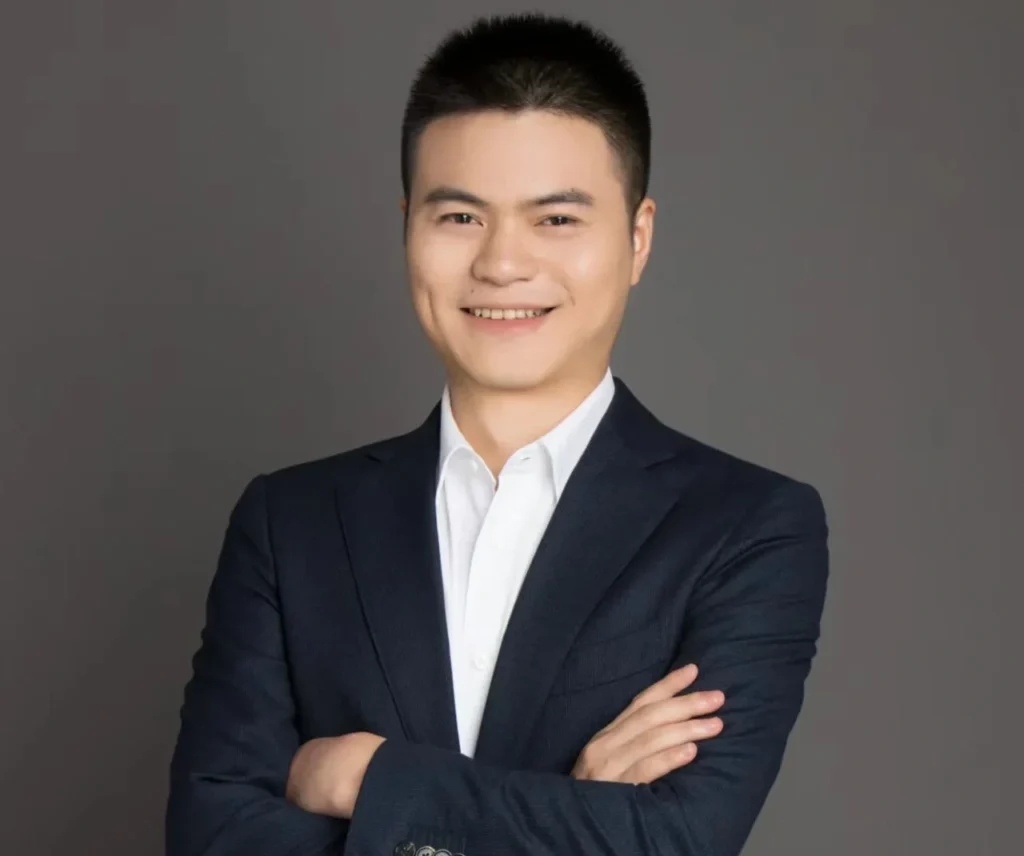
UAE Where Vision Fuels Venture

UAE Where Vision Fuels Venture

UAE Where Vision Fuels Venture By Desk Reporter The United Arab Emirates has become one of the most compelling launchpads for global business, where long-term vision meets policy innovation, and investment meets impact. Opening Doors to Global Entrepreneurs In recent years, the UAE has transformed its economic model to welcome foreign innovation at scale. With 100% foreign ownership now allowed in mainland companies and the introduction of the 10-year Golden Visa, the nation is no longer just a place to invest; it’s a place to build, settle, and thrive. According to the Ministry of Economy’s January 2024 report, the country drew more than AED 84 billion in foreign direct investment in 2023. Key sectors driving this influx include fintech, logistics, and renewable energy, industries that reflect the UAE’s strategic pivot from oil-dependency to knowledge-based, future-facing growth. A Nation Built to Incubate Innovation here is a part of the architecture. Abu Dhabi’s Hub71 and Dubai’s DIFC FinTech Hive are just two of several high-impact accelerators offering early-stage ventures access to funding, mentorship, and regulatory guidance. Whether you’re a fintech founder or a clean energy pioneer, the infrastructure to scale globally is already in place. The Green Frontier of Business The UAE’s commitment to net-zero emissions by 2050 is opening new lanes for sustainable investment. Projects like Masdar City, a planned urban ecosystem powered by renewable energy, symbolize the country’s ambition to lead on climate innovation as well as commerce. From green hydrogen to carbon capture, global investors are finding fertile ground in the UAE’s sustainability sector, just as the country strengthens its global positioning in preparation for hosting climate summits and green finance forums. Smart Finance, Smarter Future Meanwhile, the financial sector is evolving at speed. AI and blockchain are being embraced not just as tools for real-world efficiency, enhancing transparency, lowering operational costs, and expediting transactions. In this data-driven landscape, startups and institutional players alike are testing the future of finance under the region’s maturing regulatory umbrella. A Laboratory for Tomorrow The UAE is no longer just a business-friendly destination; it’s a sandbox for solving global problems through local ambition. Whether it’s digital finance, sustainability, or startup innovation, the message is clear: in the Emirates, big ideas don’t just land, they take off.

Local Voices: The UAE’s Emerging Entrepreneurs

Local Voices The UAE’s Emerging Entrepreneurs

Local Voices The UAE’s Emerging Entrepreneurs By Marina Ezzat Alfred The UAE has long been recognized as a global business hub, attracting multinationals and international investors. Today, a new generation of local entrepreneurs is reshaping the nation’s economy with bold ideas and innovative startups, signaling a shift from dependency on foreign enterprises to homegrown solutions. These forward-thinking individuals are transforming traditional industries and paving the way for a more self-sustaining and tech-driven future. A Supportive Ecosystem for Innovation Fuelled by strategic government initiatives such as the UAE Vision 2021 and the National Innovation Strategy, the entrepreneurial landscape has flourished. These programs have cultivated a dynamic environment that empowers both Emiratis and expats to bring their business ideas to life. With streamlined regulations, access to funding, and a strong push for innovation, the UAE is becoming one of the most startup-friendly nations in the region. Success Stories Leading the Way Notable examples have set a powerful precedent. Careem, founded by Mudassir Sheikha, Magnus Olsson, and Abdulla Elyas in 2012, evolved from a ride-hailing service into a tech ecosystem encompassing food delivery, payments, and car rentals. Its $3.1 billion acquisition by Uber in 2019 remains a landmark achievement in the region’s startup history. Souq.com, founded by Ronaldo Mouchawar in 2005, revolutionized e-commerce in the Middle East and was acquired by Amazon in 2017. Similarly, Talabat, launched by Abdulaziz Al-Loughani in 2004, has grown into the GCC’s leading food delivery platform, reflecting the rapid shift in consumer behavior toward convenience and digital services. Environments that Spark Creativity Creative and tech hubs across the country have become incubators for talent and innovation. Dubai Design District (d3) nurtures creative industries by hosting collaborative events, workshops, and exhibitions. Abu Dhabi’s Hub71, launched in 2019, supports startups in fintech, AI, and health tech through funding, mentorship, and global connectivity. Meanwhile, The Cribb in Dubai provides a collaborative co-working space that fosters entrepreneurial growth through community engagement and expert guidance. Revitalizing Traditional Sectors The impact of local entrepreneurship extends beyond tech. In agriculture, Pure Harvest Smart Farms, founded by Sky Kurtz, uses climate-controlled greenhouses to address food security with sustainable solutions that reduce water usage. Other agri-tech startups are leading the shift toward vertical farming and hydroponics, tackling the challenges of climate change and resource scarcity. In education, institutions like Hult International Business School are equipping future leaders with practical, innovation-focused curricula. Online platforms such as Almentor and Nabbesh are also bridging the skills gap, offering accessible training tailored to regional workforce needs. Healthcare is undergoing a digital transformation led by platforms like YAPILI, which connects patients with healthcare providers across Africa and the Middle East. Regional startups such as Healthigo and DabaDoc are streamlining patient care with services like telemedicine, digital records, and online appointment systems, improving both access and outcomes. Looking Ahead The UAE’s entrepreneurial future is bright. With a strong focus on sustainability, innovation, and digital transformation, startups are tackling challenges that are both local and global in scope. Continued government support through initiatives like the Mohammed Bin Rashid Innovation Fund and a growing network of angel investors will be critical to sustaining this momentum. The rise of local entrepreneurs marks a transformative era for the UAE. These visionary leaders are not only redefining business norms but are also shaping the region’s cultural and economic identity. As they push boundaries and inspire future generations, their voices will continue to lead the conversation in the region’s innovation journey.

The Rise of the UAE Regenerative Economy

The Rise of the UAE Regenerative Economy

The Rise of the UAE Regenerative Economy By Hafsa Qadeer In the shimmer of Dubai’s skyline or the vast stillness of the Rub’ al Khali, a quieter revolution is taking root. The UAE, long defined by its oil wealth and architectural ambition, is nurturing something deeper ,  a regenerative economy where waste becomes wealth, where growth nourishes rather than depletes. Regeneration, once a word used in environmental circles, now finds itself at the heart of boardroom strategies and government roadmaps. It’s not just about sustainability ,  it’s about reversal, renewal, and restoration. From the way buildings are designed to how capital is invested, the UAE is quietly recalibrating its definition of prosperity. A Future Planted in the Soil Take the agri-tech startups blooming in Al Ain and Sharjah. These aren’t just hydroponic farms or vertical gardens. They’re ecosystems of circularity. In these microclimates, water is recycled, energy is solar, and crops are selected not just for taste, but for climate resilience. Entrepreneurs like Layla Al Qasimi are turning food waste into soil-enriching biochar, selling carbon credits while feeding the nation. This is regeneration,  not extraction, but expansion through replenishment. Capital that Comes Full Circle The financial ecosystem is evolving too. UAE-based venture capitalists are now investing in what they call “regenerative finance” or ReFi ,  startups focused on carbon sequestration, biodiversity mapping, and ethical supply chains. DIFC’s green fintech sandbox has incubated dozens of solutions where financial products double as climate tools. At the policy level, the Ministry of Economy is promoting incentives for companies that integrate regeneration into their business models, offering benefits to waste-to-energy firms, recycled-material manufacturers, and water-positive developers. This is more than compliance. It’s a cultural pivot. Buildings That Breathe Look around Masdar City or the new climate-conscious districts in Dubai South. The architecture tells a new story, one where buildings generate their own energy, manage their own waste, and offer habitats to urban wildlife. These are not just structures but living systems. Even luxury developers are leaning in. Residences now advertise “carbon-zero footprints” and use reclaimed desert stone and algae-based paints. Materials matter. Origins matter. Impact matters. The real estate boom has not paused. It has transformed. Youth as the Custodians What fuels this shift isn’t only policy,  it’s people. Gen Z entrepreneurs in the UAE are radically values-driven. They don’t just want to earn, they want to regenerate ,  to fix, rewild, revive. At hackathons and innovation labs, you’ll find teenagers prototyping solar-powered desalination pods or NFTs that fund coral restoration. University programs now offer courses in regenerative leadership. The youth don’t ask why regeneration. They ask what’s next. Beyond Sustainability In many ways, sustainability has always been a bridge, a neutral zone between destruction and healing. The UAE has crossed that bridge. Now, the goal is net-positive: to give more than is taken, to build systems that thrive long after the builder is gone. This is a bold vision. And a necessary one. Because in a world where climate volatility and economic inequality threaten to destabilize entire regions, regeneration isn’t idealism. It’s a strategy. A New Definition of Wealth Perhaps the most radical change is philosophical. Wealth is no longer just GDP or gold reserves. In the UAE’s new lexicon, wealth is fertile soil, clean air, resilient communities, and thriving species. It is a future that can sustain itself. And in the heart of the desert,  once considered barren,  a new kind of abundance is being born. Here, regeneration is not just a practice. It is a promise.

Farah Mourad

Farah Mourad The Analyst Clarifying Global Market Shifts

Farah Mourad The Analyst Clarifying Global Market Shifts By Hafsa Dijoo Global financial markets influence every aspect of modern life. Since the beginning of this decade in 2020, the world has faced an unrelenting series of crises from pandemics to geopolitical conflicts, each one amplifying the demand for clear, trustworthy financial insight. MAGNAV had the opportunity to speak with Farah Mourad, a Senior Market Analyst at IG Group, whose rare ability to simplify complex financial trends sets her apart. With a bachelor’s degree in economics and a master’s in communication, Farah brings a rare blend of analytical depth and articulate delivery. She began her professional journey as a reporter at Al Jadeed before joining MBC in the United Arab Emirates as a producer and editor. Over five years in the media industry shaped her ability to communicate with precision skills that now serve her well as a financial analyst. “When I worked in journalism, I delivered the headlines. But as an analyst, I get to uncover what truly lies beneath them.” Farah’s transition into finance was driven by her curiosity during the COVID-19 pandemic. She felt limited by surface-level reporting and sought to understand the deeper forces behind market movements. One moment that stood out was the market panic on August 5, often compared to Black Monday. Despite the alarmist headlines, Farah’s research revealed it was largely media-driven hype. That experience solidified her desire to pursue a more analytical path. At MBC, her work centered primarily on Saudi Arabia’s economy. Today, her scope is global. Farah analyzes markets across Europe, the Americas, and Asia, covering a wide array of instruments from stocks and commodities to currencies, indices, and cryptocurrencies. Reflecting on the impact of the pandemic, she noted how it created an economic shift that, in some ways, rivaled the Great Depression. “More young people are engaging with financial markets. What was once seen as exclusive to the elite is now widely recognized as affecting everyone.” She also pointed out how the pandemic exposed vulnerabilities in globalization. Supply chain disruptions especially when air traffic was grounded made clear the risks of over-dependence. Inflation added more pressure, driving skepticism around fiat currencies and sparking renewed interest in digital assets. “This shift in consumer behavior isn’t temporary. It marks a long-term change in how we perceive money and value.” The conversation turned toward geopolitical tensions, particularly the wars in Ukraine and Palestine. Surprisingly, Farah observed that these conflicts haven’t deeply shaken global markets. Despite widespread concern, stock indices have continued to rise, oil supplies have remained relatively stable, and most price fluctuations were driven by speculation rather than actual disruption. “We’re seeing a new kind of resilience. Investors are no longer shocked by conflict, they plan for it.” She explained that major institutions now factor in multiple scenarios, protecting portfolios against sudden swings. The flood of capital post-COVID has only added to this momentum, with inflation encouraging a more aggressive investment mindset. Farah’s analysis becomes especially compelling when focused on the Middle East. Her understanding of the region is rooted in both her media background and her financial expertise. She pointed to the Etihad Rail project, a transformative initiative linking the UAE and Saudi Arabia. “Just like the Eurail system boosted regional connectivity in Europe, this project could redefine tourism, logistics, and cross-border trade in the Gulf.” Beyond the Gulf, she highlighted investment opportunities in Egypt, Lebanon, and Jordan. These markets, backed by Gulf investment, are seeing major real estate development and logistics expansions. New port infrastructure across the Mediterranean could position them for substantial growth. “Greater regional integration can only bring stability and prosperity. Europe proved that with the evolution of the EU.” Farah was also asked about the UAE’s ability to remain stable amid the ongoing Palestine conflict. She acknowledged the country’s unique position, noting that the UAE has long been viewed as a safe haven thanks to its consistent political and economic management. “In times of uncertainty, the UAE becomes a magnet for investors seeking safety. That speaks volumes about its strategic strength.”  To date, the UAE has not faced direct consequences from the conflict, providing reassurance to smaller investors who are closely watching the region. Farah also discussed how global businesses have had to respond to shifting consumer sentiments, especially with pro-Palestine boycotts affecting major franchises in Muslim-majority countries like Egypt, Indonesia, and Malaysia. Brands such as McDonald’s attempted to reverse public backlash with donations to Palestinian causes, though the response has been mixed. “Companies can’t afford to be silent anymore. Transparency is no longer optional—it’s expected.” She recommended that brands not only clarify their stance but also diversify product lines and market strategies. Adidas, for instance, recovered strongly after parting ways with Kanye West during a wave of controversy. “Reputation can be rebuilt, but only with courage and consistency.” The interview turned philosophical when asked whether individuals could influence global events through their investment decisions. Farah believes they can. “If BlackRock decided not to invest in your stock, you’d feel it. And that same logic applies, even on a smaller scale, when consumers and retail investors make ethical choices.” She pointed to the growing—but recently slowed, movement of ESG investing. In 2023, ESG-focused ETFs reached $480 billion, although momentum has cooled since. Still, she believes the ethical investing trend has staying power. That said, she noted a sharp rise in defense stocks, with companies like BAE Systems gaining as much as 140% in the last three years. While war profiteering may concern many, there are signs of pushback. Barclays, for example, divested $3.4 million from Elbit Systems, an Israeli defense firm. While this didn’t crash the stock, it made a bold public statement. “The message matters—even when the market impact is minimal.” The Middle East’s strategic location makes it a vital artery for global trade. Any disruption in its shipping lanes, Farah warned, can trigger severe economic consequences. The recent Red Sea incident caused freight prices to spike, but the greater threat lies in potential strikes
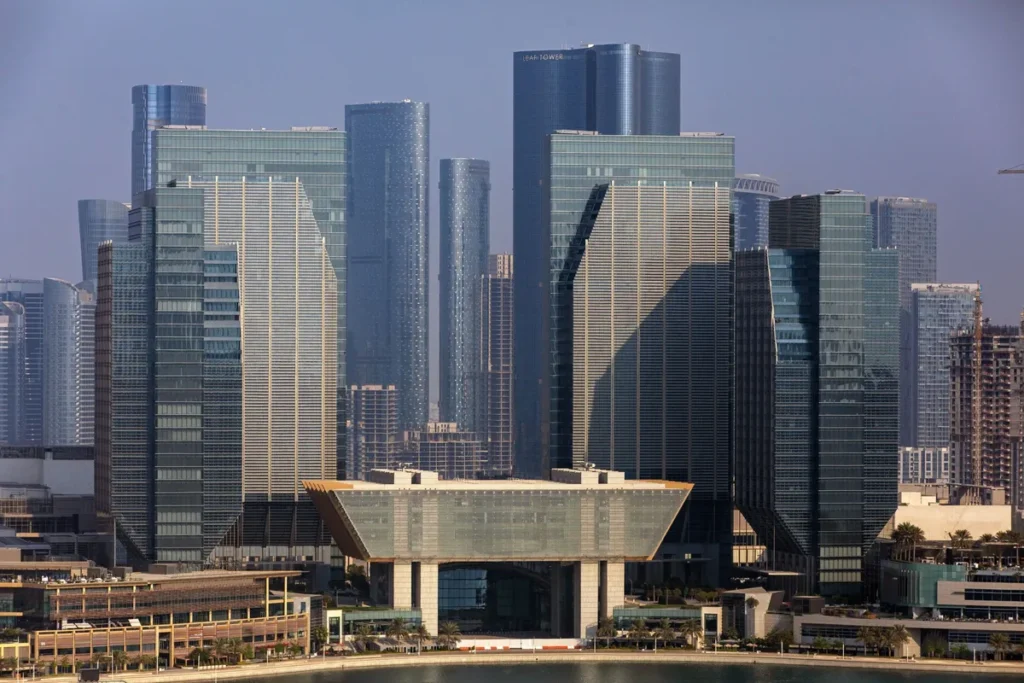
Sustainable Wealth Surge of Abu Dhabi

The Sustainable Wealth Surge of Abu Dhabi

The Sustainable Wealth Surge of Abu Dhabi By Desk Reporter Abu Dhabi’s financial landscape is flourishing in 2025, with Masdar City driving a green investment boom. Mubadala, the emirate’s sovereign wealth fund, has invested AED 10 billion in startups focused on renewable energy and carbon capture, aligning with the UAE Economic Vision 2030. EcoVolt, a Masdar-based firm, is pioneering solar-powered desalination systems, capitalizing on the UAE’s tax incentives and innovation-friendly policies. This strategic push is drawing global venture capital, positioning Abu Dhabi as a leader in sustainable finance. The Abu Dhabi Global Market (ADGM) is also thriving, with its fintech sandbox nurturing ventures like GreenPay, a blockchain platform for carbon credit trading. Recent data indicates GreenPay facilitated AED 500 million in trades this year, reflecting the UAE’s stable economy and progressive regulations. International investors are flocking to ADGM, lured by opportunities in green tech. Abu Dhabi’s fusion of financial prowess and environmental focus is redefining wealth creation, proving the emirate can lead the global charge toward a sustainable future.

Generation Zayed: The Rise of Value-Driven Entrepreneurs in the UAE

Generation Zayed The Rise of Value-Driven Entrepreneurs in the UAE

Generation Zayed The Rise of Value-Driven Entrepreneurs in the UAE By Hafsa Qadeer There is a new kind of ambition rising in the Emirates. It does not glitter like gold towers nor roar like supercars. It breathes quietly, in coworking cafés, pitch rooms, and the glowing screens of midnight Zoom calls. This is the age of Generation Zayed, young Emiratis building not only businesses, but a different kind of legacy. These are founders who want to matter more than they want to scale. Whose metrics are not just profit, but purpose. A Spirit Reimagined The UAE has long been defined by bold enterprise, from desert oilfields to megacities. But a shift is underway. Today’s entrepreneurs, born under the promise of the Union and raised with Sheikh Zayed’s vision in textbooks and hearts, are asking deeper questions. What does it mean to build something worthy of this land?  How can growth reflect generosity, not just accumulation? They are the children of visionaries, and they are answering not with nostalgia, but with action. Startups with Soul Across the seven emirates, purpose-led startups are blooming. A Sharjah-based founder builds a zero-waste skincare line using date pits and saffron. A Ras Al Khaimah agritech startup grows hydroponic crops with 80% less water, selling to local grocers instead of exporting abroad. A Dubai fintech app helps Gen Z users track not only spending, but ethical spending. This is not CSR. This is the core strategy. These companies do not add value as an afterthought; they are founded on values. Legacy as Currency For Generation Zayed, heritage is not something to preserve in a frame. It is a design principle. They reference Bedouin barter systems in their e-commerce models. They honor majlis culture by designing community-first apps. Their grandmothers’ perfumes and stories find new life as niche brands, podcasts, and global campaigns. There is a growing sense that business is not only about profit margins, it is about remembering who you are. An Ecosystem Awakening The support is catching up. Initiatives like the National Programme for SMEs and Startups, Hub71 in Abu Dhabi, and Dubai Future Accelerators are no longer just looking for tech unicorns. They’re investing in mission-driven companies, those solving problems from climate to culture. And investors, too, are changing. Where once ROI dominated the pitch, now VCs ask: Who does this help? What story does this tell? What footprint does this leave? It is, perhaps, the most Emirati thing to innovate boldly, but never forget the soil beneath. The Future is Intentional Generation Zayed does not wait for permission. They build in between university classes, family dinners, and prayer breaks. They crowdfund instead of waiting for funding. They launch slow fashion lines from Al Ain, crypto-education portals from Fujairah, and mangrove-based eco-ventures from Abu Dhabi. And in doing so, they redefine what business in the UAE can mean, not just skyscrapers, but social impact; not just success, but significance. They are not just heirs. They are architects. And in every click, pitch, and prototype, they whisper: This is not just our time. This is our turn.
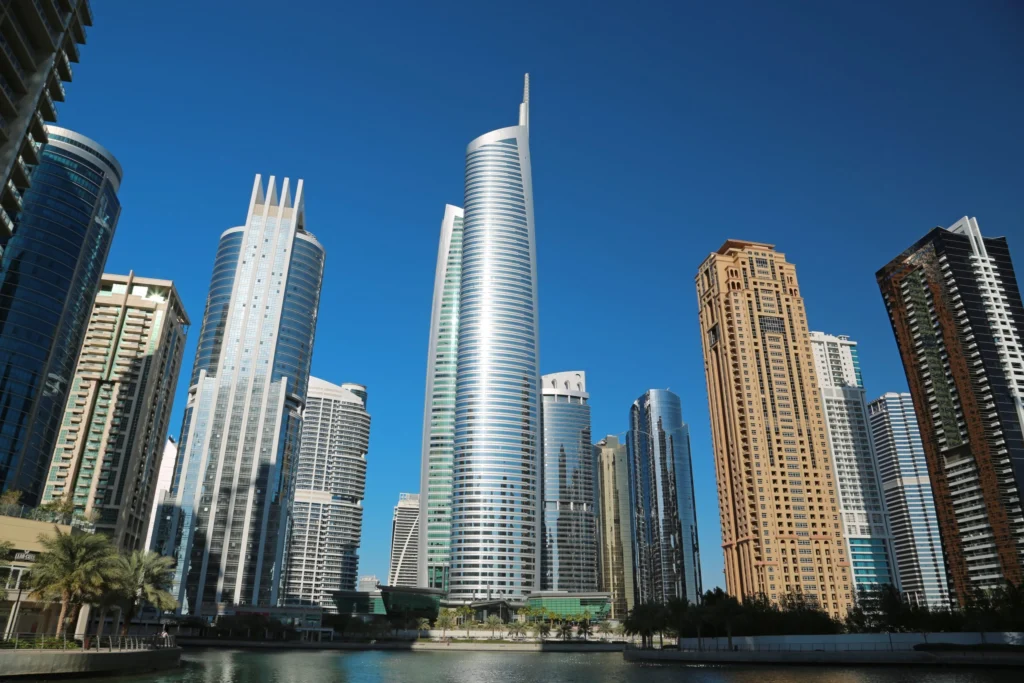
Emirati Entrepreneurship

The New Face of Emirati Entrepreneurship

Built on Ambition The New Face of Emirati Entrepreneurship By Hafsa Qadeer In a land where gold once glinted in souks and pearls shimmered in diving nets, a new kind of wealth is rising, less tangible, more transformative. Today, the UAE’s boldest treasure isn’t in the ground or sea, but in the minds of its people. A generation of Emirati entrepreneurs is rewriting the business playbook, rooted in tradition but wired for tomorrow. A Nation Engineered for Enterprise From the first economic vision laid out by Sheikh Zayed to the high-octane ambition of Vision 2031, the UAE has always positioned itself as a place where possibilities become policies. But today’s economic story is less about oil and more about originality. The country has incubated thousands of startups in the past decade, supported by free zones, incubators, and regulatory frameworks as agile as the minds they support. Walk into Hub71 in Abu Dhabi or AREA 2071 in Dubai, and you feel the charge in the air. Not just electricity, but energy, of ideas turning into prototypes, of pitches becoming products. Here, Emiratis are launching AI-based law firms, eco-conscious beauty brands, and fintech solutions that cater to both regional nuances and global standards. The Business of Identity What makes Emirati entrepreneurs distinct isn’t just the speed of their scale or the sheen of their branding. It’s the way they root innovation in identity. You’ll find brands like Talli that weave Emirati embroidery into fashion tech, or The Camel Soap Factory, where desert ingredients become global skincare hits. This isn’t business as imitation. It’s business as expression. Take Mohammed Al Hammadi, a young founder in Sharjah who built a logistics platform optimized for desert terrain. “Innovation,” he says, “should solve problems that matter to us, not just impress investors.” Women as Economic Architects Women are leading some of the most powerful ventures in the Emirates. Not because they are allowed to, but because they are expected to. From Her Excellency Reem Al Hashimy’s diplomatic legacy to rising stars like Amna Al Hashemi, whose gourmet food empire was built from home kitchens, Emirati women are building bridges between culture and capital. They do not choose between heritage and hustle. They embody both. Fueling the Future with Fintech Fintech, once an outsider, is now center stage. Dubai International Financial Centre (DIFC) and Abu Dhabi Global Market (ADGM) have become magnets for digital banking and blockchain innovation. Meanwhile, the Central Bank of the UAE is piloting a digital dirham. Young Emiratis are creating apps that merge Islamic banking with seamless UX, and remittance platforms tailored for expat-heavy populations. It is finance with a face, and a purpose. Entrepreneurship as Nation-Building There is a civic depth to entrepreneurship here. Programs like the National Program for SMEs or the Mohammed Bin Rashid Innovation Fund aren’t just financial tools, they’re signals. That to build a business in the UAE is to participate in the country’s narrative. In Ras Al Khaimah, a former date farmer now exports smart-irrigation tech. In Fujairah, a father-daughter duo crafts digital Arabic storybooks for diaspora children. These stories are not anomalies. They are blueprints. What Makes the UAE Different While many nations support startups, few intertwine business with belonging the way the UAE does. Entrepreneurship isn’t just economic, it’s cultural. Founders don’t just pitch to win funding. They pitch to shape the future of a nation still in the making. In global boardrooms, “Emirati” no longer means oil or opulence. It means originality. Legacy in the Making The new Emirati entrepreneur does not wear the crown of commerce lightly. They are building something far more resilient than unicorns or IPOs. They are building legacy. Where ambition is not the enemy of tradition, but its evolution. And in a world chasing the next disruption, the UAE quietly teaches a different lesson: that the strongest foundations are those that know where they came from, and where they are going.